Renewable energy is widely projected as the future of power production, particularly in a rapidly expanding country like India. The alternatives to fossil fuels include solar, wind, hydro, and biomass energy, which are cleaner and can greatly help reduce pollution and carbon emissions. Nevertheless, just like any significant infrastructure investment, renewable energy is also associated with limitations and challenges that must be well understood before making decisions.
India’s transition to clean energy is already well underway. In 2026 alone, the country added a record 44.5 GW of renewable energy capacity, with solar power leading the growth. This sharp increase shows why renewable energy is no longer an alternative but a strong pillar of India’s energy strategy. [Source-Link]
The numerous debates on clean energy are all based on the positive aspects, which may create impractical expectations. Investors, businesses, policymakers, and even homeowners require a balanced perspective for effective planning. Learning the drawbacks of renewable energy does not diminish the significance of this energy source; rather, this knowledge contributes to developing improved models, selecting the most efficient technologies, and preventing costly errors.
This blog elaborates on the 10 most significant disadvantages of renewable energy, focusing on reliability, cost, storage, land use, and grid integration in practice. The idea is not to stop adoption, but to bring more clarity so that investments in clean energy can be made in an informed, practical, and future-oriented way.
What Is Renewable Energy?
Natural sources such as sunlight, wind, water, and organic matter are renewable energy sources that can be continuously replenished. These sources are deemed sustainable because they do not run out over time and produce much lower emissions than fossil fuels.
Solar power, wind energy, hydropower and biomass are the primary sources of renewable energy in India. These sources are increasingly becoming part of the national power mix, reducing reliance on coal and foreign fuels.
Although renewable energy sources offer significant environmental and economic benefits, their production depends on natural factors and on the availability of infrastructure. This reliance raises issues that must be resolved to provide a scalable and reliable energy supply.
Top 10 Disadvantages of Renewable Energy
Now, let us look at the top disadvantages of renewable energy in detail.
Intermittent and Weather-Dependent Power Generation
Renewable energy is also affected by weather conditions, and this is one of the greatest setbacks. Solar energy production depends on sunlight, while wind power depends on wind speed. There are days when the sun does not shine or the wind does not flow; hence, electricity generation decreases.
This variability is less predictable in renewable energy than in conventional power sources. The change in seasons, rainy days, monsoons, and calm winds may severely influence energy production. Consequently, renewable power will not necessarily provide a constant supply.
Renewable systems must include a backup, such as batteries, hybrid systems, or grid support, to cope with this challenge, making them more complex and more expensive.
Expensive to Set up
Renewable energy has a low operating cost in the long run, but the initial investment is quite high. The installation of solar panels, wind turbines, inverters, and other facilities is capital-intensive.
This can be significant for households and small businesses, as this first expense may hinder them. Renewable energy projects, even at utility scale, are highly financed, land-based, and technically planned before any returns are realised.
Although costs are lower than they used to be, initial expenditure remains a major issue, particularly for off-grid systems or those relying on batteries.
Energy Storage Is Expensive and Limited
The production of renewable energy is not always compatible with electricity demand. Such an imbalance necessitates energy storage. When production is at its peak, the extra energy is stored in batteries and released when the generation is low.
Battery systems, however, are costly and do not last long. They add additional expenses to the project and require maintenance and replacement over time. Energy storage is also a problem in large-scale operations due to space constraints, safety concerns, and recycling challenges.
The problem of energy storage will remain a major challenge to the adoption of renewable energy until affordable, long-lasting storage technologies are widespread.
Large Land and Space Requirements
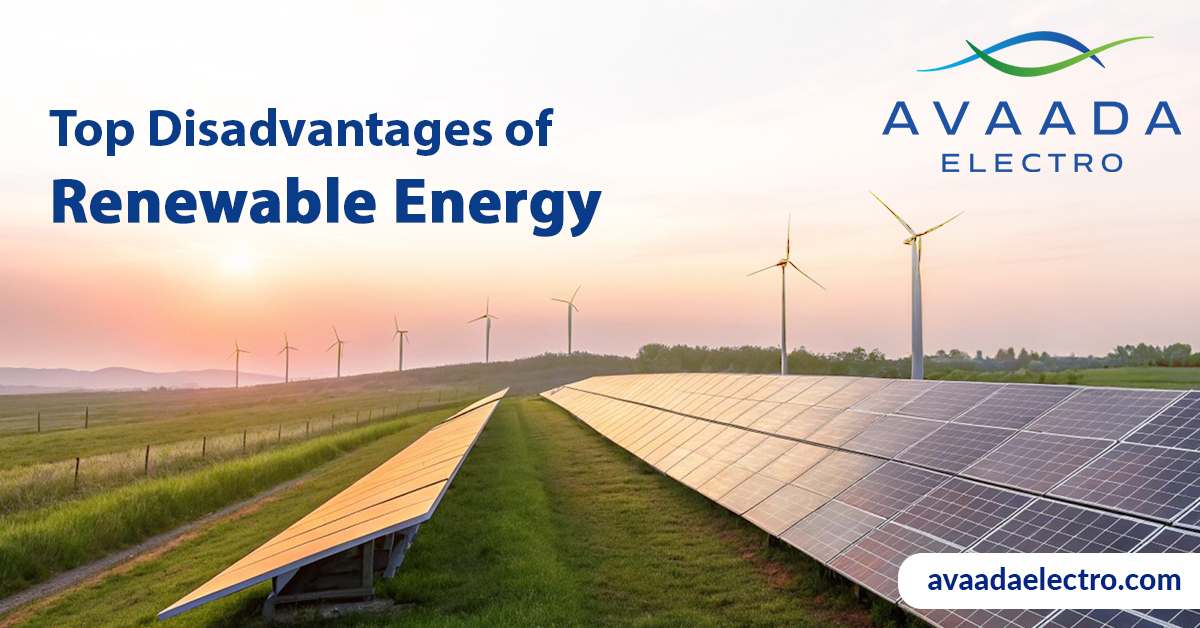
The production of renewable energy projects often involves the use of large areas of land to produce substantial power. Solar power plants require large areas of land, while wind farms require significant spacing between turbines.
Land availability may be a major constraint in high-population areas in India. Other possible effects of land acquisition on an area include conflict with agriculture, local communities, and conservation programs.
Despite rooftop solar reducing land use, large-scale renewable projects continue to face difficulties with land costs, availability, and land-use planning.
Grid Integration and Infrastructure Challenges
The process of integrating renewable energy into existing power grids is complex. The traditional grids were designed to accommodate constant, centralised power generation, rather than variable, decentralised renewable sources.
Renewable energy can produce power inconsistently, leading to grid instability without proper management. Upgrading grid infrastructure, developing smart grids, and improving transmission networks are time- and cost-consuming.
The concept of grid integration has been a challenge in India, particularly in areas with weak or obsolete transmission infrastructure.
Lower Energy Density Compared to Fossil Fuels
The energy density of renewable energy sources is usually lower than that of fossil fuels. This implies that renewable systems require additional equipment and space to generate the same amount of electricity.
As an example, even a coal power plant can produce large quantities of electricity in a comparatively small area, compared to solar and wind installations that require large areas to produce the same amount of electricity.
Renewable projects have lower energy density, contributing to increased resource intensity in land, materials, and infrastructure.
Environmental and Ecological Concerns
Although renewable energy is less polluting than fossil fuels, it is not entirely harmless. Large-scale hydropower projects may affect river ecosystems. Wind turbines can be dangerous to birds, and solar farms can alter existing land-use patterns.
The manufacturing and disposal of batteries also raise environmental concerns related to mining and recycling.
The above effects underscore that sustainable energy projects require responsible planning, environmental evaluation, and practices.
Dependence on Imported Technology and Materials
India has been unable to produce many renewable energy technologies, despite strong domestic growth, particularly in solar panels and battery materials, which are still imported.
This reliance may affect project costs and supply chains, especially in the event of a global disruption. It also exposes the sector to international prices and trade policies.
To address this drawback, it is necessary to strengthen local production to build a robust renewable energy sector.
Skilled Workforce and Maintenance Challenges
Renewable energy systems need qualified specialists to design, install and maintain. A lack of qualified technicians may affect the system’s performance and reliability.
Skilled service support is usually inaccessible in rural and remote settings. Substandard installation or maintenance can reduce system efficiency and lifespan, thereby increasing long-term costs.
To overcome this challenge, it is important to develop a trained workforce.
Not Suitable for Every Location or Use Case
The availability of renewable energy depends on location. Renewable technologies may not be optimal in areas with low solar irradiance, low wind speeds, or scarce water supplies.
This implies that the renewable energy solutions should be site-based. One-size-fits-all does not apply, and a mismatched system selection may lead to poor performance and financial loss.
The site should be properly evaluated, and the technology chosen before investing in renewable energy.
Renewable Energy vs Conventional Energy: A Practical Comparison
| Parameters | Renewable Energy | Conventional Energy |
| Power availability | Variable | Continuous |
| Initial cost | High | Moderate |
| Fuel dependency | None | High |
| Environmental impact | Low | High |
| Grid compatibility | Complex | Simple |
Are These Disadvantages Deal-Breakers?
The drawbacks of renewable energy are real, but not always. A large number of these challenges are being overcome through technological progress, policy provisions, and infrastructure upgrades.
Energy storage prices are falling, and grid systems are becoming smarter and more efficient. The drawbacks of renewable energy are real, but they are not always deal-breakers.
How to Make Smarter Renewable Energy Investments
Here are the ways that will help you make smarter renewable energy investments –
- Clarity, planning, and realistic expectations
The long-term financial, environmental, and operational benefits of investing in renewable energy can be achieved; however, a clear understanding, careful planning, and realistic expectations are essential.
Poor assessment and hasty implementation of renewable energy are the root causes of many challenges.
Wiser investments can be achieved by simply knowing what you really need in terms of energy consumption and matching the appropriate solution to it.
- Conduct a detailed site and load assessment
The most important and initial step would be the site and load assessment. This entails examining current electricity usage, peak load demands, usage trends, and expansion plans.
In the case of solar projects, the orientation of the roof, shading, available space, and local climatic conditions directly influence performance.
Lack of proper load and site data may mean systems are too small or too large, leading to poor efficiency, power outages, or unnecessary expenses.
- Choose the appropriate renewable technology
It is then necessary to select the right renewable technology. All renewable sources are not equally useful at all locations or by all users.
Solar can be suitable on rooftops and in open space, wind energy can be effective only at consistent wind speeds, and hybrid systems can be more dependable when reliability is the priority.
The choice of technology must be based on its realities, local circumstances, and long-term practicality rather than fads and speculation.
- Planning for storage and backup
Another aspect is the storage and backup planning. As a form of energy, renewable energy may be variable, so investors may need to manage the power supply during periods of low generation.
This may involve battery storage, grid connectivity, or hybrid systems. Storage is an expensive addition, but with proper planning, there will be no power cuts, and the investment’s reliability will not be compromised.
- Experienced and qualified installers
It is a great help to use skilled and trained installers to minimise risk. Professional installers guarantee proper system design, quality components, regulatory compliance, and commissioning.
One of the most frequent causes of poor performance of renewable systems, despite the quality of the technologies, is poor installation.
- Consider long-term maintenance, upgrades, and lifecycle costs
Lastly, investors should consider long-term maintenance, upgrades, and lifecycle costs. Renewable energy facilities are long-term assets, and many of them have a lifespan of 20-25 years.
With inverter replacement, battery upgrades, system monitoring, and regular maintenance planning, a long-term performance with certain returns may be guaranteed.
Planning will transform the complicated challenge of renewable energy sources into a trusted opportunity. Renewable energy investments would be robust, effective, and worthwhile in the long term when they are based on data and have a future outlook.
Conclusion
Renewable energy is necessary to make the future sustainable, yet it is not devoid of challenges. Before investing, one must be aware of intermittency, storage costs, land requirements, and infrastructure limitations.
Being aware of these drawbacks at the outset enables one to make smarter choices and develop solutions that deliver reliable, long-term benefits. Clean energy can be maximised when its shortcomings are recognised and addressed intelligently.
Frequently Asked Questions
What is the greatest setback of renewable energy?
The greatest challenge is intermittent power generation due to dependence on weather conditions.
What is the significance of energy storage in renewable energy?
Storage enables power to be maintained when generation is low; however, it is less cost-effective and more complex.
Is renewable energy more costly than fossil fuels?
Initial expenses are higher, but the operating expenses tend to be lower in the long run.
Is more land needed to utilise renewable energy?
Yes, renewable projects require more land than conventional power plants.
Is it possible to substitute fossil fuels with renewable energy?
It can significantly reduce dependence; however, it will require grid upgrades and planning for a full replacement.