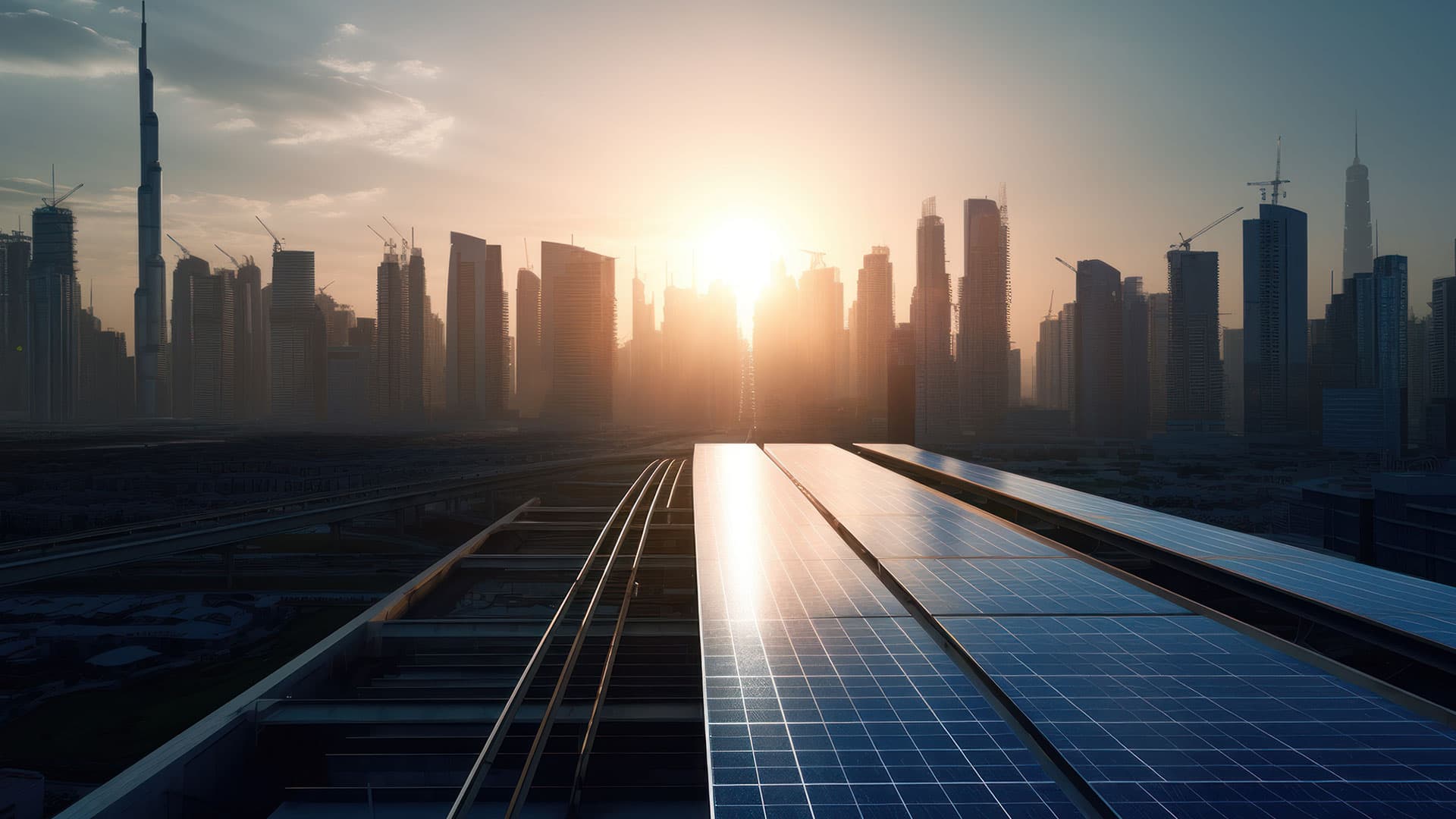
India’s rapid urbanization presents both challenges and opportunities for sustainable development. As cities expand and energy demand rises, the integration of renewable energy sources, particularly solar power, into urban planning becomes imperative.
In this blog, we explore the role of solar energy in shaping sustainable cities in India and the innovative approaches to integrating solar technologies into urban landscapes.
The Urban Solar Potential in India
India boasts abundant solar resources, with vast swathes of land and high levels of solar irradiance across the country. Urban areas, despite their density and limited open spaces, hold significant potential for solar energy generation.
Rooftops, facades, and open areas within cities offer opportunities for deploying solar photovoltaic (PV) panels, while innovative designs and technologies enable the integration of solar infrastructure into urban environments without compromising functionality or aesthetics.
Integrating Solar Technologies into Urban Planning
Solar Rooftop Installations: Rooftops represent valuable real estate for solar PV installations in urban areas. Government incentives, such as subsidies and net metering policies, encourage the adoption of rooftop solar systems among residential, commercial, and institutional buildings.
Integrating solar panels into building designs or retrofitting existing structures with solar PV arrays not only generates clean energy but also reduces electricity bills and carbon emissions, contributing to the sustainability of urban infrastructure.
Solar Parks and Public Spaces
Municipalities are increasingly establishing solar parks and green spaces equipped with solar-powered amenities to enhance urban livability and resilience.
These parks feature solar benches, streetlights, charging stations, and water pumps powered by solar energy, providing residents with sustainable amenities while reducing strain on the grid.
By transforming idle spaces into vibrant solar hubs, cities promote renewable energy adoption and foster community engagement in sustainable practices.
Building-Integrated Photovoltaics
Building-integrated photovoltaics seamlessly integrate solar panels into architectural elements, such as windows, facades, and shading structures. BIPV systems serve dual functions, providing energy generation while enhancing building aesthetics and functionality.
In India, innovative BIPV solutions are gaining traction in commercial and residential projects, enabling architects and developers to incorporate solar energy seamlessly into urban designs and reduce reliance on conventional energy sources.
Solar-Ready Infrastructure
Forward-thinking urban planners are incorporating solar-ready infrastructure into city development plans to facilitate future solar installations.
This approach involves designing buildings and infrastructure with pre-installed wiring, structural supports, and space provisions for solar panels, simplifying the process of retrofitting or adding solar systems in the future.
By embedding solar readiness into urban infrastructure, cities future-proof their energy infrastructure and accelerate the transition to clean energy.
Benefits of Solar-Powered Urban Planning
Solar-powered urban infrastructure reduces reliance on fossil fuels, mitigating air pollution and greenhouse gas emissions associated with conventional energy sources.
Energy Security and Resilience
Distributed solar generation enhances energy security by decentralizing power production and reducing dependence on centralized grids, improving urban resilience to disruptions.
Economic Opportunities
Solar energy investments create jobs, stimulate local economies, and attract private sector investments, driving economic growth and sustainable development in urban areas.
Conclusion
As India’s cities evolve and expand, the integration of solar energy into urban planning emerges as a cornerstone of sustainable development.
By leveraging solar technologies and innovative urban design strategies, cities can harness the power of the sun to create resilient, livable, and environmentally friendly urban environments.
Through collaborative efforts between government agencies, urban planners, developers, and communities, India can pave the way towards a solar-powered urban future that benefits both present and future generations.