
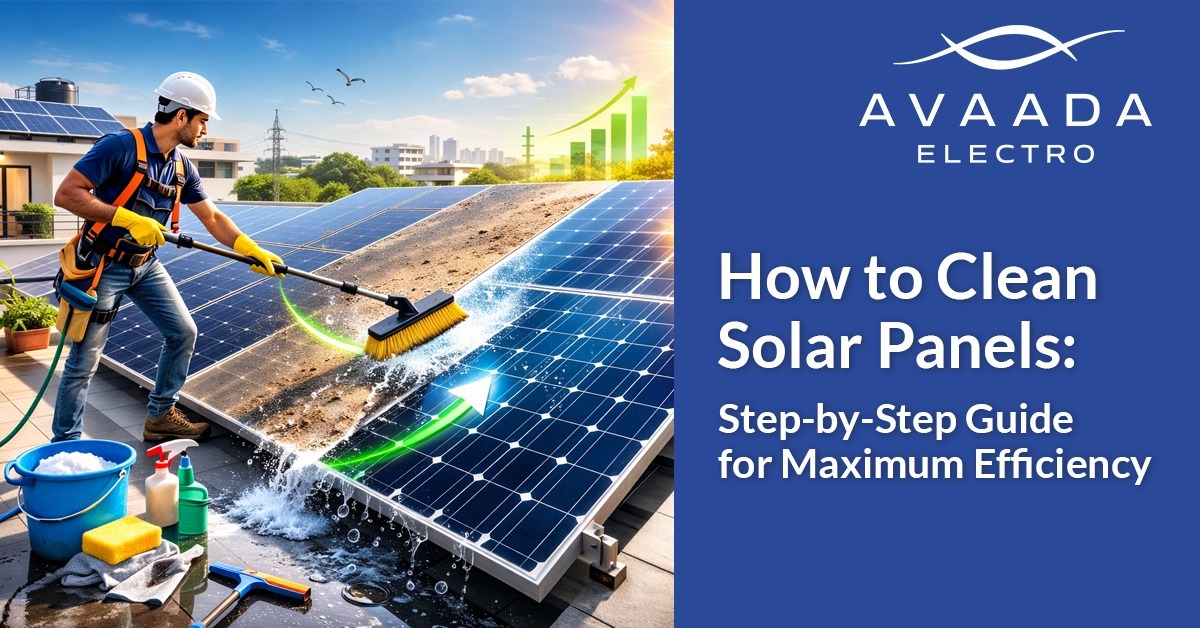
Solar panels are designed to operate for decades with minimal intervention. However, like any outdoor surface, they accumulate dust, pollen, bird droppings, and environmental residue over time. If left unaddressed, this buildup reduces sunlight reaching the cells and directly lowers energy generation.
Cleaning solar panels is one of the simplest ways to protect system performance and preserve expected savings. When done correctly and safely, it restores lost output at a very low cost compared to the value of recovered electricity.
This guide explains why solar panel cleaning matters, how often it should be done, and provides a clear step-by-step method for safe cleaning. It also explains when professional cleaning is the better option and how to measure the real benefit of cleaning.
How Dirty Solar Panels Reduce Energy Output
Solar panels rely on direct sunlight reaching the photovoltaic cells. Any layer of dust or debris blocks part of that light. Even thin dust layers can cause measurable performance losses over time.
Common causes of soiling include:
- Dust and sand in dry regions
- Air pollution and soot in urban areas
- Pollen and leaves in residential neighborhoods
- Bird droppings, which can block entire cell strings
- Salt residue in coastal regions
Performance loss varies by location and severity. In moderate environments, dirty panels may lose 2–5% output annually. In dusty, industrial, or coastal areas, losses can exceed 10% if panels are not cleaned periodically. Because these losses accumulate gradually, many system owners do not notice the decline until annual generation falls below expectations.
Safety First: Rules to Follow Before Cleaning
Safety must always come before performance. Solar panels are mounted on elevated structures, and cleaning involves water, electricity, and height, all risk factors.
Before starting:
- Switch off the solar system as per the inverter manufacturer’s instructions
- Avoid cleaning during peak sunlight hours
- Use non-slip footwear and a stable ladder
- Never work alone on steep or high roofs
- Do not step directly on panels
If the roof is steep, slippery, or difficult to access, professional cleaning is the safer choice. No efficiency gain is worth the risk of injury or equipment damage.
Tools and Supplies Required
Cleaning solar panels does not require specialized equipment, but the tools used must be gentle.
Recommended tools:
- Soft, long-handled brush or microfiber squeegee
- Garden hose with low water pressure
- Bucket with clean water (preferably soft or deionized water)
- Mild, non-abrasive detergent (optional)
- Safety gloves and eye protection
Avoid metal brushes, abrasive pads, and high-pressure washers. These can scratch the glass surface or damage panel seals, leading to long-term performance loss.
Step-by-Step Guide to Cleaning Solar Panels
The steps involved in cleaning solar panels include the following:
Step 1: Plan the Cleaning Time
Choose early morning or late afternoon when panels are cool. Cleaning hot panels can cause thermal stress and rapid water evaporation, leaving residue behind.
Step 2: Switch Off the System
Turn off the solar inverter and isolate the system according to manufacturer guidelines. This reduces electrical risk during cleaning.
Step 3: Initial Rinse
Use a low-pressure hose to rinse off loose dust and dirt. Always spray from the top downward so debris flows off naturally.
Step 4: Gentle Brushing
Dip the soft brush in clean water and gently move it across the panel surface. Do not scrub aggressively. For stubborn spots like bird droppings, allow water to soak briefly before brushing.
Step 5: Optional Mild Detergent
If residue remains, use a mild, non-abrasive soap diluted in water. Avoid harsh chemicals, ammonia, or bleach.
Step 6: Final Rinse
Rinse thoroughly to remove all soap residue. Leftover detergent can attract dust and reduce transparency.
Step 7: Dry and Inspect
Allow panels to air dry or use a rubber squeegee. Inspect for cracks, loose wiring, or mounting issues.
Step 8: Restart and Monitor
Turn the system back on and monitor energy output over the next few days to confirm performance improvement.
Special Cleaning Situations
Consider these specific cleaning scenarios for the solar panels:
Bird Droppings
Bird droppings should be removed promptly as they can block entire cells. Pre-soak the area before gentle brushing. Consider bird deterrents if droppings are frequent.
Coastal Salt Residue
Salt mist can leave sticky residue. Regular rinsing with soft water helps prevent buildup and corrosion.
Hard Water Stains
Hard water leaves mineral spots. Using deionized or distilled water minimizes staining. Avoid vinegar unless advised by the panel manufacturer.
Snow or Heavy Debris
Snow generally melts naturally. If removal is required, use a soft broom and never scrape the surface.
Tools and Methods to Avoid
The following can permanently damage solar panels:
- High-pressure washers
- Abrasive pads or steel brushes
- Strong chemical cleaners
- Sharp tools or metal scrapers
Damage from improper cleaning may void warranties and reduce system lifespan.
When to Hire Professional Solar Cleaning Services
Professional cleaning is recommended when:
- Panels are installed on steep or high roofs
- Systems are large or commercial
- Panels are heavily soiled or stained
- Warranty or insurance requires certified service
Professional cleaners use soft-water systems, safety harnesses, and inspection protocols. Residential professional cleaning typically costs far less than the value of recovered energy, especially in high-soiling regions.
How Frequent Should Solar Panels Be Cleaned?
There is no universal schedule. Cleaning frequency depends on the environment.
General guidance:
- Moderate residential areas: once or twice per year
- Dusty or polluted areas: every 3–4 months
- Coastal locations: every 2–3 months
- After major dust storms or construction nearby
A practical rule is to review monthly generation data. If output drops consistently without a seasonal explanation, cleaning is likely required.
Measuring the Benefit: Before and After Cleaning
To assess cleaning effectiveness:
- Record daily or weekly energy output before cleaning
- Clean panels using the proper method
- Compare generations over similar weather conditions
Typical recovery:
- Light soiling: 1–3% improvement
- Moderate soiling: 3–8% improvement
- Heavy soiling: 8–15% or more
Documenting these gains helps refine future cleaning schedules and justifies maintenance costs.
Environmental and Regulatory Considerations
Water usage should be minimized. Avoid runoff containing detergent entering storm drains. In water-scarce areas, dry brushing or professional reclaimed-water systems are preferable.
Always follow local safety and environmental guidelines, especially for large rooftop or commercial installations.
Solar Panel Cleaning Maintenance Checklist
A structured maintenance routine helps solar system owners maintain consistent energy output and avoid preventable performance losses. The checklist below explains what to do and why each step matters.
Quarterly visual inspection
Inspect the panels every three months to check for visible dust buildup, bird droppings, cracks, or shading. Early detection of physical issues helps prevent localized damage from spreading across the system.
Monthly performance review
Review monthly generation data using the inverter monitoring system or energy meter. Compare output against previous months and expected seasonal performance to identify unexplained drops that may indicate soiling or system issues.
Clean panels based on output decline
Cleaning should be scheduled when generation falls consistently below expected levels rather than on a fixed calendar alone. This approach ensures maintenance efforts are based on actual performance data.
Annual mounting hardware check
Once a year, inspect mounting structures, fasteners, and supports for corrosion or loosening. Secure mounting protects panels during strong winds and ensures proper alignment for optimal sunlight exposure.
Maintain warranty documentation
Keep all warranty certificates, invoices, and service records organised and accessible. Proper documentation simplifies warranty claims and protects your investment over the system’s lifetime.
Monitor inverter alerts
Regularly check inverter alerts and error messages. Early response to faults prevents extended downtime and loss of energy production.
A disciplined maintenance approach keeps solar systems operating efficiently and ensures long-term reliability.
Conclusion
Cleaning solar panels is a simple but essential maintenance activity that protects system performance and long-term savings. When done safely and correctly, it restores lost generation at minimal cost and effort.
System owners should monitor output regularly, clean panels based on actual conditions, and use professional services when safety or scale demands it. Consistent maintenance ensures solar systems deliver the efficiency and returns they were designed for.
Frequently Asked Questions
Why is it important to clean solar panels?
Dust and debris reduce the amount of sunlight reaching the solar cells, which lowers energy generation. Regular cleaning helps restore lost efficiency and protect long-term savings.
How often should solar panels be cleaned?
Most residential solar panels should be cleaned once or twice a year. Panels in dusty, coastal, or polluted areas may require more frequent cleaning.
What is the best time of day to clean solar panels?
Early morning or late afternoon is ideal because the panels are cool and safe to clean. Cleaning during peak sunlight hours can cause thermal stress and streaking.
Can I clean solar panels myself?
Yes, if the panels are easily accessible and proper safety measures are followed. For steep roofs or large systems, professional cleaning is safer.
Does rain clean solar panels effectively?
Rain removes loose dust but does not eliminate sticky dirt, bird droppings, or pollution residue. Manual cleaning is still required to maintain performance.
Can pressure washers be used to clean solar panels?
No, pressure washers can damage the glass surface and panel seals. Only low-pressure water and soft brushes should be used.
What tools are safe for cleaning solar panels?
Soft brushes, microfiber squeegees, and low-pressure hoses are safe and effective. Abrasive pads and metal tools should always be avoided.
Will cleaning solar panels increase electricity output?
Yes, cleaning can restore lost output caused by soiling. In heavily soiled conditions, generation can improve noticeably after cleaning.
Can improper cleaning void solar panel warranties?
Yes, using harsh chemicals or abrasive tools may void manufacturer warranties. Always follow the cleaning guidelines provided by the panel manufacturer.
How much does professional solar panel cleaning cost?
Costs vary by location and system size, but are generally affordable for residential systems. In most cases, the recovered energy value justifies the expense.
Should detergents or chemicals be used for cleaning?
Only mild, non-abrasive detergents should be used when necessary. Strong chemicals can damage the panel surface and reduce its lifespan.
How can I tell if my solar panels need cleaning?
A consistent drop in energy generation without seasonal or weather-related reasons is a common sign. Visual inspection showing heavy dust or residue also indicates that cleaning is needed.