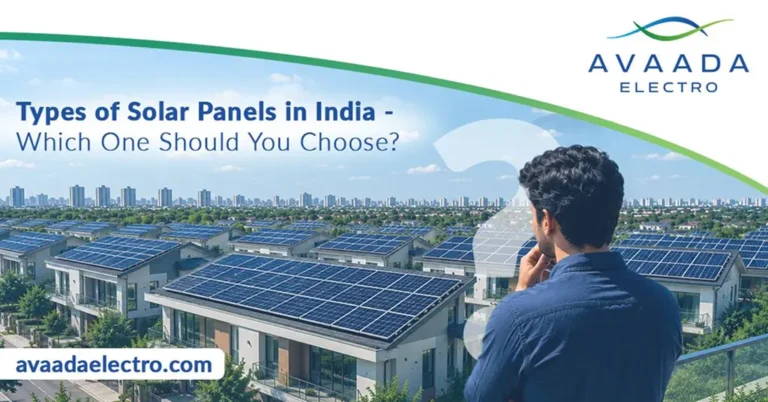

India’s solar sector is growing rapidly as residential, commercial, and industrial consumers shift toward renewable energy solutions. Climate conditions such as heat, dust, and monsoon exposure also influence solar panel performance in India. The most widely used types of solar panels in India include monocrystalline, thin-film, bifacial, and PERC modules. Among these, bifacial N-Type TOPCon technology is gaining attention because of its higher efficiency and lower degradation rates.
Types of Solar Panels in India
Several types of solar panels are available in India, each offering different levels of efficiency, durability, and cost. The most common options include:
Monocrystalline Solar Panels
According to the International Energy Agency (IEA), the solar PV capacity is set to more than double between 2025 and 2030 compared with the 2019 to 2024 period. Monocrystalline modules are among the most efficient of the different solar panel types. These panels are manufactured using single-crystal silicon, enabling better electron flow and improved energy conversion.
Here are some key features that highlight the advantages of monocrystalline solar panels:
- Improved efficiency range
- Lower space requirement
- Better low-light performance
- Lifespan of 25–30 years
- Uniform black appearance
Thin-Film Solar Panels
Thin-film technology is another important type of solar panel in India, especially for lightweight and flexible installations. These panels are created by depositing photovoltaic material onto surfaces such as glass, metal, or plastic. Thin-film modules generally operate at efficiencies of around 13% but perform relatively well in high-temperature environments.
Here are some key features that highlight the advantages of thin-film solar panels:
- Flexible and lightweight structure
- Better heat tolerance
- Easier installation on curved surfaces
- Lower manufacturing cost
TOPCon Bifacial Solar Panels
TOPCon Bifacial modules are among the fastest-growing types of panels because they generate electricity from both front and rear surfaces. These panels absorb reflected sunlight from the surrounding surface, increasing total energy output.
Bifacial modules consistently produce higher energy output than monofacial modules, with annual energy gains ranging from 1.52% to 2.67% depending on surface reflectivity. Most advanced bifacial modules now use N-Type TOPCon technology for improved reliability and performance.
Here are some key features that highlight the advantages of bifacial solar panels:
- Dual-sided power generation
- Higher energy output
- Lower degradation rates
- Glass-glass durability
- Better long-term energy output
Avaada Electro focuses on high-efficiency bifacial N-Type TOPCon modules aligned with India’s growing renewable energy requirements.
HJT Solar Panels
Heterojunction Technology (HJT) solar panels combine crystalline silicon with thin-film layers to improve energy generation and reduce power losses. They improve efficiency in high-temperature and low-light conditions, making HJT modules a popular choice for residential, commercial, and utility-scale solar installations.
Here are some key features that highlight the advantages of HJT solar panels:
- High energy conversion efficiency
- Excellent performance in low-light conditions
- Lower temperature coefficient for improved output in hot climates
- Reduced energy losses and enhanced durability
- Strong long-term performance with slower degradation rates
Flexible Solar Panels
Flexible solar panels are lightweight, glass-free alternatives to traditional rigid modules. They are made with thin photovoltaic cells embedded in durable, pliable materials; they can bend and adapt to curved surfaces, making them suitable for RVs, boats, tents, and roofs with limited load-bearing capacity.
Here are some key features that highlight the advantages of flexible solar panels:
- Lightweight and easy to transport
- Adaptable to curved and irregular surfaces
- Simple installation with minimal structural support
- Suitable for portable and off-grid applications
- Resistant to vibration and movement-related stress
PERC Solar Panels
Passivated Emitter and Rear Contact (PERC) technology improves conventional monocrystalline cells by adding a reflective rear layer that redirects unused sunlight back into the cell. PERC modules are widely used across residential and commercial rooftop systems.
Here are some key features that highlight the advantages of PERC solar panels:
- Improved energy conversion
- Better low-light performance
- Enhanced heat management
- Reliable long-term output
Comparison of Different Solar Panel Types
The table below compares the most common types of solar panels in India based on efficiency, lifespan, and applications.
Panel Type | Efficiency | Lifespan | Common Usage |
Monocrystalline | 18–22% | More than 25 years | Rooftop systems |
Thin-Film | 10–12% | 15–20 years | Flexible structures |
Bifacial TOPCon | 18–24%* | More than 25 years | Utility-scale projects Residential Rooftop |
PERC | 19–23% | More than 25 years | Residential rooftops |
*Including rear-side generation.
Factors to Consider Before Choosing Solar Panels
Selecting the right type of solar panel in India depends on several factors:
- Roof Space: High-efficiency modules, such as monocrystalline and bifacial panels, generate more electricity per square foot of rooftop area.
- Climate Conditions: Panels with better temperature coefficients maintain performance more effectively during Indian summers.
- Certifications: Consumers should look for BIS-, IEC-, and MNRE-approved modules to ensure quality assurance and compliance.
- Budget: Balancing upfront investment with long-term savings is important while selecting solar technology.
Read More – Advantages and Disadvantages of Solar Energy
Cost of Solar Panel Systems in India
Solar installation pricing varies depending on panel technology and system capacity. The 3kW solar panel price in India can be reduced under the PM Surya Ghar Muft Yojana subsidy scheme. Under the scheme, households will receive a subsidy upto INR to install solar panels on their roofs. The subsidy will cover up to 40% of the cost of the solar panels.
Avaada Electro's Solar Panel Selection Expertise
Choosing the right solar panel requires more than comparing efficiency figures. Proper rooftop assessment, electricity consumption analysis, and technology selection are equally important for long-term system performance.
We support customers through:
- Rooftop and shadow analysis
- Consumption-based system sizing
- Access to bifacial N-Type TOPCon modules
- BIS and IEC-certified solar products
- Integrated manufacturing capabilities in India
With a strong focus on advanced solar manufacturing, Avaada Electro continues to support India’s clean energy transition through its highly efficient made-in-India solar solutions.
Read More – How Do Solar Panels Work?
Conclusion
As India continues expanding its renewable energy capacity, advanced solar technologies are becoming increasingly important for improving electricity savings and long-term system performance. Understanding the types of solar panels available in the Indian market helps consumers make informed energy decisions. From monocrystalline and PERC modules to advanced bifacial TOPCon technology, each panel type offers distinct advantages in efficiency, durability, and energy output.
Connect with Avaada Electro for a customized solar assessment tailored to your rooftop and electricity needs.
FAQs
Which type of solar panel is suitable for a home in India?
Monocrystalline PERC and bifacial TOPCon panels are widely preferred for their higher efficiency, improved low-light performance, and longer operational life. These technologies also require less rooftop space while delivering consistent electricity generation across varying weather conditions.
What is the difference between monocrystalline and bifacial solar panels?
Monocrystalline panels generate electricity from one side, while bifacial panels generate power from both front and rear surfaces using reflected sunlight. Bifacial technology can improve overall electricity generation, particularly in elevated rooftop and utility-scale solar installations.
How long do solar panels last in India?
Most high-quality solar panels last between 25 and 30 years with proper maintenance. Advanced glass-glass bifacial modules generally offer lower degradation rates and better resistance against dust, humidity, and changing Indian weather conditions.
What is the 3kW solar panel price in India?
The 3kW solar panel price in India generally ranges from ₹1.6 Lakh to ₹2.15 Lakh, depending on the technology, installation type, and module efficiency. Government subsidies under the PM Surya Ghar scheme can further reduce the overall project cost.
Which solar panel performs better in high temperatures?
Advanced TOPCon and thin-film technologies generally operate more efficiently at high temperatures due to their improved temperature coefficients. It helps maintain stable electricity generation during peak summer conditions commonly experienced across several Indian states.