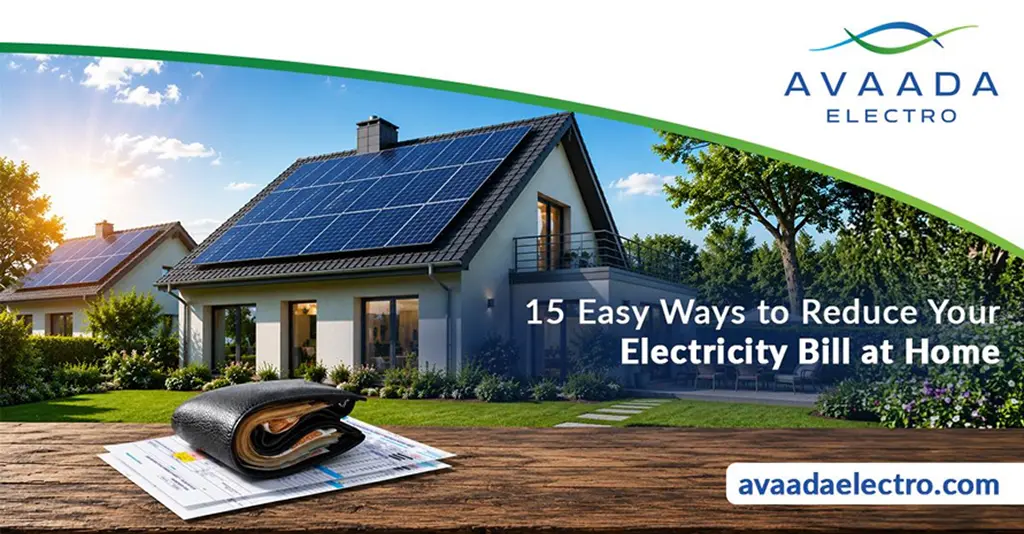
Electricity costs in India have increased steadily in recent years, especially during hot summer months when cooling appliances run for long periods. According to the Bureau of Energy Efficiency (BEE) and CLASP, thermal comfort (cooling) accounts for nearly 40% of total residential electricity use in India. Residential consumers are among the fastest-growing power-consuming segments in the country, making smart energy habits essential. For families actively searching for how to reduce electricity bill at home, making small changes in daily habits and appliance choices can lead to massive long-term financial relief.
Why Managing Power Matters in 2026
Lowering our domestic power usage offers great benefits for both our wallets and the environment. Understanding how to reduce electricity consumption helps Indian homes in several ways:
- It cuts down high monthly utility expenses.
- It protects heavy appliances from excessive wear and tear.
- It lowers the pressure on regional power grids during peak hours.
- It supports India’s green movement toward a cleaner future.
15 Proven Strategies to Cut Your Energy Costs
The Ministry of Power indicates that adopting energy-efficient practices can dramatically reduce a home’s energy use. As India pushes toward its clean energy goals, managing our power habits helps stabilize the national grid. Here are 15 ways through which you can cut your energy costs:
1. Upgrade to 5-Star BEE-Rated Appliances
The Bureau of Energy Efficiency (BEE) uses a 1-to-5 star rating system to rank the performance of an appliance. A 5-star-rated refrigerator or air conditioner consume significantly less energy than standard models, saving thousands of rupees over its lifespan.
2. Switch to LED Lighting
If you want to quickly learn how to save electricity, change older bulbs in your home for LED bulbs. Switching to LED bulbs is one of the quickest ways to cut your electricity bill, reducing your home’s lighting energy consumption as they emit much less heat and last drastically longer than incandescent options.
3. Install BLDC Ceiling Fans
Old ceiling fans tend to consume more power. Brushless Direct Current (BLDC) fans operate on advanced motor technology that drops power usage, reducing fan electricity usage.
4. Optimize Air Conditioner Settings
According to the Bureau of Energy Efficiency (BEE), every time you lower the temperature degree below 24°C, it increases energy use by 6% to 8%. Therefore, setting your AC temperature to 24°C provides ideal comfort while reducing electricity consumption and bills.
5. Optimize Refrigerator Temperature and Placement
Refrigerators work all the time, making them one of the primary drivers of continuous household power consumption. By setting your refrigerator temperature at or below 40°F (4°C) or the fresh food compartment and setting your freezer to 0°F (-18°C) for the freezer keeps food perfectly preserved without drawing unnecessary power.
6. Track Patterns with Energy Meters
Using smart power strips or home energy monitors tells you which appliances draw the most power. Tracking them provides an idea for how to reduce electric bill amounts month after month.
7. Run Full Loads in Large Appliances
Washing machines use a lot of water and power. Avoid running them half-empty and use cold-water cycles whenever possible to avoid high heating costs.
8. Use Natural Light and Ventilation
Open your curtains during the day to utilize natural sunlight instead of switching on room lights. In pleasant weather, opening windows allows fresh air to circulate, reducing the need for air conditioning.
9. Use Energy-Efficient Water Pumps with Auto-Controllers
An unmaintained pump motor may cause a tank to overflow, leading to energy wastage. Installing an automatic water-level controller makes sure that the pump shuts off immediately when the tank is full, helping you save household energy effectively.
10. Switch to Solar Power
Transitioning to solar energy is the ultimate way to secure long-term energy independence. Installing solar electricity for home use allows you to generate your own clean power. Under the government’s PM – Surya Ghar: Muft Bijli Yojana, households receive a financial subsidy of up to ₹78,000 for installing rooftop solar systems up to 3 kW.
Avaada Electro plays a major role in this system by manufacturing advanced, highly efficient solar modules that maximize daily power generation.
11. Practice Smart Device Charging
Do not leave mobile phones or laptops charging overnight. Once a device hits 100%, disconnect the charger. Keeping chargers plugged into live sockets consumes idle power over time.
12. Clean and Maintain Your Appliances
Dust and dirt force appliance motors to work twice as hard. Clean your AC filters every month, clear out refrigerator coils, and wipe down fan blades regularly to maintain top operating efficiency.
13. Use Efficient Cooking Tools
Electric induction cooktops are highly efficient as they transfer heat directly to the cookware. When cooking, always keep lids on pots to trap heat and speed up cooking times.
14. Set Up Smart Home Automation
Smart plugs and motion sensors can automatically shut down lights and appliances when a room is empty. Making use of these modern tools shows families how to save household energy without changing their lifestyle.
15. Check Your Monthly Energy Bill
Log in to your local electricity distribution company (DISCOM) portal regularly. Monitoring your monthly consumption helps you catch sudden usage spikes early and stay within lower, more affordable tariff slabs.
Read More – Best Solar Panels for Your Home
Quick Comparison of Home Energy Actions
Appliance Category | Recommended Action | Estimated Energy Savings | Government/Industry Source |
Air Conditioner | Maintain at 24°C | 20% – 30% Savings | Bureau of Energy Efficiency (BEE) |
Ceiling Fan | Upgrade to BLDC Motor | 50% – 70% Savings | BEE Standards & Labelling |
Rooftop Solar | 3 kW System Installation | Up to 100% of Daytime Load |
Conclusion
If you’re wondering how to save energy and reduce your monthly electricity bills, rooftop solar is one of the most effective long-term solutions available today. As India accelerates its renewable energy journey, companies such as Avaada Electro are helping make solar adoption easier through advanced solar manufacturing and high-performance solar technologies designed for long-term reliability. With the right rooftop solar system, homeowners can significantly reduce their dependence on grid power while moving towards greater energy independence.
FAQs
How can I reduce my electricity bill at home immediately?
Solar panels are primarily made from silicon (the semiconductor), tempered glass (front cover), ethylene-vinyl acetate (EVA encapsulant), a polymer backsheet, an anodized aluminum frame, silver paste (metal contacts), and a junction box with bypass diodes. High-efficiency solar cells also use aluminum oxide and silicon nitride passivation layers.
Which appliances consume the most electricity in Indian homes?
A solar cell is a single photovoltaic unit that converts sunlight into a small DC voltage. A solar panel is an assembly of multiple solar cells connected in series and parallel to produce a usable voltage and power output.
What is the ideal temperature for AC to save electricity?
The solar cell manufacturing process involves silicon purification, iIngot growth, wafer slicing, texturization and doping, anti-reflective coating, metal contact printing, and cell testing and sorting. Afterward, the cells go into module assembly.
What government subsidies are available for energy-efficient appliances?
Standard silicon solar panels use largely benign materials. However, the manufacturing process uses hazardous chemicals, including hydrochloric acid, hydrofluoric acid, and trichlorosilane. Some thin-film panels contain cadmium or selenide compounds that require specialized handling.
How can I track my home's electricity consumption in real-time?
Solar panel recycling involves separating the aluminum frame, breaking down the glass, and recovering silicon cells. Silicon can be reprocessed and reused. Silver contacts can be recovered. EVA and backsheet polymers are more complex to recycle.