
Rooftops across India are turning into personal power plants, and it is easier now than it has ever been. The PM Surya Ghar: Muft Bijli Yojana has brought solar within reach of everyday homeowners, and the 1kW system sits right at the sweet spot of affordability and practicality.
Even a small 1kW setup can cut your electricity bill by around ₹1,200–₹1,800 every month. After the central subsidy of ₹30,000, the actual out-of-pocket cost can drop to as little as ₹25,000–₹40,000. That means most homeowners recover their investment in under four years and then enjoy virtually free power for the next two decades.
What is a 1kW Solar Panel System?
A 1 kilowatt solar system is one that can generate up to 1 kilowatt of electricity at peak sunlight. That number refers to the total combined output of all the panels together, not the capacity of any single panel.
In real-world conditions across most of India, a 1000 watt solar panel price produces roughly 6–7 units of electricity per day. Over a full year, that works out to about 2,200–2,600 units, which is comfortably enough for a small household running essential appliances.
Components of a 1kW Solar Setup
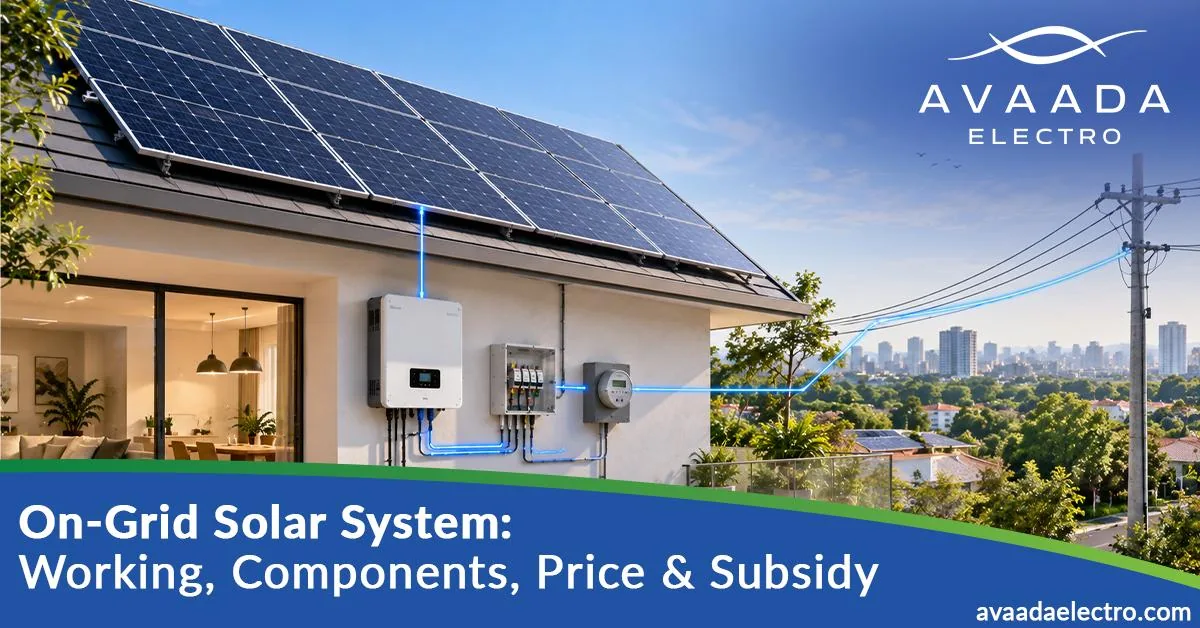
- Solar panels (typically 3–4 high-efficiency modules)
- Solar inverter (to convert DC to AC power)
- Mounting structures (for your rooftop)
- Cables and junction box
- Net meter (for on-grid connections)
- Battery (optional for hybrid or off-grid systems)
How much space is required for the installation?
A 1kW solar system typically needs around 100 square feet of unobstructed rooftop space with full sun exposure for at least 5–6 hours daily.
Compatibility of 1kW Solar System
This size is perfect for –
- Small homes or apartments using up to 200 units/month
- Shops or small offices with moderate daytime usage
- Rural households with limited or intermittent grid supply
How Much Does a 1000 watt solar panel price in India
The one kw solar panel price in India typically falls between ₹55,000 and ₹1.20 lakh before subsidy. The final number depends on the type of system you choose, the panel technology, your location, and whether your roof needs any special mounting.
India’s domestic solar manufacturing capacity has grown substantially in recent years. This has kept prices competitive even as panel efficiency has improved. Many manufacturers now offer N-type TOPCon and bifacial modules in the 630–720 Wp range, which means fewer panels are needed for a 1kW installation.
Cost Breakdown by System Type
System Type | Description | Approx. Cost (Before Subsidy) | Best Suited For |
On-Grid System | Connected to the grid, no battery | ₹55,000–₹70,000 | Homes with reliable grid supply |
Hybrid System | Includes limited battery backup | ₹75,000–₹95,000 | Homes with short power cuts |
Off-Grid System | Standalone with full battery storage | ₹95,000–₹1.20 lakh | Rural or no-grid areas |
Read More – Government Solar Panel Scheme
Solar Subsidy on 1kW System – PM Surya Ghar Yojana in 2026
Launched in early 2024, the PM Surya Ghar: Muft Bijli Yojana is the central government’s flagship rooftop solar scheme for residential homeowners. If you install a system of up to 3kW, you qualify for a direct subsidy credited straight to your bank account after installation is verified by your local DISCOM.
For a 1kW system, the central subsidy is ₹30,000. This is not a discount from the vendor it is actual money transferred to your account, making it a real and bankable benefit.
Updated Subsidy Table (FY2026)
System Capacity | Central Subsidy (₹) | Net Cost After Subsidy (Approx.) |
1 kW | ₹30,000 | ₹25,000–₹40,000 |
2 kW | ₹60,000 | ₹60,000–₹80,000 |
₹78,000 (maximum) | ₹80,000–₹1,00,000 |
This subsidy model makes sure that even small systems, like a 1kW unit, deliver excellent returns.
For example, a ₹65,000 system effectively costs just ₹35,000 after subsidy. This can save ₹10,000–₹12,000 per year in electricity bills, paying back the investment in about 3.5 – 4 years.
What Can a 1kW Solar System Run?
Appliance | Wattage | Daily Usage (Hours) | Can a 1kW System Run It? |
LED Bulbs (5–6) | 30–36W total | 6–8 hrs | Yes, easily |
Ceiling Fans (2) | 60–80W total | 10–12 hrs | Yes |
LED Television (32 inch) | 40–60W | 4–5 hrs | Yes |
Small Refrigerator (165L) | 90–120W | 24 hrs | Yes (on-grid/hybrid) |
Laptop + Mobile Charging | 60–80W | 3–4 hrs | Yes |
1-Ton Air Conditioner | 900–1100W | – | No needs 2kW+ |
Water Heater / Geyser | 1500–2000W | – | No needs 2kW+ |
ROI and Payback Period for a 1kW Solar System
The return on investment (ROI) from a 1 kilowatt solar system in 2026 is among the highest of any home improvement project.
Here’s what your numbers would look like –
Parameter | Details (2026 Estimate) |
System Cost (After Subsidy) | ₹35,000 – ₹45,000 |
Average Monthly Savings | ₹900 – ₹1,200 |
Annual Savings | ₹10,000 – ₹14,000 |
Payback Period | 3.5 – 4.5 years |
System Life | 25 years |
Lifetime Savings | ₹3 lakh – ₹3.5 lakh |
After the payback period, your electricity is virtually free. It is except for minimal cleaning and occasional inverter servicing. It all comes with a 400–500% ROI over its lifetime, along with long-term energy security.
Real Benefits of Going Solar with a 1kW System
A 1kW solar panel system is not only a clean energy upgrade but a long-term investment which provides steady returns over a period of more than twenty years. Since small families are the intended customers, it is the right mix of affordability, practicality, and performance.
Let’s look at the key benefits:
Your electricity bill drops from day one
A 1kW system has a range of 4-5 units per day, which will cost 700-1200 per month saved, at your usage rate of electricity. That is almost 12,000 a year, with over 3 lakh saved lifetime.
You recover your money in under 4 years
Using the PM Surya Ghar subsidy, the home owners will normally recover their capital after 3.5 to 4.5 years. The system has worked effectively for 25 years, and it saves decades of free energy.
Every unit you generate keeps roughly 0.9 kg of CO2 out of the air
A 1kW solar system mitigates an average of 1.2-1.5 tonnes of CO 2/year which is approximately the same amount of CO 2 as planting 50 trees in a year. Thus, each home going solar will help make the environment a better place.
No more worrying about tariff hikes or power cuts
Solar is shielding you against power shortages and tariff increases. The hybrid or off-grid systems in unstable electricity areas guarantee that you will be able to keep your necessities going.
Your home becomes more valuable to future buyers too
Houses that possess a rooftop solar system tend to be priced higher because customers perceive that a reduction in utility and reliance on power is a significant incentive.
Major Factors Affecting the 1000 watt solar panel price
Although the fundamental cost of solar has continued to decrease, there are still a few forces that can affect the cost of your 1kW system, including:
Where you live matters more than you think
In states such as Rajasthan, Gujarat, and Maharashtra, houses get additional sunlight per year, which enhances the output of the systems and ROI. Panels might have to be more efficient in shadier or hilly locations.
The type of panel you choose changes both cost and output
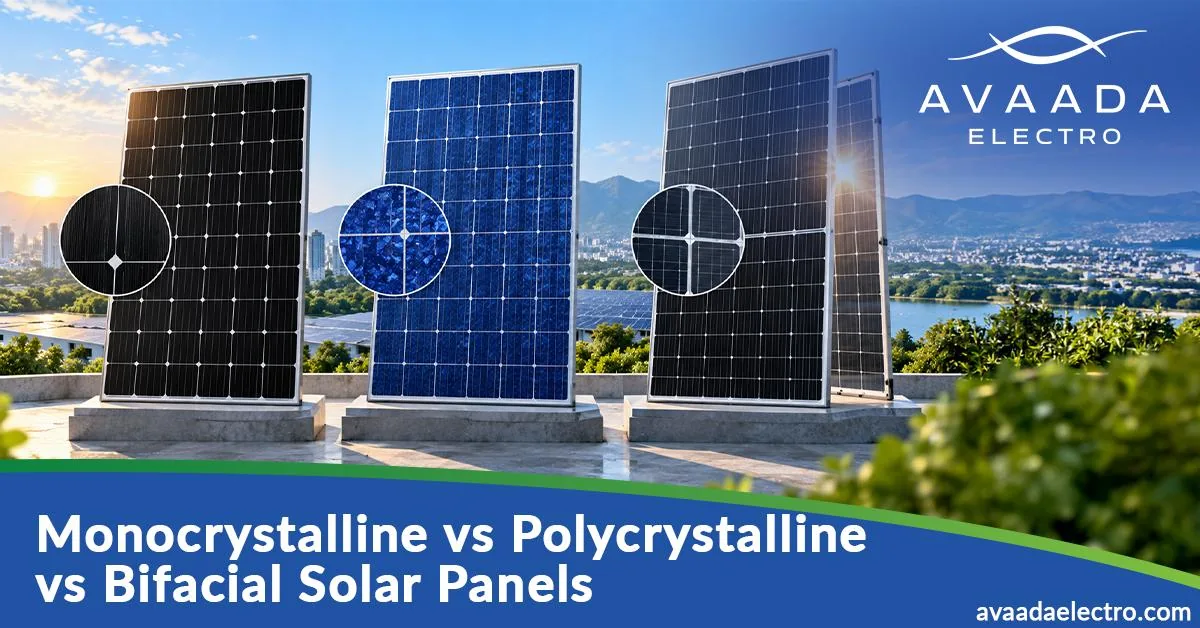
Poly-crystalline panels – The cheapest, 16-17% efficiency.
Mono-PERC panels 19-21% efficiency with a slight premium.
N-type TOPCon panels (such as Avaada Electro) – 22-23% efficiency, high-end with higher yields in the long run.
Your rooftop’s shape and material can add or save money
Roofs with flat RCC are the simplest to install and the least costly roofs. Tilted frames or Tin sheds will need extra mounting hardware and will be a little more expensive.
On-grid is almost always the cheapest starting point
On-grid systems are the least expensive. Off-grid or hybrid configurations with battery cost 20-30% more because of the storage element.
Cheaper panels can cost you more over time
Positively rated panels and inverters, certified by MNRE using branded companies, can be more expensive initially but have a longer lifespan, a reduced level of degradation and subsidy eligibility.
Which Type of Solar Panel Should You Choose for a 1kW System
Panel Type | Efficiency | Cost Level | Best For | Warranty |
Polycrystalline | 16–17% | Lowest | Tight budgets, ample roof space | 10–15 years |
Mono-PERC | 19–21% | Mid-range | Most residential rooftops | 25 years |
N-Type TOPCon | 22–23%+ | Premium | Limited space, hot climates | 30 years |
Bifacial TOPCon | Up to 25% | Premium | Open flat rooftops | 30 years |
For most homeowners installing a 1kW system, Mono-PERC is the sweet spot between performance and price. If your roof is smaller or you live in a high-temperature region like Rajasthan or Gujarat, N-type TOPCon panels are worth the premium.
Avaada Electro
Avaada Electro, a company within the Avaada Group, is an Indian solar panel manufacturer. Its modules are ALMM & ALCM-listed and hence qualify for government subsidies under the PM Surya Ghar program.
Feature | Avaada Electro |
Core Business | Solar module manufacturing |
Panel Technology | N-Type TOPCon (Up to 23%+ efficiency) |
Manufacturing | AI-enabled,automated at Butibori plant |
Certifications | ALMM, UL, BIS, IEC compliant |
Warranty | 30-year linear performance warranty |
Market Reach | Nationwide distribution |
Key Highlights
- Module Production – N-type TOPCon bifacial glass-to-glass modules (630–720 Wp).
- Subsidy Compliance – MNRE and ALMM certification ensure faster approvals.
- EPC & Rooftop Services – Turnkey projects with O&M support.
- AI-Enabled Manufacturing – Ensures consistency, reduced defects, and long-term performance.
ALMM-listed modules are eligible for applicable subsidy programs and can be used in residential rooftop systems
Read More – 2Kw Solar System Price In India With Subsidy
How to Maintain a 1kW Solar System After Installation
Recommended content:
- Panel cleaning: Wipe panels every 2–4 weeks with a soft cloth and plain water. In dusty cities or post-monsoon, more frequent cleaning helps. Avoid harsh chemicals.
- Inverter check: Inspect the inverter display once a month. Modern string inverters are largely maintenance-free but should be serviced by a professional every 3–5 years.
- Net meter reading: Check your net meter reading monthly to track export credits and spot any generation drop early.
- Annual inspection: Have your installer do a visual and electrical check once a year. Look for loose wiring, rust on mounting structures, or bird nesting under panels.
- Battery maintenance (hybrid/off-grid): Check electrolyte levels if using lead-acid batteries. Lithium batteries are maintenance-free.
Estimated annual maintenance cost: ₹1,000–₹3,000 for a standard residential 1kW system. This is often included in the first 1–2 years by installers as part of the AMC (Annual Maintenance Contract).
Final Takeaway
An example of the most intelligent and least expensive clean energy investments that a homeowner can make in 2026 is a 1kW solar panel system. As the panel prices have been dropping and the central subsidies are covering a greater proportion of the expenses, solar is now something that almost every Indian household can afford.
A small 1kW system can break even in a few years, and then proceed to give decades of free power. Other than saving money, it is a direct path towards a cleaner lifestyle, reduced emissions and a sustainable future.
High-efficiency modules that meet required certification and subsidy norms can support better system performance when installed correctly.
Waiting to embark on a solar journey, now is the right moment to do it. A small system like 1kW can have a huge effect in the long run, both on your wallet and the planet.
Frequently Asked Questions
What is the amount of power produced by a 1kW solar system on a daily basis?
Average of 4-5 units every day or 1500-1800 units annually, according to place and weather.
What is the size of an area required to have a 1kW solar system?
About 100 sq. ft. of unshady roof area.
Can a 1kW solar system run an AC?
No. A 1kW system will be used for household non-essential items such as lights, fans, TV, and refrigerator. For ACs, consider 3–5 kW systems.
Is a subsidy on 1kW solar systems available?
Yes. Under the PM Surya Ghar Yojana, you will receive a subsidy of 30000 INR to your bank account upon installation and inspection.
What is the lifetime of a solar panel?
The majority of panels have a life span of more than 30 years and require minimal maintenance, and the panels retain approximately 80-85% of their efficiency even at the expiry of the panel.
Which solar installer do I select?
Choose a vendor of MNRE which is registered in the PM Surya Ghar portal. This makes it eligible for subsidies and installation of standard quality.