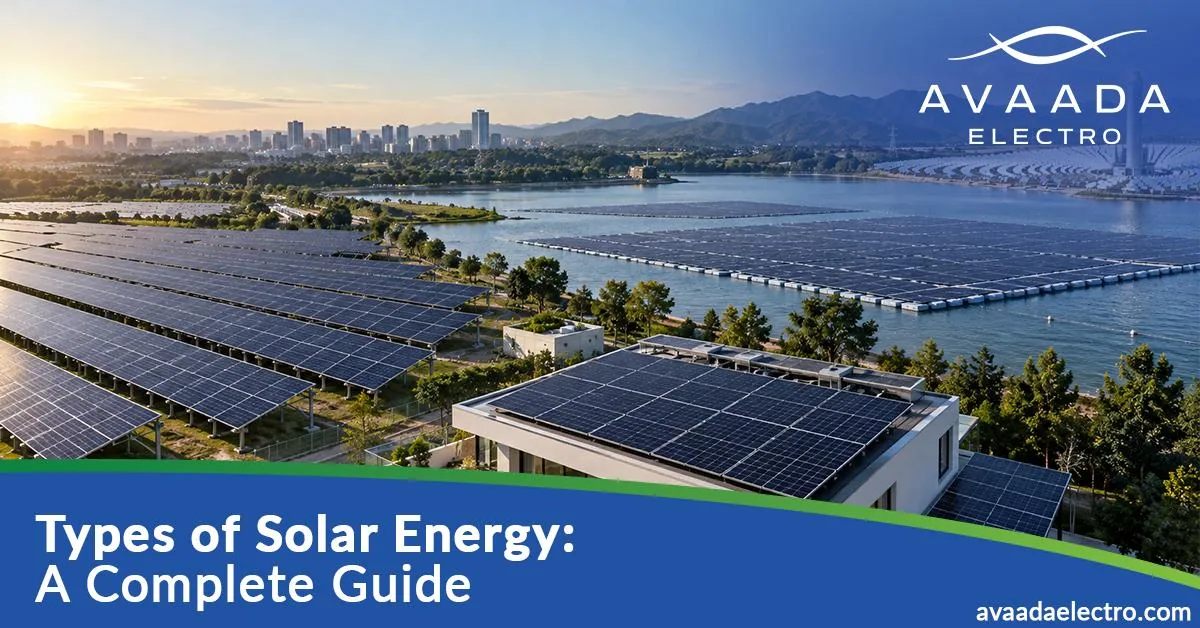


Installing a rooftop solar system in India today typically costs between ₹45,000 and ₹7 lakh, depending on system size and with the PM Surya Ghar subsidy, most homeowners bring that solar panels for home cost down by ₹48,000 to ₹78,000 before the first panel goes up.
The ever-increasing prices of electricity in India have increased in the last four years by 20-35 per cent in the major metro cities like Delhi, Mumbai, Bengaluru, Pune, and Hyderabad.
INR 4,000-12,000 is now the standard monthly electricity bill of households with air conditioning systems, a number of heavy appliances, and day-to-day electricity demand. This is forcing homeowners to seek avenues to cut down on the recurring electricity expenses.
Meanwhile, a dramatic change in solar energy, which was seen as a costly or complex process, has taken place.
There were three historic transformations that occurred:
First, the PM Surya Ghar Muft Bijli Yojana (PMSGY) was introduced by the Central Government through a rooftop subsidy.
Second, the production capacity of solar panels in India was increased, which resulted in cheaper systems and their easy accessibility of best plus solar panels for home use.
Third, the State DISCOMs and subsidies have enhanced awareness of net metering and rooftop policy.
The result:
- Home-mounted solar systems experienced a 4-fold increase in applications in a year.
- The solar panel installation cost is now the lowest in the history of India.
- Depending on the location and the use, a rooftop system recovers its cost in 2.5-6 years.
As reported by the JMK Research & IEEFA report:
- Over 57.9 lakh rooftop applications of solar under PM Surya Ghar.
- Already commissioned residential rooftop capacity of 4,946 MW.
- INR 9281 crore subsidy paid to house owners.
It is the most rapid adoption that has ever been seen in the residential segment since the introduction of solar policies in 2010.
Solar power has ceased to be a luxury and a secondary option, but has become a mainstream domestic investment. The best plus solar panels for home use are now accessible to most Indian homeowners.
In this blog, we will have a look at the solar panel installation for home cost in India, along with its complete pricing.
Understanding the Types of Solar Systems
When evaluating solar panels for home cost, choosing the right system type is critical. In India, home solar power comes in three broad categories:
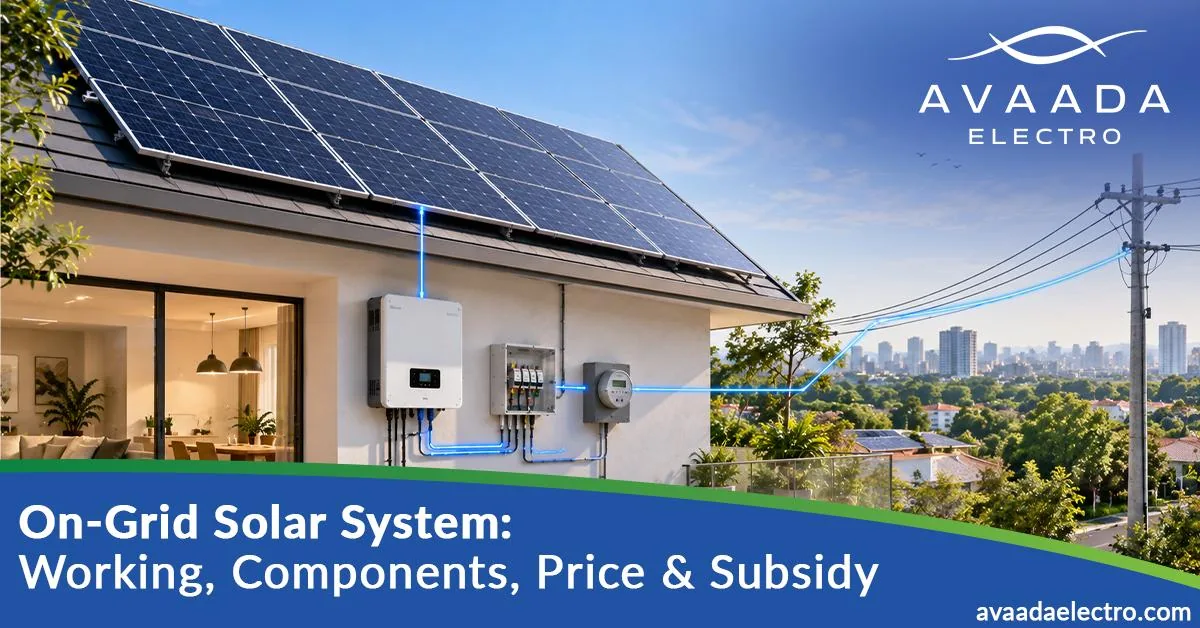
On-Grid Solar System
Connects directly to the electricity grid. No batteries needed. Surplus energy is exported to the grid via net metering, effectively zeroing out your bill. The most popular and affordable choice for urban and semi-urban Indian homes when using best plus solar panels for home. Subsidy-eligible under PM Surya Ghar.
Best for: Homes with stable grid supply and high daytime electricity use.
Hybrid Solar System
Works like a grid-tied system but also supports a battery bank. Stores surplus energy for use at night or during power cuts. More expensive upfront but offers higher energy independence with best plus solar panels for home.
Best for: Homes in areas with frequent power outages.
Off-Grid Solar System
Completely independent of the grid. Runs entirely on battery-stored solar energy. Highest upfront cost and maintenance overhead.
Best for: Rural homes or sites with no reliable grid access.
System Comparison Table
Feature | On-Grid | Hybrid | Off-Grid |
Battery Required | No | Optional | Yes |
Works during power cut | No | Yes | Yes |
Cost (Relative) | Lowest | Medium | Highest |
Subsidy Eligible | Yes | Yes (panels) | Limited |
Best ROI | Fastest (2–4 yrs) | 3–5 yrs | 5–8 yrs |
Most Common in India | Yes | Growing | Rural Use |
What Actually Affects the Cost of Solar Installation
When evaluating solar panel installation in India, several technical and geographical factors influence the final solar panel cost:
Type of Solar Panel
When evaluating solar panel installation in india, several technical and geographical factors influence the final home solar system cost. Here is what actually drives those variations:
Inverter Type
Grid-tied inverters cost least. Hybrid inverters cost 25–35% more but future-proof your system for batteries. Off-grid inverters carry the highest price tag and require a fully designed battery bank.
Roof Type and Structure
Metal roofs are the cheapest to mount on. Flat RCC terraces may need elevated tilt frames (adds ₹8,000–₹20,000 for larger systems). Complex or sloped roofs add labour time and material cost.
Wiring, Earthing, and Safety Components
Cable length, earthing pits, AC/DC protection boxes, and surge protection are all safety-critical and add to cost. Never negotiate these away they are what keeps your home safe during a fault.
Installer Quality and Brand Warranty
Established installers typically charge 8–15% more than unbranded ones but deliver better workmanship, reliable after-sales support, and smoother subsidy processing.
Read More – How to Apply for Solar Subsidies in India
Detailed Cost Breakdown by System Size
The cost of the best plus solar panels for home use varies significantly based on capacity. Here is the complete breakdown:
System Size | Cost Before Subsidy (₹) | Cost After Subsidy (₹) | Best Suited For |
1 kW | ₹75,000 – ₹85,000 | ₹45,000 – ₹55,000 | Small homes (fans, lights, TV) |
2 kW | ₹1,50,000 – ₹1,70,000 | ₹90,000 – ₹1,10,000 | 2 BHK homes |
3 kW | ₹1,89,000 – ₹2,15,000 | ₹1,14,000 – ₹1,40,000 | Average home (fridge + limited AC) |
4 kW | ₹2,52,000 – ₹2,85,600 | Partial subsidy (20% only) | Large 3–4 BHK homes |
5 kW | ₹3,15,000 – ₹3,57,000 | ₹1,80,000 – ₹2,40,000 | Villas, bungalows, duplexes |
10 kW | ₹6,30,000 – ₹7,14,000 | ₹5,50,000 – ₹6,00,000 | Small businesses, shops, offices |
Most Indian homes install a 3 kW to 5 kW system. This is enough to reduce 80 to 100 percent of the bill value through net metering.
3 kW Solar System Detailed Subsidy Breakdown
The 3 kW system is the single most popular capacity for Indian homes. Here is the complete solar panel home installation cost story for a 3 kW on-grid installation:
Cost Component | Estimated Amount (₹) |
Solar Panels (3 kW Mono PERC / TOPCon) | ₹90,000 – ₹1,05,000 |
Inverter (On-Grid, 3 kW) | ₹25,000 – ₹35,000 |
Mounting Structure + Hardware | ₹18,000 – ₹25,000 |
DC/AC Wiring, Earthing, Protection | ₹15,000 – ₹22,000 |
Installation Labour | ₹10,000 – ₹15,000 |
Net Meter Application Fee | ₹500 – ₹2,000 |
TOTAL (Before Subsidy) | ~₹1,89,000 – ₹2,15,000 |
PM Surya Ghar Subsidy (40% on 3 kW) | –₹78,000 |
NET COST TO HOMEOWNER | ₹1,11,000 – ₹1,37,000 |
Solar Panel Price Per Watt (₹/Wp) By Technology
Understanding solar panel cost per watt helps you compare quotes effectively:
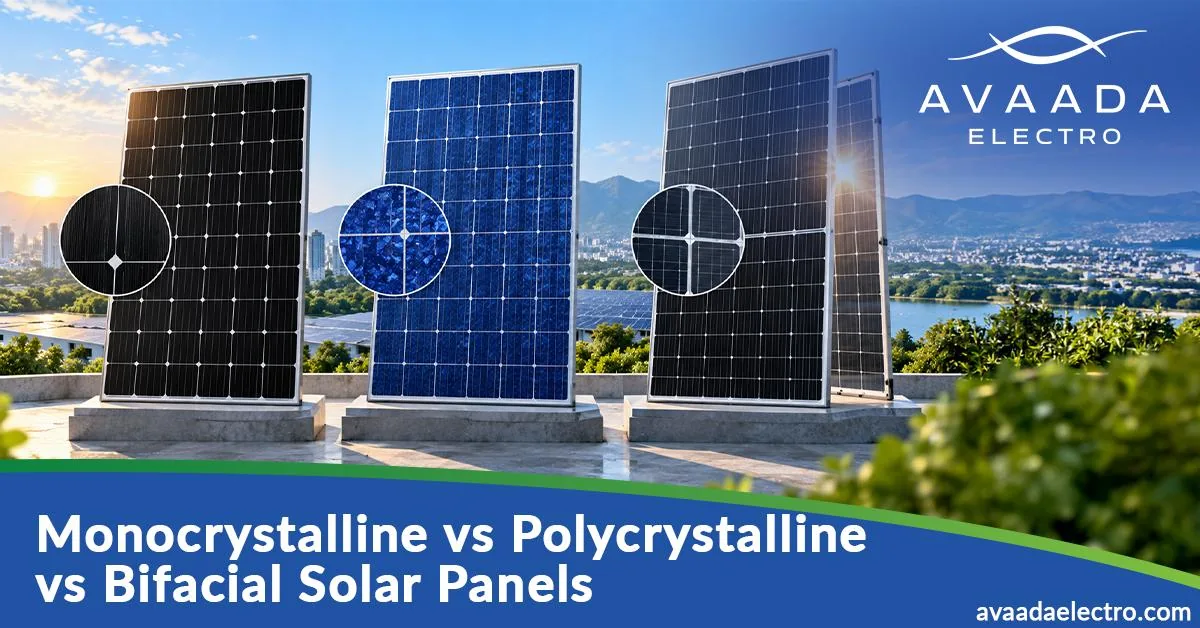
Panel Type | Price (₹/Wp) | Efficiency | Recommended For |
Polycrystalline | ₹38 – ₹42 | Moderate | Budget-conscious buyers with ample roof space |
Mono PERC | ₹42 – ₹48 | High | Most urban and semi-urban homes |
N-Type TOPCon (Latest) | ₹48 – ₹55 | Very High (22%+) | Limited roof space / premium installs |
Monthly Electricity Savings by System Size
The solar panels for home cost is only half the story savings are where the real value lies:
System Size | Typical Monthly Generation | Avg. Monthly Savings (₹) | Annual Savings (₹) |
2 kW | ~200–240 units | ₹1,600 – ₹2,200 | ₹19,200 – ₹26,400 |
3 kW | ~300–360 units | ₹2,500 – ₹4,000 | ₹30,000 – ₹48,000 |
5 kW | ~500–600 units | ₹4,500 – ₹6,500 | ₹54,000 – ₹78,000 |
10 kW | ~1,000–1,200 units | ₹8,000 – ₹12,000 | ₹96,000 – ₹1,44,000 |
Payback Period Calculation How Fast Does Solar Pay Back?
The formula is straightforward:
Payback Period = Net System Cost (after subsidy) ÷ Monthly Savings
Example 3 kW system, net cost after subsidy ₹1,20,000, monthly savings ₹3,500:
- Payback = ₹1,20,000 ÷ ₹3,500 = ~34 months (under 3 years)
- After payback: effectively free electricity for the remaining 18–22 years of panel life.
- A well-installed solar system delivers an ROI of 18–28% annually better than most fixed-income instruments.
Real Case Study Kanpur Homeowner
A 5 kW hybrid system installed in Kanpur, Uttar Pradesh (reported by Saur Energy):
- Monthly bill before solar: ₹12,000.
- Monthly bill after solar: ₹3,500.
- Monthly savings: ₹8,500.
- Battery backup ensures power even during load shedding.
- Full payback achieved in approximately 30 months.
PM Surya Ghar Subsidy Everything You Need to Know
System Size | Subsidy Percentage | Max Subsidy Amount (₹) | Eligibility |
Up to 2 kW | 40% | ₹48,000 | All residential connections |
2 kW to 3 kW | 40% (up to 2 kW) + 20% above | ₹78,000 (combined cap) | All residential connections |
Above 3 kW | 20% (on capacity above 2 kW) | ₹78,000 (same cap) | Residential only |
Above 10 kW | Not eligible |
| Commercial/industrial, not residential |
Who Is Eligible for the Subsidy?
- Indian residential property owner with a valid electricity connection.
- Must apply through the official portal: pmsuryaghar.gov.in before installation begins.
- Must use an MNRE-empanelled vendor non-empanelled installers disqualify you.
- Only one subsidy per electricity consumer number.
- Subsidy is paid directly to the homeowner’s bank account, not the vendor.
Common Reasons Subsidy Gets Delayed or Rejected
- Installing before getting Technical Feasibility Approval from DISCOM.
- Using a vendor not on the empanelled list.
- Incomplete documentation upload on the portal.
- Bank account details mismatch or cancelled cheque not uploaded.
- Net meter not installed or commissioning certificate not generated.
Step-by-Step Installation Process Under PM Surya Ghar
Step 1 Register on the PM Surya Ghar National Portal
Visit pmsuryaghar.gov.in. Register with your state, DISCOM name, and mobile number. Upload your electricity bill and rooftop details. This generates your application ID keep it for all future follow-ups. This step is essential for installing best plus solar panels for home.
Step 2 Choose an MNRE-Empanelled Vendor
The subsidy is only valid when the installation is done by an MNRE-approved vendor. Use your portal dashboard to view and compare empanelled vendors. Choosing a non-empanelled vendor forfeits the subsidy.
Step 3 Vendor Site Survey and Technical Feasibility
The vendor visits your roof to measure usable area, check shading, assess the wiring path, and determine final system size. They submit a technical feasibility request to your DISCOM through the portal. No installation begins until DISCOM approves.
Step 4 System Installation
Once technical approval is granted, the vendor installs panels, inverter, mounting structure, safety components, and earthing. The system is tested for voltage, wiring integrity, and safety compliance. Completion photos and documentation are uploaded to the portal.
Step 5 Net Meter Installation and Grid Synchronisation
Your DISCOM replaces the standard meter with a bidirectional net meter. A DISCOM engineer inspects and certifies the system. A commissioning certificate is issued on the portal this is the key milestone that triggers the subsidy process.
Step 6 Subsidy Credited to Your Bank Account
After commissioning, upload your bank details and a cancelled cheque. The subsidy up to ₹78,000 is transferred directly to your account within 30–60 days. The vendor receives nothing; the subsidy is yours.
Why Choose Avaada Electro for Your Home Solar Installation
Avaada Electro combines the manufacturing depth of the Avaada Group with hands-on installation and post-commissioning support. For homeowners seeking best plus solar panels for home use in India, that means one accountable partner from the panel leaving the factory to the subsidy arriving in your bank account.
What Avaada Electro Offers | Why It Matters for You |
N-Type TOPCon Panels (630–720 Wp, 23%+ efficiency) | More power per sq.ft. ideal for homes with limited roof space |
ALMM-Listed and BIS/IEC/UL Certified | Subsidy-eligible; meets international quality benchmarks |
AI-Powered Robotic Production (Nagpur) | Uniform quality and low degradation over 25+ years |
30-Year Linear Performance Warranty | Guaranteed output thresholds not just a paper promise |
End-to-End EPC Services | Single point of accountability from design to O&M |
Full PM Surya Ghar Subsidy Assistance | No paperwork headaches handled for you |
Pan-India Network | Service and support wherever you are |
Read More – Solar Panel Companies In India
Conclusion
Solar power is no longer a future investment it’s the most financially rational energy decision an Indian homeowner can make today. With falling hardware prices, up to ₹78,000 in central subsidies, and near-zero bills through net metering, the average 3–5 kW system pays for itself in under 3 years and runs free for the next 20+.
- Cuts electricity bills by 80–100%.
- Pays for itself in 2.5–4 years for most Indian homes.
- Free electricity for 20+ years after payback.
- Reduces your home’s carbon footprint by up to 12 tonnes of CO₂ annually (10 kW system).
- Strengthens India’s energy security and reduces import dependency.
Frequently Asked Questions
What is the cost of a 3 kW rooftop solar system in India?
A 3 kW on-grid solar system typically costs ₹1,89,000 to ₹2,15,000 before the government subsidy. After the PM Surya Ghar subsidy (up to ₹78,000), the net cost to a homeowner is approximately ₹1,11,000 to ₹1,37,000. Exact pricing varies by panel type, inverter brand, city, and installer.
Can apartment or flat owners install best plus solar panels for home?
Yes, with conditions. If you own a flat, you need written permission from your housing society and a society resolution approving the installation of best plus solar panels for home. If you’re a tenant, you need a No Objection Certificate (NOC) from the property owner. The electricity connection used for net metering must be in your name. The process is doable but involves 2–3 extra steps compared to a standalone home.
How much roof space do I need for solar panels?
As a general rule, you need roughly 80–100 square feet of shade-free, south-facing roof area per kilowatt (kW) of solar capacity. A 3 kW system needs around 250–300 sq.ft. A 5 kW system needs 400–450 sq.ft. This is usable, unshaded area not your total roof size.
Does the PM Surya Ghar subsidy apply to battery or hybrid systems?
The central subsidy covers the solar panel system. Under the current PM Surya Ghar scheme, the subsidy is applied to on-grid and hybrid systems (on the solar component), but not to the battery itself. Check the latest state-specific scheme guidelines, as some states offer additional incentives for battery-backed systems.
How long do solar panels last?
Most quality solar panels including Mono PERC and N-Type TOPCon carry a 25-year performance warranty and continue producing power well beyond that. Inverters typically need replacement after 8–12 years (costing ₹15,000–₹35,000 depending on capacity). Mounting structures and wiring should be inspected annually.
What is net metering and how does it reduce my electricity bill?
Net metering is a billing arrangement where your bidirectional meter tracks both the energy you consume from the grid and the surplus energy your solar system exports to it. At billing time, you pay only the net difference. For a typical Indian home with a 3 kW system, net metering can reduce monthly bills by 80–100% during peak solar months.
What are the hidden costs in solar installation?
Common hidden costs include: electrical panel upgrades if your home’s wiring is outdated (₹5,000–₹15,000), roof repair or waterproofing before mounting, DISCOM connection upgrade fees if your sanctioned load is insufficient, and inverter replacement after 8–12 years. Always ask your installer for a full itemised quote that includes all these components before signing.