
Have you ever walked into an inner hallway, windowless bathroom, or dark pantry during the day and had to flip on an electric switch? Constant artificial lighting drains energy and drives up monthly power bills. Lighting accounts for roughly 15% of total national electricity consumption in India. Bringing natural daylight into enclosed indoor spaces without installing heavy roof windows or consuming grid power is now easier than ever. Tubular daylighting devices funnel direct sunlight from your roof into dark rooms, offering a practical way to brighten indoor spaces while supporting sustainable energy practices.
Before choosing one, it helps to understand what a solar tube is, how it works, the available types, installation requirements, and the expected solar tube installation cost in India.
What is a Solar Tube?
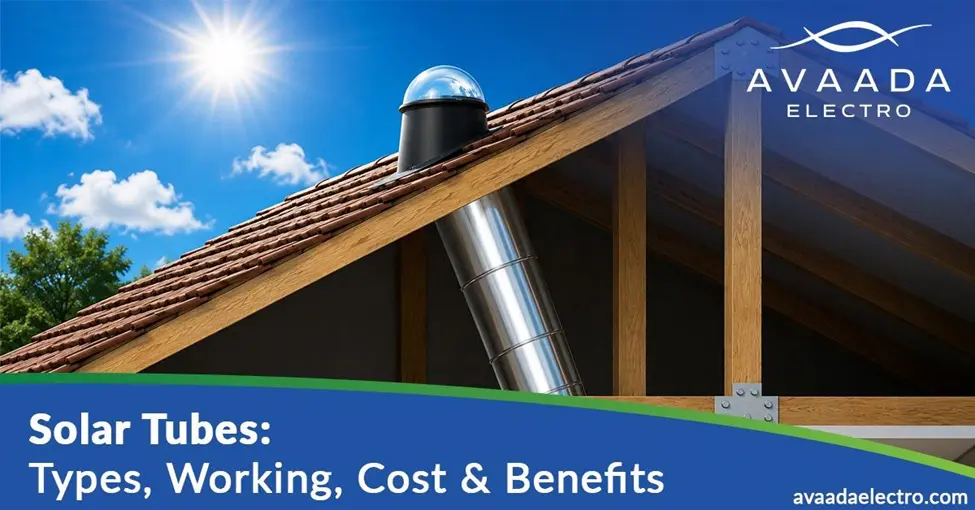
A solar tube, also known as a sun tunnel, light tube or solar tube skylight, is a daylighting system that brings natural sunlight from the roof into an indoor space.
It consists of a rooftop dome, a highly reflective tube and a ceiling diffuser. The dome captures sunlight, the tube carries it indoors, and the diffuser spreads the light across the room.
Unlike a traditional skylight, solar tubes do not provide a direct view of the sky. They are designed mainly to provide natural illumination in areas where installing a conventional window or skylight may not be practical.
How Do Solar Tubes Work?
The working of solar tubes is based on the reflection of sunlight through a highly reflective tube. The process involves three main components:
- Rooftop Dome: A clear, weather-resistant dome collects sunlight from outside.
- Reflective Tube: The tube directs sunlight from the roof towards the room. Its reflective inner surface helps retain light as it travels downwards.
- Ceiling Diffuser: The diffuser spreads the incoming sunlight across the room for more even illumination.
The amount of light available indoors depends on factors such as sunlight intensity, tube length, tube diameter and the number of bends in the tube.
Types of Solar Tubes
The right type depends mainly on the roof structure, available attic space and distance between the roof and ceiling.
1. Rigid Solar Tubes
Rigid tubes use straight, solid reflective shafts. They provide a relatively straight path for sunlight and generally offer higher light transmission than flexible tubes. They work well when there is a clear path between the roof and the room below.
2. Flexible Solar Tubes
Flexible tubes use bendable shafts that can be routed around rafters, pipes and other obstacles. They are useful when the roof and ceiling are not directly aligned. However, multiple bends can reduce the amount of light reaching the diffuser.
| Type | Light Transmission | Flexibility | Suitable For |
| Rigid Tube | Higher | Limited | Short, relatively direct paths |
| Flexible Tube | Moderate | High | Spaces with structural obstacles |
Read More – What is a Solar Cell?
Solar Tube vs Traditional Skylight
Both options bring natural light indoors, but they work differently.
| Factor | Solar Tube | Traditional Skylight |
| Main purpose | Daylight indoor spaces | Daylight plus outdoor view |
| Roof opening | Smaller | Generally larger |
| Installation | Usually quicker | Can require more structural work |
| Sky view | No | Yes |
| Suitable spaces | Bathrooms, hallways and closets | Living rooms and larger spaces |
For smaller or enclosed rooms, solar tubes can provide natural light without the larger roof opening associated with many traditional skylights.
Benefits of Solar Tubes
Installing a daylighting system can offer several practical benefits.
- Reduces daytime use of electric lights: Because solar tubes use natural sunlight, they can reduce the need to switch on electric lights during daylight hours.
- Brings natural light into enclosed spaces: Rooms without windows can receive natural illumination without creating a conventional window opening.
- Requires less roof space: A solar tube generally needs a smaller roof opening than a traditional skylight, making it suitable for areas where a large opening may not be practical.
- Can reduce heat transfer: Depending on the system design, tubular daylighting devices may limit heat transfer compared with some conventional glazed openings.
- Suitable for different indoor spaces: Depending on the tube size and installation conditions, these systems can be used in bathrooms, hallways, kitchens, closets, utility areas and other spaces that receive limited natural light.
Solar Tube Installation Process
The solar tube installation cost depends partly on the complexity of the work. A typical installation involves the following steps:
- Site assessment: The installer identifies a suitable roof location and checks the space between the roof and ceiling.
- Marking the openings: The required positions for the rooftop dome and ceiling diffuser are marked.
- Roof and ceiling preparation: Openings are created according to the selected tube size.
- Dome installation: The rooftop dome and flashing are fitted and sealed to protect against water ingress.
- Tube connection: The rigid or flexible tube is connected between the roof and ceiling.
- Diffuser fitting: The ceiling diffuser is installed and the joints are sealed.
Professional installation is recommended because proper roof sealing is important, particularly in areas that experience heavy rainfall.
Solar Tube Price in India
The solar tube price can vary significantly depending on the tube diameter, roof type, tube length, flashing requirements and installation work involved. Solar tubes are commonly available in 10-inch and 14-inch diameters, with smaller models suited to compact spaces and larger models designed to illuminate bigger rooms.
For example, a 10-inch solar tube can illuminate up to about 200 sq. ft., while a 14-inch model can cover up to about 300 sq. ft., although actual performance depends on sunlight availability, roof conditions, and the length and configuration of the reflective tube.
Rather than relying on a fixed price range, compare the following components when estimating the total installation cost:
| Cost Factor | What to Check |
| Tube diameter | 10-inch and 14-inch models are common options. Larger tubes generally provide greater light coverage. |
| Tube length | Longer runs may require additional extension sections and can affect installation requirements. |
| Roof type | Flashing and sealing methods may vary depending on the roof material and design. |
| Installation work | Labour requirements depend on roof access, ceiling location and the work needed to create and seal the openings. |
| Accessories | Dimmer systems, ventilation kits and additional extension tubes may increase the overall cost. |
Some manufacturers also offer daylight dimmer systems, ventilation add-ons, and extension tubes as separate accessories, so consider these when comparing quotations.
Read More – What is a Solar Panel?
Final Thoughts
Solar tubes provide a practical way to bring natural light into rooms that have limited or no access to windows. Unlike rooftop solar panels, they do not generate electricity. Instead, solar tubes use reflected sunlight to illuminate indoor spaces during the day.
Understanding what a solar tube is, the available types, installation requirements, and solar tube price can help property owners choose a suitable system. For installations of solar tubes in India, factors such as roof design, room size, weather conditions and professional sealing should also be considered.
Solar tubes and solar photovoltaic (PV) systems serve different purposes. Solar tubes use daylight to illuminate indoor spaces, while solar PV modules convert sunlight into electricity. Understanding this distinction can help homeowners, businesses, and project developers choose the right solar technology for their needs.
Avaada Electro focuses on solar photovoltaic manufacturing and solutions that convert sunlight into electricity, making PV technology different from daylighting systems such as solar tubes.
FAQs
What is a solar tube?
How do solar tubes work on cloudy days?
Can solar tubes be used at night?
Do solar tubes cause roof leaks?
Modern monocrystalline and N-type TOPCon panels can offer efficiencies ranging from around 20% to more than 23%, depending on the specific module and technology.