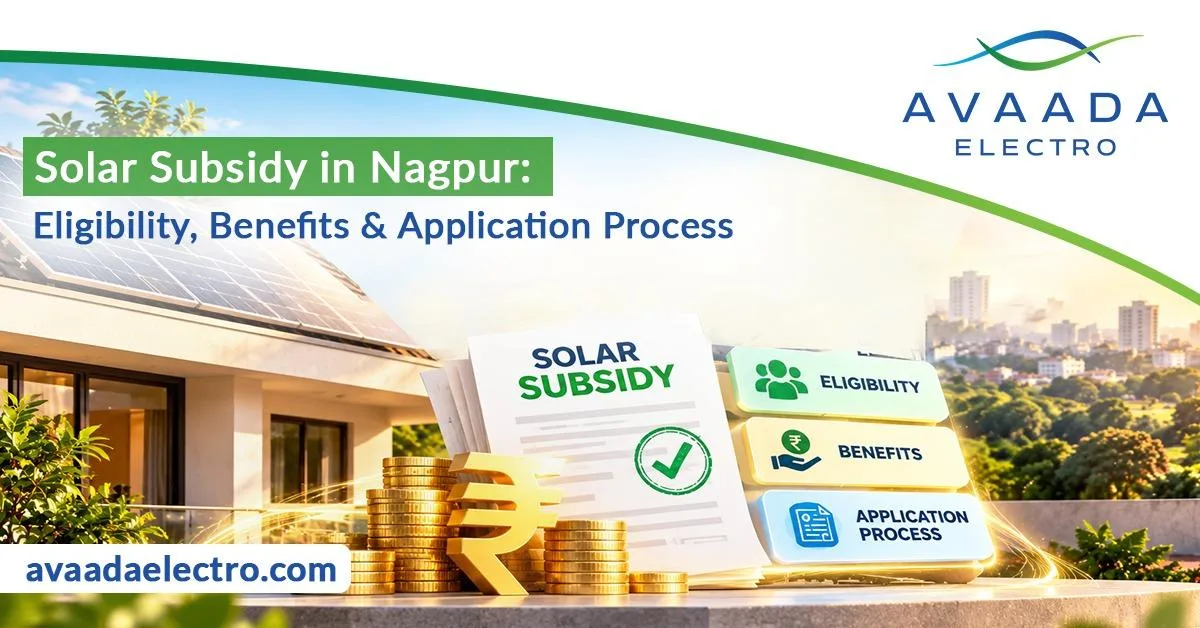


A homeowner in Pune looking to cut monthly electricity bills and a farmer in Vidarbha hoping to reduce irrigation costs may both benefit from solar power. However, the subsidy available to each depends on the installation’s purpose and the scheme they apply under. The solar subsidy in Maharashtra covers different requirements, including residential rooftop solar installations and solar-powered agricultural pumps for farmers. Knowing which scheme applies to you, how much support it offers and how to apply can help you make an informed decision before investing in solar.
Solar Subsidy in Maharashtra at a Glance: Schemes You Can Use
Maharashtra offers several solar subsidy schemes to help homeowners, housing societies, and farmers reduce energy costs and adopt solar power.
| Scheme | Who it serves | Main benefit |
|---|---|---|
| PM Surya Ghar: Muft Bijli Yojana | Homes and housing societies | Up to ₹78,000 per home |
| SMART Solar Scheme | Low-income homes using under 100 units a month | Extra state subsidy on 1 kW |
| Magel Tyala Saur Krushi Pump Yojana | Farmers | Solar pumps for 10% of cost |
| Mukhyamantri Saur Krushi Vahini Yojana 2.0 | Farmers and landowners | Daytime solar power, land lease income |
Maharashtra Solar Subsidy Under PM Surya Ghar: Amounts for 1 kW to 3 kW
The central subsidy is ₹30,000 per kW for the first 2 kW and ₹18,000 for the third kW, capped at ₹78,000.
| System size | Central subsidy |
|---|---|
| 1 kW | ₹30,000 |
| 2 kW | ₹60,000 |
| 3 kW and above | ₹78,000 |
Solar Yojana Maharashtra: Rooftop, Agricultural and Community Schemes
The Swayampurna Maharashtra Residential Rooftop (SMART) scheme, approved by the state government in October 2025 with funding for FY 2025-26 and FY 2026-27, adds a state top-up to the central subsidy on a 1 kW system. MSEDCL runs it alongside PM Surya Ghar on its I-SMART rooftop solar portal, and an empanelled vendor installs the system.
The Magel Tyala Saur Krushi Pump Yojana sizes off-grid solar pumps to the farm: up to 3 HP for holdings up to 2.5 acres, 5 HP for 2.51 to 5 acres and 7.5 HP above 5 acres. The farmer needs an assured water source such as a well, borewell or river to meet the scheme’s eligibility requirements. Farmers who have already received a pump under the earlier Atal or Mukhyamantri solar pump schemes cannot apply again.
Mukhyamantri Saur Krushi Vahini Yojana 2.0 builds solar plants of 0.5 MW to 25 MW within 5 to 10 km of agriculture-heavy substations, so farms get power during the day. Private landowners who lease land to these plants earn ₹1.25 lakh per hectare a year or 6% of the ready reckoner rate, whichever is higher, with a 3% annual increase.
Read More – Solar Panel Subsidies in India
Central vs State Solar Subsidy in Maharashtra: Benefits by Beneficiary Category
A regular household gets the central subsidy alone. The state adds money only through SMART and the farm pump scheme. SMART figures below use the ₹50,000 cost the state assumes for a 1 kW system, as reported by the Free Press Journal when the government resolution was issued.
| Beneficiary | Central subsidy | State subsidy | Household pays |
|---|---|---|---|
| Regular household, 3 kW | ₹78,000 | None | Balance of cost |
| BPL household, 1 kW (SMART) | ₹30,000 | ₹17,500 | ₹2,500 |
| SC/ST household, 1 kW (SMART) | ₹30,000 | ₹15,000 | ₹5,000 |
| EWS general household, 1 kW (SMART) | ₹30,000 | ₹10,000 | ₹10,000 |
| Farmer, solar pump | Combined central and state | Combined | 10% (5% SC/ST) |
Who Qualifies for Solar Panel Subsidy in Maharashtra?
To qualify for a solar panel subsidy in Maharashtra, applicants must meet specific eligibility requirements under the applicable government scheme.
- Indian citizenship: You must be an Indian citizen to apply for the PM Surya Ghar scheme.
- House ownership: You must own a house with a rooftop suitable for solar panel installation.
- Electricity connection: You must have a valid residential electricity connection.
- Previous subsidy: You must not have received another government subsidy for rooftop solar installation.
- SMART scheme eligibility: Your household must consume fewer than 100 units of electricity per month to meet the consumption requirement.
Which Solar Systems Qualify? ALMM Modules and Inverter Requirements
Subsidized systems must use DCR modules, meaning panels made in India with Indian cells, from ALMM-listed manufacturers. Inverters must meet the government’s quality control order and BIS standards.
When shortlisting solar panel manufacturers in Mumbai and other parts of Maharashtra, it is important to check their manufacturing credentials, applicable ALMM listings and compliance with the Domestic Content Requirement (DCR). These factors help ensure that the selected solar modules meet the applicable government guidelines for subsidy eligibility.
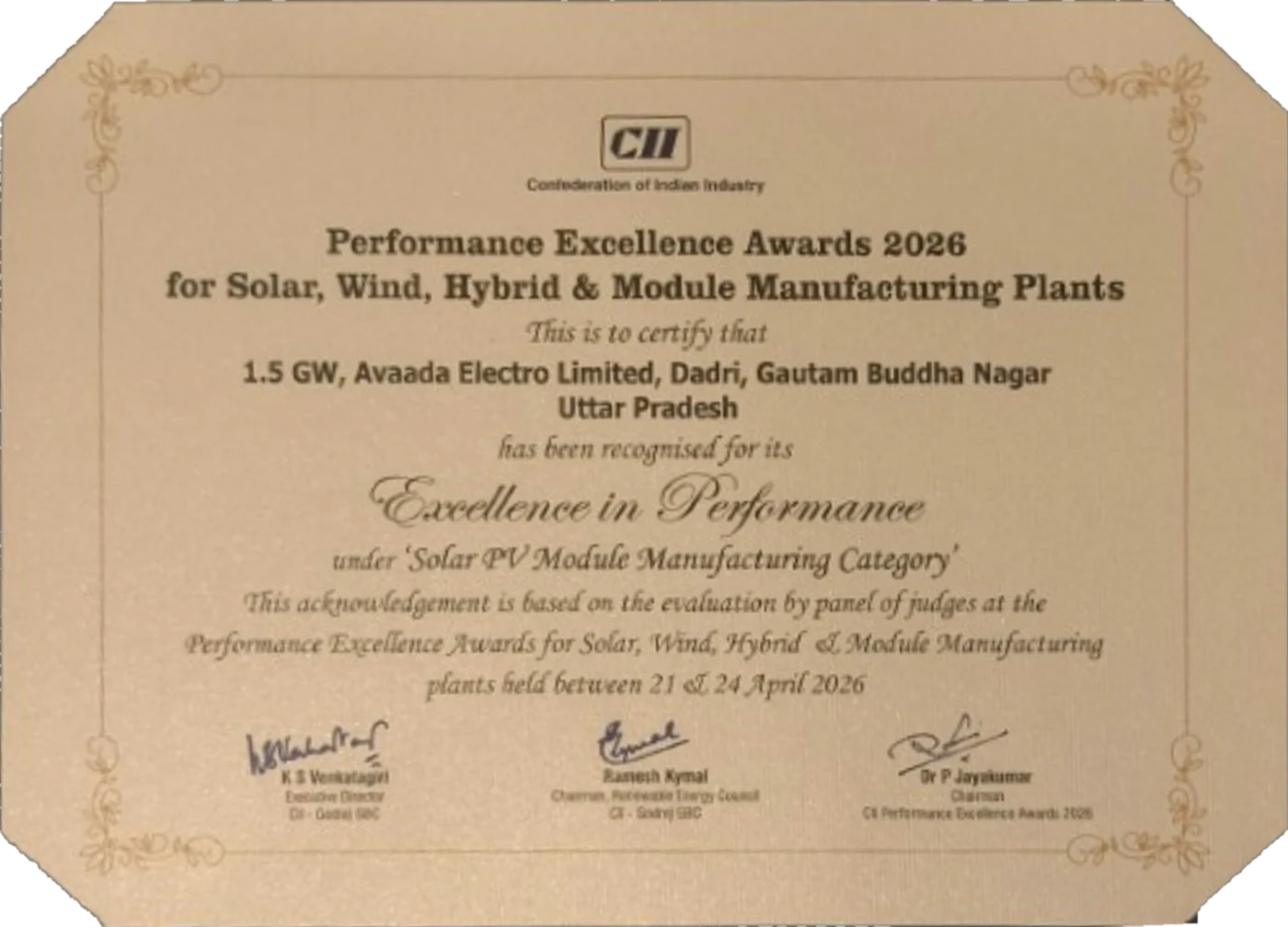
Avaada Electro, a solar panel manufacturing company in India, manufactures N-Type TOPCon solar modules and cells at its facility in Butibori, Nagpur. Its manufacturing portfolio includes modules ranging from 610 Wp to 720 Wp, supported by its TOPCon cell manufacturing technology.
Benefits Beyond the Subsidy
Apart from government subsidies, rooftop solar systems in Maharashtra offer additional benefits that help homeowners save money on electricity bills.
- Lower electricity bills: Solar panels generate electricity during the day, reducing your dependence on grid power and monthly MSEDCL bills.
- Net metering credits: Under Maharashtra Electricity Regulatory Commission regulations, eligible consumers can offset grid electricity consumption with surplus solar power exported to the grid.
- Affordable financing: Eligible households can access collateral-free loans at around 7% interest for rooftop solar systems up to 3 kW.
Documents Required to Apply for Solar Subsidy in Maharashtra
To apply for a rooftop solar subsidy in Maharashtra, keep the following documents ready to complete the application process smoothly.
- Electricity bill: A recent electricity bill showing your consumer number and residential electricity connection details.
- Identity proof: A valid government-issued identity document to verify your personal information.
- House ownership proof: Documents confirming ownership of the property where the solar panels will be installed.
- Bank account details: Your bank account information and a canceled check to receive the subsidy through direct bank transfer.
How to Apply for Solar Subsidy in Maharashtra Online
To claim the Maharashtra solar subsidy, follow these steps in order, from online registration and feasibility approval to installation, net metering and the final subsidy request.
- Visit the PM Surya Ghar National Portal (pmsuryaghar.gov.in) and register by selecting Maharashtra and the electricity distribution company (DISCOM) mentioned on your electricity bill.
- Apply and wait for feasibility approval.
- Once you receive feasibility approval, select a registered vendor through the portal and proceed with the rooftop solar installation.
- Request the net meter. The DISCOM inspects and commissions the plant.
- Submission of bank details alone does not guarantee payment. The revised wording reflects the verification and disbursement process.
Rooftop Solar Cost in Maharashtra After Subsidy
The SMART scheme uses a benchmark cost of ₹50,000 per kW. At that rate:
| System size | Indicative cost | Central subsidy | Indicative net cost |
|---|---|---|---|
| 1 kW | ₹50,000 | ₹30,000 | ₹20,000 |
| 2 kW | ₹1,00,000 | ₹60,000 | ₹40,000 |
| 3 kW | ₹1,50,000 | ₹78,000 | ₹72,000 |
These figures are indicative. Real quotes vary with the mounting structure, inverter, roof type and location.
Read More – What is an On-Grid Solar System?
Conclusion
Choosing the right solar subsidy in Maharashtra starts with understanding your electricity requirements and the eligibility conditions of the available government schemes. Homeowners can explore PM Surya Ghar, eligible low-income households can check the SMART scheme, and farmers can look into schemes such as Magel Tyala Saur Krushi Pump Yojana and Mukhyamantri Saur Krushi Vahini Yojana 2.0. Check the eligibility criteria, confirm the subsidy available and choose a system that matches your electricity needs before proceeding with installation.
For your rooftop or solar project, explore Avaada Electro’s N-Type TOPCon solar modules for product specifications and technical details to help you assess the right option for your requirements.
FAQs
Which portal is used to apply for solar subsidy in Maharashtra?
Residential rooftop solar subsidy applications can be submitted through the PM Surya Ghar National Portal (pmsuryaghar.gov.in). Farmers applying under the Magel Tyala Saur Krushi Pump Yojana can use the MSEDCL solar pump portal (offgridmtsup.mahadiscom.in), subject to the applicable application process.
What is the minimum rooftop system size required to qualify?
The subsidy under PM Surya Ghar is calculated based on eligible installed solar capacity, subject to the scheme’s technical and application requirements. Applicants should check the latest guidelines on the National Portal before deciding on the system size.
Can housing societies in Maharashtra get a solar subsidy for common areas?
Yes, ₹18,000 per kW for common facilities, up to 500 kW.
Is there a subsidy for agricultural solar pumps in Maharashtra?
Yes. Under Magel Tyala Saur Krushi Pump Yojana, farmers pay 10% of the pump cost, or 5% for SC/ST farmers.
Can I claim the subsidy if I have already installed solar panels?
The process starts with a portal application before installation, through a registered vendor. A system installed outside that process does not fit the claim route.
What should I do if my subsidy application is rejected?
Raise a grievance on the portal or the national call center. The guidelines aim to resolve grievances within 30 days.
Are there additional Maharashtra state subsidies for rooftop solar?
Only through SMART, for eligible low-income households using under 100 units a month.
Does the subsidy amount differ between Mumbai and rural Maharashtra?
No. The central rates are the same statewide. Mumbai homes may have a different DISCOM, so select the one on your bill.
Are ALMM-listed modules and compliant inverters mandatory?
Yes. DCR modules from ALMM-listed manufacturers and compliant inverters are conditions for the subsidy.
Can I increase my plant size later and still get subsidy for the extra capacity?
Only up to 3 kW in total. A home that claimed for 2 kW can claim the balance for one more kW.
Is net metering compulsory and who installs the meter in Maharashtra?
The subsidy is for grid-connected systems with net metering. The DISCOM installs the meter, which it supplies or you buy from an enlisted vendor.