
What if sunlight could power entire cities, run heavy factories and light up every home? Solar energy is a renewable source of energy derived from the sun’s radiation. Different technologies convert this light into electricity or heat water and spaces. Unlike finite fossil fuels such as coal, oil and natural gas, solar energy is naturally replenished by the sun. Global reports show that worldwide solar installations reached nearly 2.9 TW by the start of 2026, driving clean power generation worldwide.
What is Solar Energy?
Solar energy is renewable energy obtained from the sun’s radiation. Different technologies and systems can convert it into electricity or heat. Solar photovoltaic (PV) panels convert sunlight directly into electricity, while solar thermal systems use sunlight to produce heat for applications such as water heating. Concentrated solar power systems use mirrors to focus sunlight and generate heat to produce electricity. Solar energy can be used in homes, businesses, agriculture and large power plants. Unlike fossil fuels such as coal, oil and gas, sunlight is naturally replenished, making solar energy a renewable source that can support long-term energy needs.
Types of Solar Energy
Solar energy can be harnessed through technologies such as photovoltaic, solar thermal and concentrated solar power, while passive solar design and hybrid systems represent different ways of using or integrating solar energy.
Photovoltaic (PV) Solar Energy
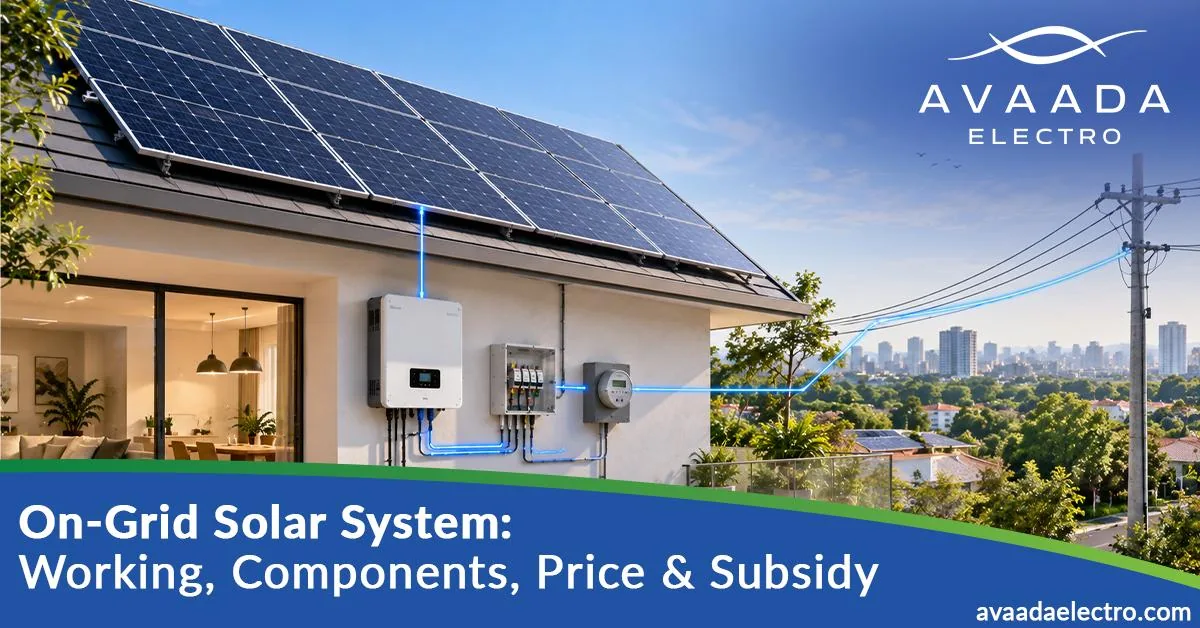
Photovoltaic (PV) solar energy converts sunlight directly into electricity through solar cells. The cells produce direct current (DC), which an inverter converts into alternating current (AC) for use in homes and businesses.
PV systems can be installed on residential rooftops, commercial buildings and large ground-mounted solar plants. They can also be scaled to match electricity needs, making them suitable for both small and large projects.
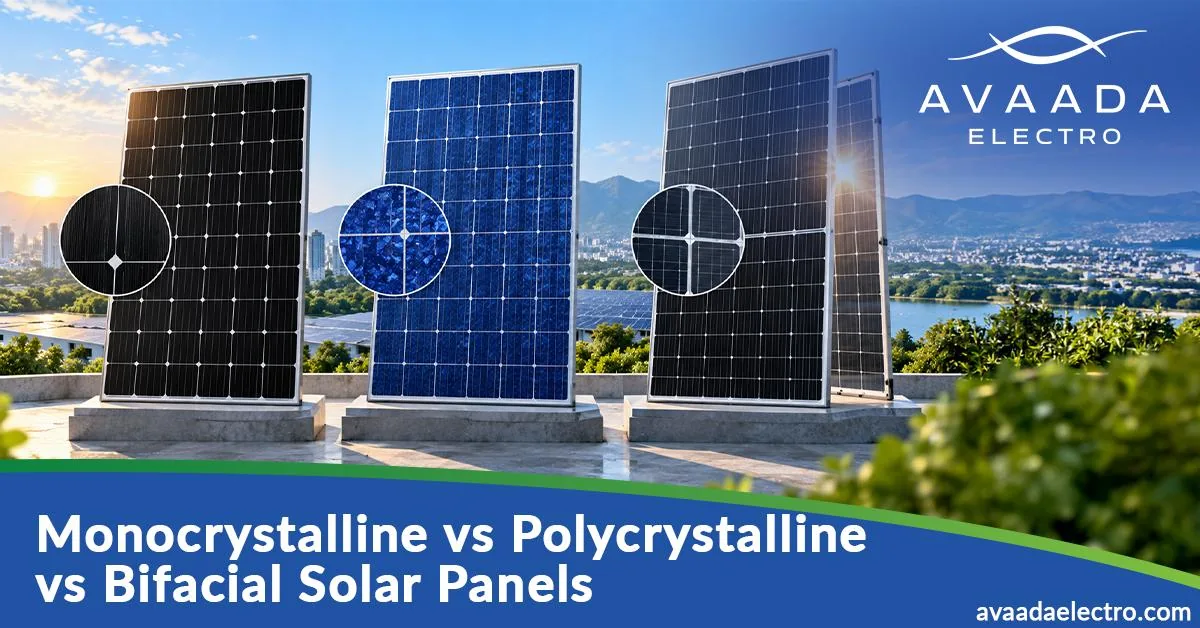
To support these applications, Avaada Electro produces N-type TOPCon bifacial modules designed to deliver high power output and support efficient project economics.
Solar Thermal Energy
Solar thermal energy uses sunlight to produce heat instead of electricity. Solar thermal systems are commonly used for heating water and spaces.
Solar water heaters are a common example. They use solar collectors to absorb sunlight and transfer the heat to water. These systems are used in homes, hotels, institutions and other buildings that require hot water.
Concentrated Solar Power (CSP)
Concentrated solar power (CSP) uses mirrors or lenses to focus sunlight onto a specific area. The concentrated heat heats a working fluid, which can produce steam to run a turbine and generate electricity.
CSP is mainly used in large, utility-scale plants in areas with strong, consistent sunlight. Common CSP designs include parabolic troughs, power towers and dish systems. Some CSP plants also use thermal storage, such as molten salt. This allows stored heat to generate electricity even after sunlight is no longer available.
Passive Solar Energy
Passive solar energy uses building design to use sunlight and natural heat more effectively without mechanical equipment.
For example, a building can be designed with suitable orientation, window placement, insulation and materials that absorb or retain heat. These features can improve natural lighting and help maintain indoor temperatures while reducing the need for artificial lighting, heating or cooling.
Hybrid Solar Energy
Hybrid solar energy combines solar power with another technology or energy source. One common example is a hybrid solar PV system that combines solar generation, battery storage and grid connectivity.
Solar panels generate electricity during the day, while batteries can store excess power for later use. The grid can provide electricity when solar generation and stored energy are not enough. Hybrid systems can be useful for homes and businesses that want to use solar power while also having backup options during power outages.
Each type serves a different purpose, from generating electricity and heating water to improving building efficiency and providing backup power.
Also Read – Best Solar Energy Companies in India
Uses of Solar Energy
Solar energy is used in homes, businesses, agriculture and large power projects. Common applications include:
- Generating electricity through rooftop and utility-scale PV systems
- Heating water through solar thermal systems
- Running agricultural irrigation pumps
- Drying crops and other agricultural products
- Powering street lights and other off-grid systems
- Charging electronic devices and electric vehicles
- Supplying electricity to the grid through large solar power plants
These applications show how solar energy can be used at different scales, from small residential systems to large power projects.
Benefits of Solar Energy
Solar energy can offer practical and long-term advantages for households, businesses and large-scale power projects. Its benefits extend beyond electricity generation to cost savings, resource use and energy planning.
- Lower electricity costs: Rooftop solar can reduce the amount of electricity purchased from the grid.
- Renewable energy source: Solar energy is naturally replenished and requires no fuel to generate electricity.
- Low operating requirements: PV systems have no moving parts, which can help reduce routine module maintenance.
- Government support: Schemes such as PM Surya Ghar provide financial support for eligible residential rooftop solar installations in India.
- Suitable for India: Many parts of India receive significant solar radiation, supporting both rooftop and large-scale solar projects.
Also Read – What Is Solar Energy?
Conclusion
Solar energy can be used in several ways. Photovoltaic systems convert sunlight into electricity, solar thermal systems use sunlight for heating, CSP plants use concentrated sunlight to generate electricity and passive solar design uses sunlight and heat through building design. Hybrid systems combine solar power with batteries, the grid or other technologies.
For homes and businesses in India seeking to generate electricity from sunlight, PV systems are a widely used option.
Avaada Electro offers made-in-India N-type TOPCon solar modules for residential, commercial and utility-scale solar applications.
FAQs
What is the difference between hybrid solar energy and a hybrid solar system?
Hybrid solar energy refers broadly to combining solar energy with another technology or energy source. A hybrid solar system commonly refers to a PV system combined with battery storage and the electricity grid.
Which type of solar energy is the most efficient?
Efficiency depends on the technology, system design and operating conditions. Some studies report conversion efficiencies of up to around 30% for advanced PV technologies and around 35% for CSP under specific conditions. These figures do not represent the typical efficiency of commercial installations.
For homes and most commercial projects, PV is widely used because it can be installed in modular systems and scaled according to available space and electricity requirements.
Which type of solar energy can produce power after sunset?
CSP plants with thermal storage can continue generating electricity after sunset. Systems using molten salt can store heat collected during the day and use it later to produce steam and generate electricity.
A PV system can also supply power after sunset when it is combined with battery storage or another electricity source.
What are the disadvantages of solar energy?
Solar power generation depends on sunlight, so PV output falls at night and can decrease during cloudy conditions. Solar installations also require upfront investment and sufficient space with limited shading.
Battery storage or grid electricity may be needed when solar generation is unavailable or insufficient.
Is solar energy renewable or non-renewable?
Solar energy is renewable because it comes from the sun and is naturally replenished. It does not require the consumption of fuels such as coal, oil or natural gas to generate electricity.