
Securing project financing for renewable energy assets depends on verifying equipment quality, performance consistency and long-term financial viability. With India’s total solar PV module manufacturing capacity reaching about 233 GW in mid-2026, lenders and equity investors face an expanding marketplace. Selecting the right solar PV equipment requires a deep understanding of bankability parameters to ensure predictable debt servicing and asset longevity. Choosing equipment from established and financially credible manufacturers can help reduce technology and performance risks and support project financing.
What is Bankability in Solar?
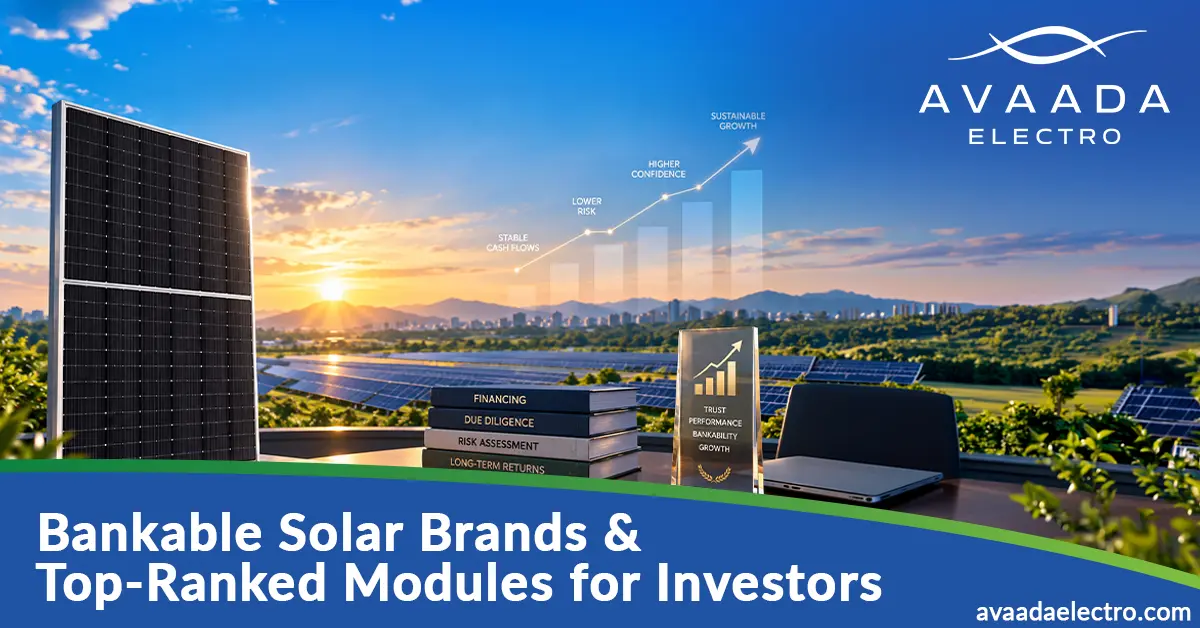
In solar, bankability refers to the extent to which lenders, investors and other project stakeholders view a manufacturer, product or technology as sufficiently reliable and financially credible for use in a financed project. A solar module is considered bankable when its manufacturer demonstrates financial stability, proven field reliability and third-party laboratory verification.
Lenders evaluate whether a solar module can deliver its promised power output over a 25- to 30-year operational life. High bankability minimizes technological default risk, ensuring steady cash flows to cover debt service obligations throughout the financing term.
Read Also: Solar Module Manufacturing
Why Bankability Matters: Lender, Investor & Project Developer Perspectives
Equipment bankability shapes the financial structure, risk profile and overall returns of solar power assets for all project stakeholders.
- Lenders & NBFCs: Financial institutions require equipment from bankable manufacturers to reduce non-performing asset (NPA) risk.
- Investors, Developers & EPCs: Equity investors evaluate Levelized Cost of Energy (LCOE) and long-term Internal Rate of Return (IRR). Bankable modules can support more predictable generation assumptions and help mitigate technology and degradation risks.
- Residential & C&I Buyers: Commercial facilities and homeowners utilizing solar loans benefit from bankable equipment through accelerated credit approvals, eligibility for government subsidies and lower interest rates.
Which Solar Brands are Considered Bankable?
Determining if a solar manufacturer is bankable requires evaluating manufacturing standards, balance sheet strength and quality management systems.
How Brands Get Ranked for Bankability
Independent engineering firms, testing labs and financial research groups rank solar brands based on specific technical and operational criteria:
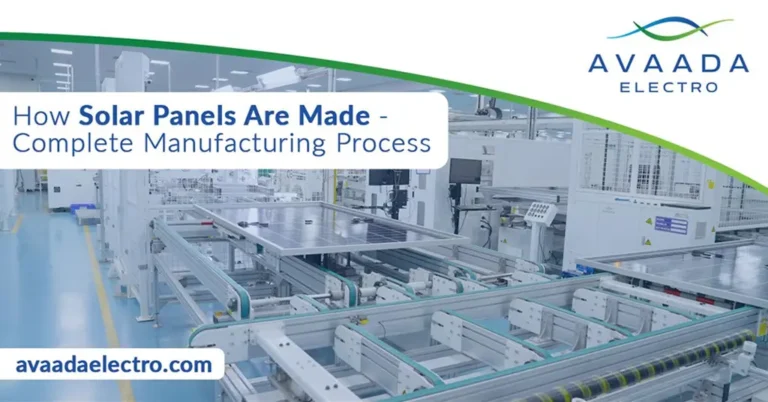
- Upstream Integration: Backward integration from polysilicon, ingot and wafer production to cell and module assembly enhances quality control and supply resilience.
- Manufacturing Automation: High-precision manufacturing utilizing automated AI defect detection and low Takt times minimizes cell defects.
- Third-Party Stress Testing: Submitting modules to extended thermal cycling, damp heat and mechanical load tests beyond standard baseline requirements.
Top Bankable Solar Brands in India
India’s solar manufacturing industry includes established companies serving large-scale utility and distributed solar markets. Leading manufacturers on lender-approved lists include:
- Avaada Group (Avaada Electro)
- Waaree Energies
- Adani Solar
- Tata Power Solar
- Vikram Solar
- Premier Energies
- RenewSys
- Emmvee
- Goldi Solar
- Saatvik Green Energy
Avaada Electro – Bankability Factors and Certifications
Avaada Electro strengthens its bankability standing through high-precision manufacturing facilities in Dadri (Uttar Pradesh) and Nagpur (Maharashtra). Our manufacturing ecosystem operates under an Integrated Management System (IMS) and holds certifications for Quality Management (ISO 9001:2015), Environmental Management (ISO 14001:2015) and Occupational Health & Safety (ISO 45001:2018).
Products undergo rigorous international testing by TÜV Rheinland under IEC 61215 and IEC 61730 standards and fully comply with Indian BIS (IS 14286 / IS/IEC 61730) requirements. Avaada Electro backs its N-Type TOPCon modules with a 12-year workmanship warranty and a 30-year linear performance warranty, guaranteeing an ultra-low 1.0% first-year degradation and 0.40% annual degradation thereafter.
Which Solar Modules Pass Lender Bankability Tests?
Lenders use detailed technical checklists to verify module reliability before approving project debt financing.
Lender Bankability Checklist – What Banks Look For
- Listed on ALMM: Official inclusion on the Approved List of Models and Manufacturers (ALMM) issued by MNRE.
- Valid BIS Certification: Mandatory compliance with Indian Standards IS 14286 and IS/IEC 61730.
- Positive Power Tolerance: Guaranteed output tolerance (e.g., 0 to +5 W) ensuring modules meet or exceed nameplate capacity.
- Low Temperature Coefficient: Advanced performance rating (e.g., -0.30%/°C) minimizing yield loss in high-ambient-temperature regions.
- Weather Durability: Certified resistance against salt mist, ammonia, sand and dust environments with an IP68-rated split junction box design.
Read Also: Latest Solar Panel Technology
Understanding Solar Bankability Assessments & Certifications
Independent third-party testing validates module performance and structural durability under harsh operating conditions.
- PVEL (PV Evolution Labs): Evaluates module reliability through Product Qualification Programs (PQP), testing for Potential Induced Degradation (PID), Light-Induced Degradation (LID), thermal cycling and mechanical stress.
- TÜV Rheinland & TÜV SÜD: Performs safety and quality testing under global standards like IEC 61215 and IEC 61730 to verify design safety and long-term output.
- BIS & ALMM (India Requirements): BIS requirements and ALMM are separate regulatory frameworks. Applicable solar PV modules must meet relevant BIS requirements, while ALMM listing applies to specified project categories under MNRE requirements. ALMM List-I covers eligible solar PV module models and manufacturers and applies to specified government, government-assisted, government-scheme, open-access and net-metering projects.
How to Verify a Solar Brand's Bankability Status
Project developers and investors can follow a five-step process to verify equipment bankability:
- Check Independent Reliability Reports: Review available independent reliability-testing reports, such as PVEL or other recognised third-party testing programmes, where available.
- Verify TÜV Certification: Download official test certificates (IEC 61215 / IEC 61730) from accredited testing bodies.
- Confirm BIS & ALMM Status: Cross-check the manufacturer’s module model numbers on the MNRE portal.
- Review Lender Approved Vendor Lists (AVL): Consult your lending bank to confirm the brand is on their pre-approved vendor matrix.
- Examine Warranty Terms: Verify that performance warranties guarantee linear output retention over a 25- to 30-year period backed by strong corporate balance sheets.
Final Thoughts
Equipment bankability bridges engineering performance and financial viability in solar power development. Lenders and equity investors prioritize manufacturers with robust financial health, third-party testing credentials and proven production standards. Selecting certified, high-efficiency N-Type TOPCon modules ensures long-term power generation, protects capital and accelerates clean energy deployment. Avaada Electro remains dedicated to high-precision manufacturing to power a sustainable future.
For procurement inquiries and technical datasheets, visit Avaada Electro to consult with our solar engineering specialists.