
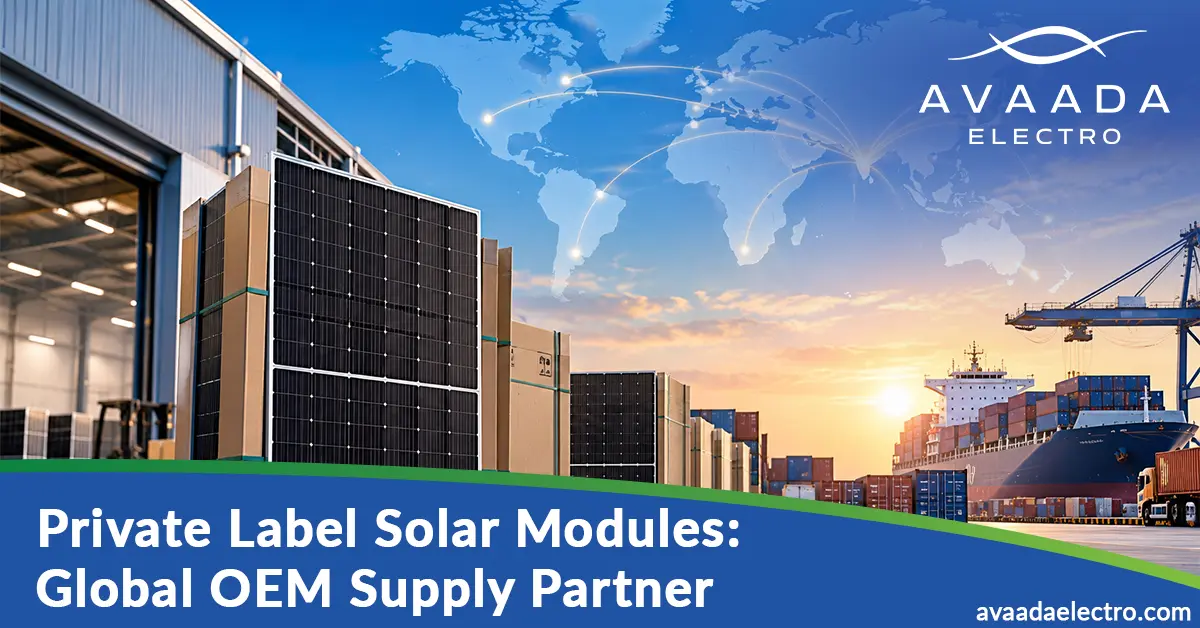
When you print your logo on a solar module, you take on every claim that module makes for the next 30 years. The warranty, the certification, the field performance, and the returns from an unhappy customer 8 years in – that is the real weight behind private-label supply. It comes down to who built the module, what it is certified against, and who pays out when a panel underperforms.
Here are the crucial checks to make before signing a manufacturing agreement, and how Avaada Electro’s N-Type TOPCon modules fit buyers selling under their own brand.
What Private-Label Solar Module Supply Means
Private-label solar module supply is an arrangement where a manufacturer produces certified modules that you sell under your own brand name, using the manufacturer’s proven design and certified bill of materials (BOM). You own the brand and the customer relationship. The factory manages production, certification, and warranty backing.
Supply Model | Core Definition | Design & BOM Source | Brand on Nameplate |
OEM Supply | Manufacturer builds to your custom specification | Custom or shared specification | Your Brand |
White-Label | Manufacturer’s standard product resold by multiple buyers | Manufacturer’s standard | Your Brand |
Private-Label | Certified standard product supplied under a dedicated arrangement | Manufacturer’s standard | Your Brand |
Most private-label solar supply involves a manufacturer’s already-certified module carrying your brand on the nameplate, frame, and packaging. International certification applies to a specific model and BOM from a specific factory. Changing the printed brand name does not alter the certified product underneath, keeping the compliance and warranty tied directly to the manufacturer.
Six Checks Before Signing a Manufacturing Agreement
The best private-label module for your business is one whose certification, capacity, documentation, and warranty survive due diligence. Run these Seven checks on any potential manufacturer:
- Certification Scope: Verify compliance with IEC 61215 (design qualification and long-term stress testing) and IEC 61730 (electrical, mechanical, and fire safety). Avaada Electro’s modules carry BIS, IEC, UL, and KIWA certifications, along with ALMM listing.
- Capacity Headroom: Ensure the manufacturer operates sufficient line capacity beyond your order volume so lead times do not slip. Avaada Electro operates 8.5 GW of solar PV module manufacturing capacity at its Nagpur facility, complemented by its Dadri (UP) facility and backed by 3 GW of operational solar cell capacity, with an additional 3 GW in advanced stages of commissioning expected to be operational by the quarter ending September 30, 2026.
- Batch-Level QC Documentation: Require per-batch flash-test reports, electroluminescence (EL) images, and power-sorting data to prove each shipped pallet matches the certified design.
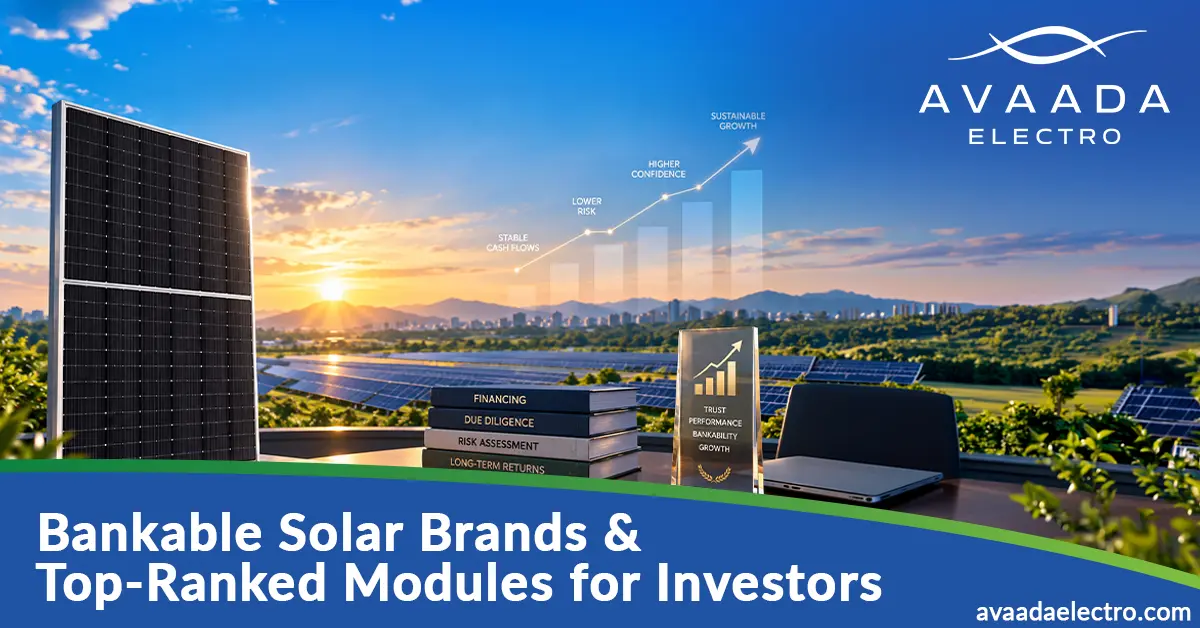
- Bankability Ratings: Check independent ratings to ensure lenders and project developers accept your branded module. Avaada Electro earned a Grade A classification in Wood Mackenzie’s H1 2025 global solar module rankings.
- Export & Incoterms Readiness: Confirm Incoterms (EXW, FOB, CIF, or DDP), HS codes, and market-specific compliance to streamline cross-border shipping.
- Warranty Underwriting: Ensure the contract explicitly names the manufacturer as the warranty obligor for performance and product claims on your rebranded units.
Avaada Electro's Private-Label Module Range
Avaada Electro manufactures three N-Type TOPCon module families for private-label and OEM supply. All models feature Glass-to-Glass bifacial construction built on M10 and G12 wafer formats.
| Model | Peak Power | Module Efficiency | Wafer Format | Target Application |
| Enlume G12 | Up to 720 Wp | Up to 23.18% | G12 (210 mm) | Utility-scale & ground-mount projects |
| Enlume G12R | Up to 630 Wp | Up to 23.3% | G12R rectangular | Commercial & space-constrained layouts |
| Integlow M10L | Up to 610 Wp | High-efficiency class | M10L | Commercial & residential rooftops |
Enlume G12 (720 Wp) N-Type TOPCon
Built on a 132-cell N-type bifacial Glass-to-Glass layout, the Enlume G12 delivers up to 720 W with over 23.18% efficiency. Higher power density per module reduces Balance of System (BOS) costs, mounting structures, cabling, and labor hours per megawatt. It features a Pmax temperature coefficient of -0.3%/°C and a bifaciality of 80±5% for high energy yield in high-heat environments.
Enlume G12R (630 Wp) N-Type TOPCon
Using rectangular G12R cells, the Enlume G12R achieves up to 630 W at 23.3% efficiency. The format suits rooftop applications where full G12 dimensions are difficult to fit without sacrificing output per panel.
Integlow M10L (610 Wp) N-Type TOPCon
The Integlow M10L delivers up to 610 Wp in the M10L format, supporting residential and commercial rooftop installations. It provides the core benefits of N-Type TOPCon: lower temperature-related power loss, reduced degradation, and superior low-light performance compared to older P-Type PERC modules.
Manufacturing Quality & AI-Driven Production
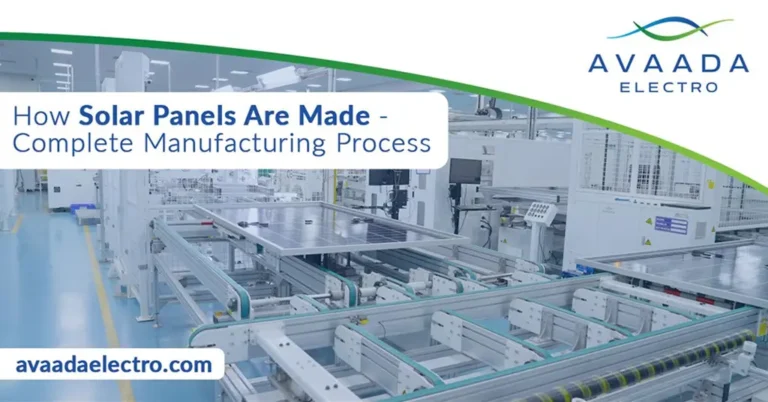
Automated inspection prevents defective modules from reaching the field under your brand. Avaada Electro operates self-adaptive, AI-integrated production lines with a 16-second takt time and smart energy management systems.
- Machine-Vision & EL Imaging: High-speed cameras verify component alignment, while Electroluminescence (EL) imaging reveals microcracks and cell breaks prior to dispatch.
- AI-Based Cell Binning: Smart sorting matches cells by electrical output, reducing power mismatch inside string arrays and protecting real-world yield.
- Branding Execution: Private-label badging includes custom nameplate labels, frame laser etching, and branded junction boxes and shipping packaging.
Global Market Applicability
Private-label procurement follows a structured three-step process:
- Specification Lock & Sampling: Confirm model ratings, artwork, and packaging, then sign off on samples.
- Production Allocation: Booking order slots against active factory capacity to protect delivery timelines.
- Pre-Shipment Inspection: Final flash testing, EL scanning and compiling batch documentation packages.
Standard private-label nameplate orders start at single-megawatt container quantities, while customised frames call for container-level batch allocations. Lead times range from four to eight weeks following artwork lock and sample approval.
Read Also – Top Solar Panel Companies in India
Conclusion
Building a successful solar brand requires manufacturing reliability, rigorous quality documentation, and clear warranty backing. By partnering with Avaada Electro, you gain access to high-efficiency N-Type TOPCon technology and 8.5 GW of module capacity without the burden of factory capex. Secure your competitive edge with certified, high-volume production under your own name.
Contact the Avaada Electro OEM team today to request technical datasheets, review compliance documentation, and reserve your production slot.