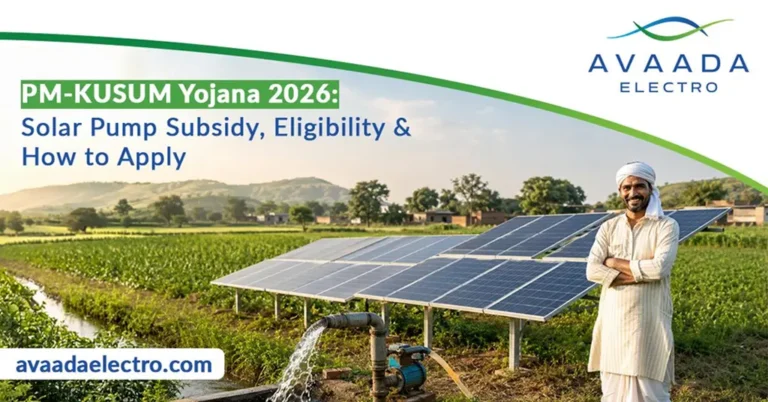

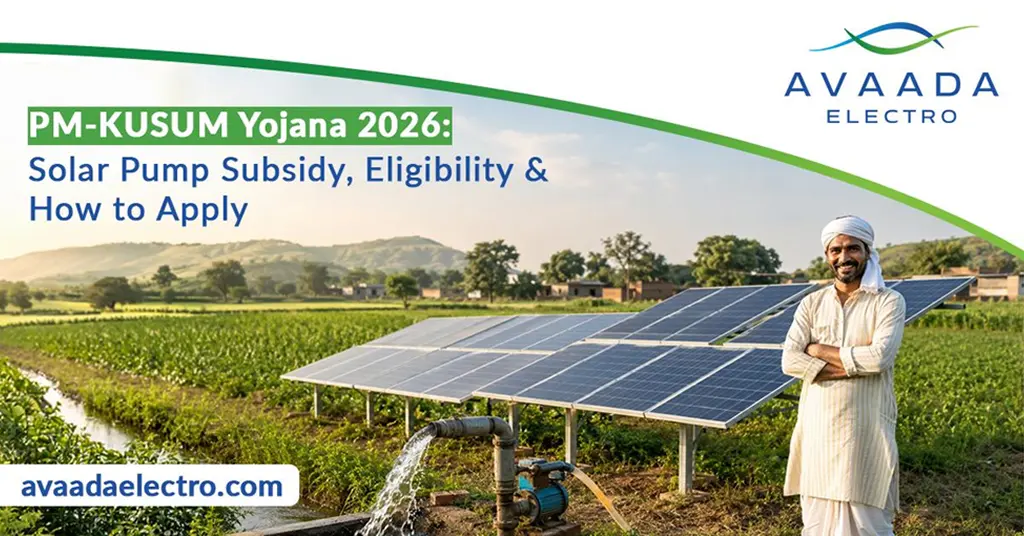
For many farmers, irrigation and access to water mean having reliable, affordable resources when crops need them most. Power cuts can disrupt irrigation schedules, while diesel-powered pumps add to farming expenses year after year. To address these challenges, the Government of India launched the PM-KUSUM Yojana in March 2019 through the Ministry of New and Renewable Energy (MNRE). The scheme allows farmers to harness solar energy for irrigation, reduce dependence on conventional power sources, and create opportunities for additional income. As solar adoption grows across rural India, high-quality solar technologies from Avaada Electro are helping support the transition to sustainable farming.
How the Scheme Supports Rural Energy Independence
The main objective of the Pradhan Mantri Kisan Urja Suraksha evam Utthaan Mahabhiyan (PM-KUSUM) Scheme is to transform farmers from ‘Annadatas’ or ‘food producers’ into ‘Urjadatas’ or ‘energy producers’ by allowing them to generate solar power and, in eligible cases, sell surplus electricity. The scheme targets the addition of 34,800 MW of solar capacity by March 2026 and is supported by Central Financial Assistance (CFA) of ₹34,422 Crore.
By promoting solar-powered irrigation and decentralized renewable energy generation, the PM-KUSUM Yojana is helping strengthen rural energy security while supporting sustainable agricultural development.
Three Components of PM-KUSUM Yojana
The PM-KUSUM Yojana is divided into three components, each designed to address a specific agricultural energy requirement:
Component | What It Covers | Target | Benefit for Farmers |
Component A | Grid-connected solar power plants (500 kW–2 MW) on eligible land | 10,000 MW | Additional income through power sales |
Component B | Standalone solar-powered agriculture pumps | 14 Lakh Pumps | Reliable irrigation in off-grid areas |
Component C | Solarization of existing agricultural pumps and feeder-level solarization | 35 Lakh Pumps | Assured daytime power and lower electricity costs |
Advantages of Solar-Powered Irrigation for Farmers
The Solar Pump Yojana offers advantages that directly support agricultural productivity and reduce long-term expenses:
- Assured daytime irrigation
- Reduced diesel and electricity expenses
- Lower maintenance requirements than conventional pumps
- Cleaner farming operations through renewable energy use
Another major advantage is the availability of Solar Pump Subsidy support, which makes solar-powered irrigation systems more affordable for farmers.
Eligibility Criteria for PM-KUSUM Yojana
The KUSUM Solar Yojana is open to people involved in agriculture, including:
- Individual farmers
- Farmer Producer Organizations (FPOs)
- Cooperatives
- Panchayats
- Water User Associations (WUAs)
Land requirements vary depending on project capacity, site conditions, and technology selection. Applicants should refer to state-specific guidelines issued by the implementing agency.
Read more – Rooftop Solar Companies in India
How to Apply for PM-KUSUM Yojana
The application process for the PM-KUSUM Yojana varies by state and component. Farmers interested in applying for the Solar Pump Scheme can visit their respective state nodal agency’s portal or the official PM-KUSUM website to check eligibility, application requirements, and current enrollment status.
In general, applicants may be required to submit:
- Aadhaar Card
- Land ownership records
- Bank account details
- Passport-size photograph
- Mobile number linked to Aadhaar (where applicable)
Farmers should refer to their state’s designated renewable energy agency for the latest application guidelines and timelines.
Subsidies and Funding Support Under PM-KUSUM Yojana
One of the biggest attractions of the Solar Pump Scheme is the financial support offered to eligible applicants. For eligible solar pump installations under Components B and C, farmers may receive up to 30% Central Financial Assistance and 30% state subsidy, with the remaining amount typically covered through beneficiary contribution and/or financing. Subsidy structures may vary by state and component.
The solar water pump subsidy structure reduces the upfront investment required to install solar-powered irrigation systems. In many cases, farmers only need to contribute a small portion of the total project cost. The scheme also complements broader initiatives that promote solar panel subsidies in India, increasing the adoption of renewable energy in rural communities.
As more farmers invest in solar-powered infrastructure, selecting reliable solar modules becomes essential. Avaada Electro’s made-in-India solar modules are designed to deliver dependable energy generation for agricultural applications.
Implementation of PM-KUSUM Yojana in Different States
Implementation of the PM-KUSUM Scheme varies across states based on agricultural requirements, renewable energy goals, and local implementation frameworks:*
- Rajasthan: Rajasthan has emerged as one of the leading states in solar pump deployment under the scheme. Farmers can apply through the RajKisan portal and access various state-supported renewable energy initiatives.
- Maharashtra: The state has placed significant emphasis on feeder-level solarization under Component C. Implementation is carried out through MSEB Solar Agro Power Limited (MSAPL), the designated nodal agency.
- Uttar Pradesh: Uttar Pradesh has focused on installing standalone solar pumps, particularly in regions with high irrigation demand. The program is implemented under the supervision of UPNEDA.
- Madhya Pradesh: Madhya Pradesh has actively promoted solar-powered irrigation systems under the scheme through its designated renewable energy agencies, helping farmers improve access to reliable irrigation.
*Disclaimer: Implementation details and application processes may vary by state and are subject to periodic updates by the respective nodal agencies.
Future of Solar-Powered Farming in India
The PM-KUSUM Scheme has accelerated solar adoption in agriculture, but challenges such as awareness gaps, administrative delays, and grid connectivity in remote areas still need to be addressed. At the same time, advances in remote monitoring, smart energy management, and solar technologies are expected to improve system efficiency and farmer experience. As implementation continues, the scheme plays an important role in strengthening India’s renewable energy ecosystem and supporting sustainable agriculture.
Read more – Solar Panel Home Installation Cost
Conclusion
The PM-KUSUM Yojana is helping farmers access affordable solar-powered irrigation while creating opportunities to reduce operational costs and improve farm productivity. Through solar pumps, decentralized power generation, and financial assistance, the scheme is contributing to a more resilient and sustainable agricultural sector. As solar adoption continues to grow, investing in reliable technology becomes increasingly important. Avaada Electro’s solar modules are designed to support long-term performance and help power India’s transition toward a cleaner energy future.
You can maximize the benefits of the PM-KUSUM Yojana with Avaada Electro’s 720 Wp solar modules, designed to deliver dependable performance and long-term energy output for agricultural solar projects.
FAQs
What is the primary objective of the PM-KUSUM Scheme?
The primary objective of the PM-KUSUM Scheme is to provide energy security to farmers through solar-powered irrigation, reduce dependence on diesel and conventional electricity, and enable farmers to generate additional income by producing solar power.
Can I apply for PM-KUSUM Yojana online?
Farmers can apply for the PM-KUSUM Yojana online through the portal or their state’s designated renewable energy agency. The application process generally includes registration, document submission, verification, and payment of the beneficiary contribution after approval.
What documents are required for Solar Pump Yojana?
You need to keep documents such as your Aadhaar Card, land ownership documents, bank account information, and a passport-size photograph ready for the Solar Pump Yojana. Additional documents may be required depending on the state’s implementation guidelines.
Is PM-KUSUM Yojana available in all states?
The PM-KUSUM Yojana has been implemented across multiple states and Union Territories through designated nodal agencies. However, eligibility criteria, subsidy availability, targets, and application procedures may vary depending on state-specific policies and funding allocations.
Can I sell extra electricity to the government?
Under PM-KUSUM, eligible farmers can sell surplus solar power generated from their systems to the local DISCOM. The terms, tariffs, and power purchase arrangements depend on state regulations and approved agreements.