
Electricity bills in India have quietly crossed the ₹4,000–7,000 mark for most households running an air conditioner, fridge, washing machine, and daily kitchen appliances. If you have been watching your meter spin faster every summer, you are not alone.
A 5kW solar panel system has become the go-to choice for Indian homeowners because it hits the sweet spot enough power for a full 3 BHK home, real monthly savings of ₹4,500–6,500, and a government subsidy under PM Surya Ghar that significantly reduces your upfront 5kW solar system price..
In this guide, you will find everything in one place:
- Exact 5kW solar system price in India with and without subsidy
- The PM Surya Ghar subsidy breakdown for a 5 kilowatt solar system
- Savings and payback calculation
- Which appliances a 5kW system can power
- Step-by-step installation and subsidy claim process
- Maintenance tips to protect your 25-year investment
What is a 5kW Solar System?
A 5 kilowatt solar system setup can generate up to 5 kilowatts of power at any given moment of peak sunlight. The ‘5kW’ refers to peak capacity, not daily output; actual generation depends on sunlight hours, roof angle, panel quality, and local weather.
Daily and Annual Power Output
- Daily generation: 24–30 units (kWh) on average
- Annual generation: 7,300–8,500 units (kWh)
- Best performance: south-facing rooftop with minimal shading
How Many Panels Do You Need?
Panel Technology | Panel Wattage | Panels Needed | Roof Space Required |
Mono-PERC | 450–550 Wp | 9–11 panels | ~60–70 sq ft |
N-Type TOPCon (High Efficiency) | 630–720 Wp | 7–8 panels | ~45–55 sq ft |
Higher wattage modules mean fewer panels, less roof space used, better aesthetics, and stronger output in low-light and cloudy conditions.
Read More – Solar System Installation
What Can a 5kW Solar System Power in Your Home?
Here is a realistic breakdown of what a 5 kilowatt solar panel setup can handle:
Appliance | Wattage | Daily Hours | Daily Units Used |
1.5 Ton AC (1 unit) | 1,500W | 6 hrs | 9 units |
Refrigerator | 150W | 24 hrs | 3.6 units |
Washing Machine | 500W | 1 hr | 0.5 units |
Lights + Fans (10 points) | 400W | 8 hrs | 3.2 units |
Microwave / Kitchen | 1,000W | 1 hr | 1 unit |
Laptop + Phones | 100W | 6 hrs | 0.6 units |
Total Daily Load (approx.) |
|
| ~18–20 units |
Since a 5kW solar system produces 20–24 units per day, it comfortably covers this load with some surplus for net metering credit on most sunny days.
5 kW Solar System Price in India (2026)
The total cost of a 5kW solar system in India depends on the type of system you choose, the panel technology, the inverter brand, and your state. Here is a clear breakdown:
System Type | Best For | Price Before Subsidy | Price After Subsidy | Net-Metering |
Grid-Tied | Stable grid, maximum savings | ₹2.2–₹2.6 lakh | ₹1.4–₹1.7 lakh | Yes |
Hybrid (with battery) | Areas with power cuts | ₹3.5–₹4.5 lakh | Subsidy on solar only | Yes |
Off-Grid | Remote / no grid areas | ₹3.8–₹4.8 lakh | No subsidy | No |
What affects the final price:
- Panel technology N-Type TOPCon panels cost slightly more but generate 5–10% more power per square foot
- Inverter brand String inverters are economical; hybrid inverters cost more but offer battery backup readiness
- State-level add-on subsidy Some states like Gujarat and Maharashtra offer additional subsidies on top of the central scheme
- Installation complexity Flat roofs, sloped roofs, and shading conditions can affect labour costs
PM Surya Ghar Subsidy for a 5kW System What You Actually Get
The PM Surya Ghar Yojana provides a fixed central subsidy for residential rooftop solar. For a 5kW solar system price in India with subsidy, the calculation works like this:
Capacity Slab | Subsidy Rate | Amount |
First 2 kW | ₹30,000 per kW | ₹60,000 |
Next 1 kW (2–3 kW) | ₹18,000 per kW | ₹18,000 |
Above 3 kW (remaining 2 kW) | Fixed cap, no additional | ₹0 extra |
Total Central Subsidy for 5kW |
| ₹78,000 (fixed cap) |
Important: The subsidy applies only to grid-tied systems installed by MNRE-empanelled vendors. Battery costs in hybrid systems are not covered.
How It Reduces Your Cost
- System price before subsidy: ₹2.2–₹2.6 lakh (grid-tied)
- Central subsidy: ₹78,000
- Effective cost after subsidy: ₹1.42–₹1.82 lakh
- State-level additional subsidy (if applicable): further ₹10,000–₹30,000 in select states
Savings and Return on Investment for a 5kW Solar System
One of the most common questions about going solar is: when will I get my money back? Here is a realistic picture for a 5kW system in India:
Parameter | Conservative | Moderate | High Savings |
Monthly Electricity Tariff | ₹5/unit | ₹7/unit | ₹10/unit |
Annual Units Generated | 7,300 units | 7,800 units | 8,500 units |
Annual Savings | ₹36,500 | ₹54,600 | ₹85,000 |
Net Cost After Subsidy | ₹1.5 lakh | ₹1.5 lakh | ₹1.5 lakh |
Payback Period | ~4.1 years | ~2.7 years | ~1.8 years |
Total Savings Over 25 Years | ₹9.1 lakh | ₹13.7 lakh | ₹21.3 lakh |
After the payback period, electricity from your rooftop solar system is essentially free for the remaining 20+ years of panel life.
Components of a Complete 5kW Solar System
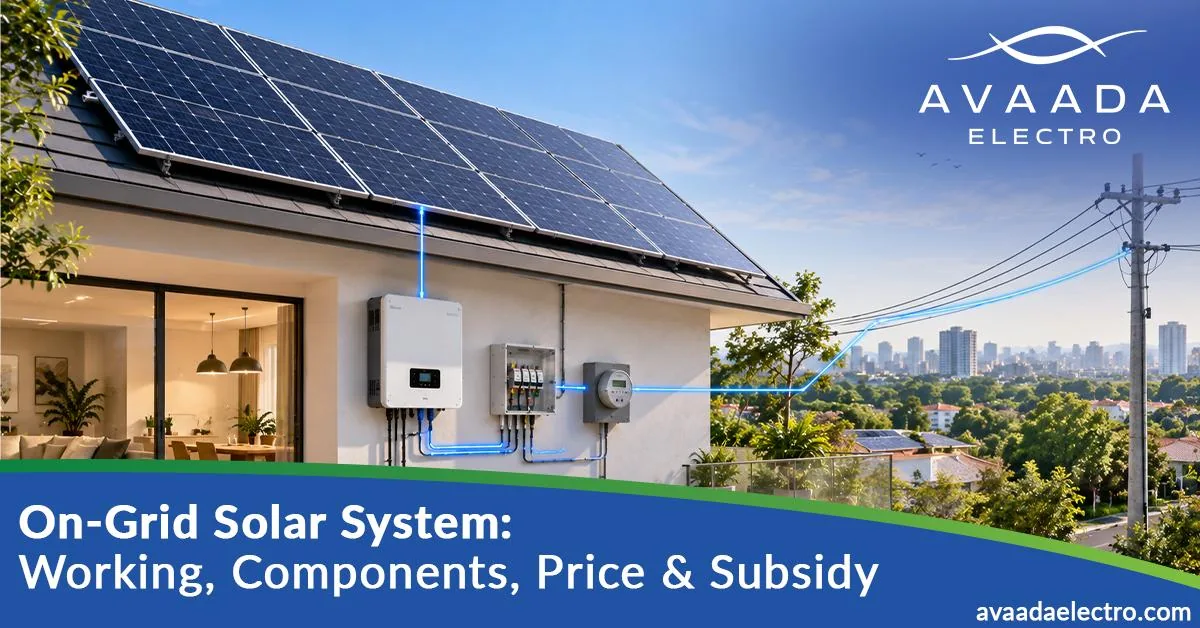
A 5kW solar system is not just panels on a roof. It is a complete electrical system made up of multiple components that work together. Here is what a full setup includes:
Component | What It Does | What to Look For |
Solar Panels | Converts sunlight to DC electricity | N-Type TOPCon for better efficiency; ALMM-listed for subsidy eligibility |
Solar Inverter | Converts DC to usable AC power | String inverter for basic use; hybrid inverter if you want battery backup later |
Mounting Structure | Fixes panels to roof at optimal angle | Hot-dip galvanized for corrosion resistance; wind load certification |
Cables and Connectors | Carries electricity safely | UV-resistant, flame-retardant, IEC-rated cables |
AC Distribution Box (ACDB) | Protects the AC side of the system | Surge protection, MCBs, and isolation switches |
DC Distribution Box (DCDB) | Manages DC wiring between panels and inverter | String fuses, disconnect switches |
Net Meter | Tracks exported and imported units | Installed by DISCOM after system commissioning |
Monitoring System | Tracks real-time generation | App-based monitoring most modern inverters include this |
Grid-Tied vs Hybrid vs Off-Grid Which Type Is Right for You?
Choosing the right type of 5kW solar system is the most important decision you will make. Here is a side-by-side comparison to help you decide:
Feature | Grid-Tied | Hybrid | Off-Grid |
Battery included | No | Yes | Yes (large) |
Works during power cut | No | Yes | Yes |
Net metering eligible | Yes | Yes | No |
PM Surya Ghar subsidy | Yes | Partial (solar only) | No |
Best for | Urban homes, stable grid | Areas with daily cuts | Remote / farms |
Approx. cost (5kW) | ₹1.4–1.7L (post-subsidy) | ₹3.5–4.5L | ₹3.8–4.8L |
Payback period | 3–5 years | 6–8 years | 7–10 years |
For most urban and semi-urban homeowners with a reasonably stable grid, a grid-tied system offers the best combination of savings, subsidy, and payback period.
If you’re checking the 5kw off grid solar system price in India for a remote property with no grid access, expect to pay ₹3.8-4.8 lakh since the entire cost falls on you with no subsidy support.
Step-by-Step Installation Process Under PM Surya Ghar
The PM Surya Ghar Yojana process is fully digital and straightforward when you follow each step correctly. Here is the complete process:
- Register on pmsuryaghar.gov.in with your mobile number and electricity consumer number
- Select your state DISCOM and choose an MNRE-empanelled vendor from the portal dashboard
- The vendor visits your site, takes a roof assessment, and submits a technical feasibility report to your DISCOM
- DISCOM reviews and grants feasibility approval (typically 7–30 days depending on the state)
- Installation begins panels, inverter, mounting structure, cabling, and protection equipment are fitted and tested
- Your vendor applies for net meter installation through the DISCOM portal
- DISCOM installs the net meter, conducts a final inspection, and commissions the system
- After successful commissioning, the subsidy amount (₹78,000 for 5kW) is credited directly to your Aadhaar-linked bank account
Common Challenges and How to Handle Them
Most installation issues are preventable when you know what to watch for. Here are the four most common challenges homeowners face:
Net-Metering and DISCOM Approval Delays
State-level DISCOM processing times vary widely from 10 days in Gujarat to 8 weeks in some parts of Uttar Pradesh. Choosing a vendor who actively follows up with your DISCOM on your behalf is the single biggest time-saver.
Limited Roof Space or Heavy Shading
If your roof has trees, water tanks, or adjacent buildings causing shade, consider high-efficiency N-Type TOPCon modules (630–720 Wp) that perform better in partial shading than standard Mono-PERC panels.
Grid-Tied, Hybrid or Off-Grid Choosing Wrongly
Many homeowners opt for expensive hybrid systems when their area has less than 2 hours of daily power cuts. A simple load assessment and power-cut audit with your installer before purchase prevents this expensive mistake.
Subsidy Rejection Due to Non-ALMM Panels
PM Surya Ghar subsidy is strictly linked to ALMM-listed solar modules and MNRE-empanelled vendors. Always ask your vendor to share the ALMM certificate of the panels before signing any agreement. If the panels are not on the ALMM list, you will lose your ₹78,000 subsidy.
How to Fix and Repair Your 5kW Solar Panel System
Correct maintenance will ensure your solar investment performs properly throughout its 30+ years of life. The following are some of the main tips and typical problems that should be observed:
Panel Cleaning
Dust, dirt, and droppings of birds may decrease power output. Wipe down the clean panel using water and a soft cloth after every couple of months- more frequently in dusty places. No harsh chemicals or tough materials are to be used.
Shade Management
Make it a habit to ensure that there are no new obstructions (trees, buildings) that are shading your panels, because shading is a sure way to cut down production of energy by a substantial margin.
Measure Performance
Inverter displays or monitoring applications can monitor energy generation. Sudden drops may be an indication of panel, wiring or inverter issues.
Wiring Inspection
Connection of the wires can be loose or corroded which results in faults and dangers. Have electrical connections inspected by a skilled electrician on an annual basis.
Inverter Maintenance
Clean, well-ventilated and has no fault codes. Most inverter errors have certain fault indicators.
Battery (hybrid systems) Maintenance
Check the health of batteries, keep electrolyte levels (where applicable) and prevent deep discharges to increase the lifespan of the battery.
Resolving Faults in Time
In case you observe flickering lights, system shutdowns, alarms, etc, call your installer or official service to avoid damage.
Adhering to these maintenance procedures would help you save on money as well as maintain a running system that would save you years of reliability in power supply.
Read More – Solar Panel Subsidy
5kW Solar System Performance by City in India
Solar generation varies significantly by location. Here is how a standard 5kW system performs across major Indian cities:
City | Avg. Peak Sun Hours | Daily Generation (est.) | Annual Generation (est.) | Annual Savings (@ ₹7/unit) |
Jodhpur / Jaisalmer | 6.0 hrs | ~24–26 units | ~8,800–9,500 units | ~₹61,600–₹66,500 |
Ahmedabad / Surat | 5.8 hrs | ~23–25 units | ~8,400–9,100 units | ~₹58,800–₹63,700 |
Delhi / NCR | 5.0 hrs | ~20–22 units | ~7,300–8,000 units | ~₹51,100–₹56,000 |
Mumbai / Pune | 5.2 hrs | ~21–23 units | ~7,700–8,400 units | ~₹53,900–₹58,800 |
Bengaluru / Chennai | 5.3 hrs | ~21–23 units | ~7,700–8,400 units | ~₹53,900–₹58,800 |
Hyderabad | 5.4 hrs | ~22–24 units | ~8,000–8,800 units | ~₹56,000–₹61,600 |
Kolkata / Bhubaneswar | 4.7 hrs | ~19–21 units | ~6,900–7,700 units | ~₹48,300–₹53,900 |
Values are estimates based on typical peak sun hours. Actual generation depends on installation quality, panel efficiency, roof orientation, and local weather patterns.
Why Avaada Electro for Your 5kW Solar System
Here is what makes Avaada Electro the right choice for a 5kW rooftop solar investment:
What You Get | Why It Matters |
N-Type TOPCon panels (630–720 Wp) | Fewer panels needed, more power per square foot ideal for smaller rooftops |
ALMM-listed and BIS/IEC certified | Qualifies you for the full ₹78,000 PM Surya Ghar subsidy without dispute |
AI-automated manufacturing | Consistent quality control across every module |
30-year performance warranty | Panels will produce at guaranteed output for three decades |
End-to-end installation support | From site survey to subsidy documentation handled by Avaada’s team |
App-based monitoring | Track your daily generation, savings, and carbon offset in real time |
Conclusion
For most Indian homeowners, a 5kW solar panel system is not just an energy decision, it is a financial one. Here is the bottom line:
- With the PM Surya Ghar subsidy, your out-of-pocket cost drops to approximately ₹1.4–1.8 lakh
- Annual savings range from ₹45,000 to ₹90,000 depending on your electricity tariff and consumption
- Most homeowners reach break-even in 2–5 years, after which electricity is essentially free for 20+ more years
- Property value increases by 3–5% for solar-equipped homes
- Every year you delay costs you one year of free electricity
If you are running a 3 BHK or larger home with an AC, and your monthly electricity bill is above ₹3,000, a 5kW grid-tied solar system will almost certainly be among the best financial decisions you make this year.
Frequently Asked Questions
How much electricity does a 5kW solar system produce per day?
A 5kW solar system typically generates 20–24 units (kWh) per day in most parts of India, assuming 4.5–6 peak sun hours. Annual output ranges from 7,300 to 8,500 units depending on your location and installation quality.
What is the subsidy for a 5kW solar system under PM Surya Ghar?
The central government subsidy for a 5kW grid-tied system is fixed at ₹78,000. This is calculated as: ₹60,000 for the first 2kW (at ₹30,000/kW) + ₹18,000 for the next 1kW (at ₹18,000/kW). No additional subsidy is provided for capacity above 3kW.
Does a 3 BHK home have enough power from a 5kW solar system?
Yes. A 5kW system comfortably runs 1–2 air conditioners, a refrigerator, washing machine, lights, fans, and all standard kitchen appliances typical in a 3–4 BHK Indian home.
How much roof space is needed for a 5kW solar system?
You need approximately 300–400 square feet (27–37 sq metres) of shadow-free roof area for a standard 5kW system using Mono-PERC panels. With high-efficiency N-Type TOPCon panels, this reduces to roughly 250–300 square feet.
Will a 5kW solar system work during a power cut?
A standard grid-tied 5kW system shuts down during a power cut for safety reasons (anti-islanding protection). To use solar power during outages, you need a hybrid system with battery backup.
What is the lifespan of a 5kW solar system?
Solar panels are designed to last 25–30 years. Most manufacturers guarantee 80% of rated output at the end of 25 years. Inverters typically last 10–15 years and may need replacement once during the system’s lifetime.
Is there a state-level subsidy on top of the central subsidy?
Some states offer additional subsidies on top of the central government’s ₹78,000. For example, Gujarat and Maharashtra have run state-level incentives in the past. Always check your state’s current DISCOM website or the PM Surya Ghar portal for the latest state-specific scheme updates.
What happens to excess electricity my 5kW system generates?
With a grid-tied system and net metering, any electricity you generate beyond your immediate need is exported to the grid. Your electricity bill will show this export as credits, which are deducted from your import consumption effectively reducing or even eliminating your electricity bill each month.
What is the 5kW solar panel price in India for different system types?
The 5kW solar panel price in India varies by system: Grid-tied costs ₹2.2–₹2.6 lakh before subsidy; Hybrid costs ₹3.5–₹4.5 lakh; Off-grid costs ₹3.8–₹4.8 lakh. Only grid-tied and hybrid (solar portion) qualify for subsidy.
What is the 5kw off grid solar system price in india?
An off-grid 5kW system costs between ₹3.8 lakh and ₹4.8 lakh in India, since it includes a larger battery bank sized to cover your full daily load without grid backup. This system type doesn’t qualify for the PM Surya Ghar subsidy, so the entire cost is out-of-pocket making it best suited for remote areas or farms with no reliable grid connection.