

In the quest for sustainable energy solutions, solar power stands out as a beacon of hope. Central to harnessing this abundant source of clean energy are solar modules, the building blocks of solar panels.
Over the years, the manufacturing processes behind these modules have undergone a remarkable evolution, transitioning from conventional methods to cutting-edge techniques.
In this blog, we embark on a journey through time to explore the fascinating evolution of solar module manufacturing, tracing the innovations and advancements that have propelled the industry forward.
The Early Days
In the early days of solar energy, manufacturing solar modules was a labor-intensive and costly endeavor. Conventional techniques involved the use of crystalline silicon cells, which were painstakingly assembled into modules by hand.
Each step of the process, from cutting silicon wafers to soldering connections, required skilled labor and meticulous attention to detail. As a result, solar modules were relatively expensive and accessible to only a niche market.
The Rise of Thin-Film Technology
The landscape of solar module manufacturing began to shift with the emergence of thin-film technology. Thin-film solar cells, made from materials such as amorphous silicon, cadmium telluride, and copper indium gallium selenide (CIGS), offered a lighter, more flexible alternative to traditional crystalline silicon cells.
This breakthrough opened up new possibilities for solar module design and manufacturing, paving the way for lighter, more versatile modules that could be integrated into a variety of applications, including building-integrated photovoltaics (BIPV) and portable solar chargers.
Read More – Material Innovations On Solar Module Manufacturing
The Advent of PERC and Beyond
In recent years, the solar industry has witnessed a wave of innovation driven by the pursuit of higher efficiency and lower costs. One of the most significant advancements has been the introduction of Passivated Emitter and Rear Cell (PERC) technology.
By adding a passivation layer to the rear surface of solar cells, PERC technology reduces recombination losses and enhances cell efficiency. This breakthrough has enabled manufacturers to produce modules with higher power output and improved performance under real-world conditions.
Beyond PERC, researchers and manufacturers are exploring a range of advanced techniques to further push the boundaries of solar module efficiency and durability. These include bifacial modules, which can capture sunlight from both the front and rear surfaces, as well as tandem solar cells, which combine multiple layers of photovoltaic materials to achieve higher efficiencies.
The Role of Automation
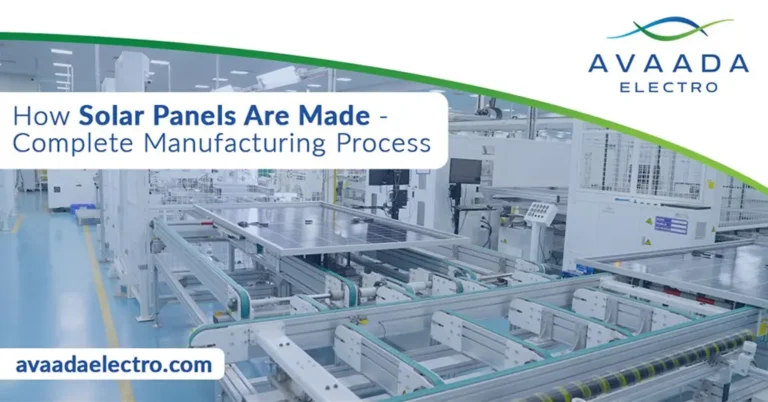
Central to the evolution of solar module manufacturing has been the increasing role of automation and robotics. Automated production lines have enabled manufacturers to scale up production, reduce labor costs, and improve product consistency.
From automated cell soldering and stringing to robotic module assembly and quality control, automation has revolutionized the way solar modules are manufactured, making the process faster, more efficient, and less prone to human error.
Read More – Quality Control In Solar Module Manufacturing
Conclusion
The journey of solar module manufacturing from its humble beginnings to the forefront of renewable energy technology is a testament to human ingenuity and innovation.
As we look to the future, the evolution of solar module manufacturing continues unabated, driven by a relentless pursuit of efficiency, sustainability, and affordability.
With each new advancement, solar power moves one step closer to realizing its full potential as a clean, abundant, and accessible source of energy for generations to come.