

Are you looking for a reliable way to reduce your electricity bills or power a small off-grid setup without spending a fortune? The 200-watt solar panel price in India makes it one of the most accessible entry points into clean energy for small-scale, portable, and emergency backup setups. A single 200W module ranges from ₹6,000 to ₹12,000, depending on the specific technology, build quality, and manufacturing standards. While individual small modules do not qualify for the popular PM Surya Ghar Muft Bijli Yojana, which offers up to ₹78,000 in central subsidy for residential systems starting at 1 kW, understanding how these small units fit into the larger clean energy ecosystem is highly beneficial. With India’s off-grid solar segment expanding steadily at a compound annual growth rate (CAGR) of 35%, choosing the right technology remains vital for maximizing long-term returns.
What is a 200 Watt Solar Panel?
A 200-watt panel is a compact solar photovoltaic module engineered to generate 200 watts of direct current (DC) power under standard test conditions. These standard conditions include a solar irradiance of 1,000 watts per square meter and a cell temperature of 25°C. These modules are widely favored for small-scale electricity generation rather than for large home rooftop systems.
Core Configurations and Sizes
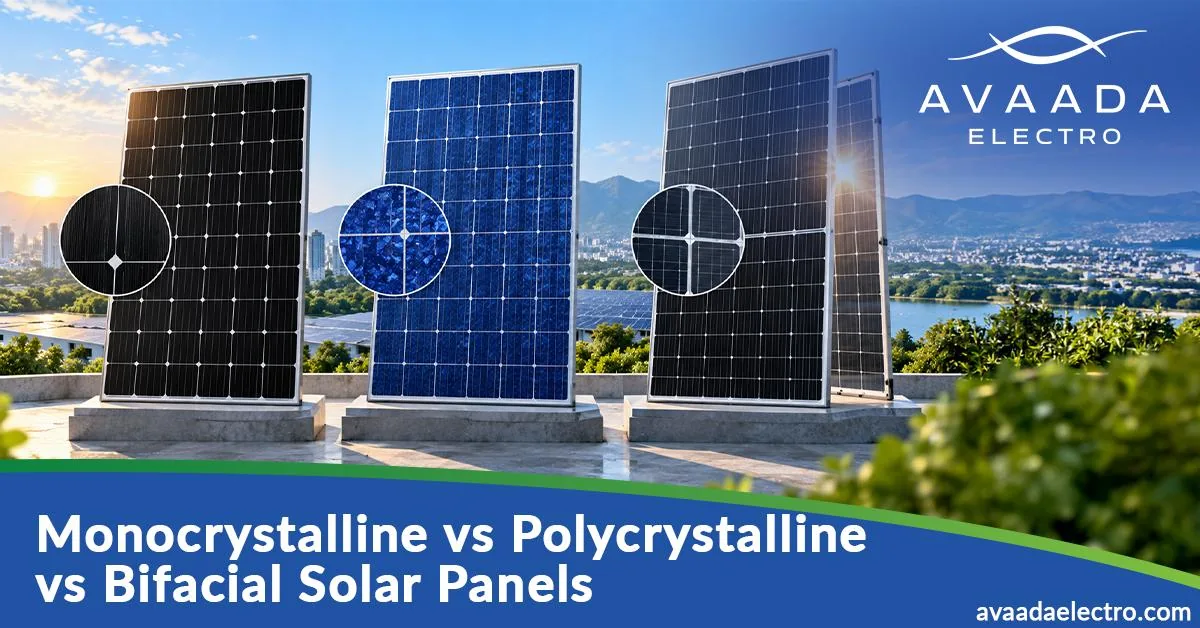
- Monocrystalline Panels: These utilize high-purity silicon cells to achieve an efficiency rating between 19% and 22%. They perform exceptionally well in tight spaces.
- Bifacial Mono PERC Panels: These generate power from both sides by absorbing direct sunlight on the front and reflected light on the back, reaching efficiencies between 21% and 23%.
- Physical Profile: A standard 200W panel features a space-saving structure measuring roughly 1500–1900 mm in length, 1000 mm in width, and 35–40 mm in frame thickness.
- Weight and Transport: Weighing only 11-14 kg, these modules are highly portable, making them a top choice for remote areas, camping, and mobile cabins.
Recent industry reports indicate that 200W modules account for over 60% of portable and off-grid solar setups across India due to their convenience and low initial setup cost.
Solar Plate 200 Watt Price in India
The solar plate 200 watt price depends mainly on the cell design, the product warranty, and the manufacturer’s reputation. On average, the market solar plate price per watt-peak is around ₹25-₹30 before taxes and shipping costs.
Panel Price Breakdown by Technology
The table below illustrates the estimated price ranges for a single 200W module based on the technology type:
| Panel Type | Indicative Price Range (Rs.) | Average Efficiency | Best Application |
| Monocrystalline | 6,500 – 8,500 | 19% – 22% | Premium quality, restricted spaces |
| Bifacial Mono PERC | 7,500 – 10,000 | 21% – 23% | High-generation ground or elevated setups |
Total Off-Grid System Costs
When building a functioning off-grid system, you must account for extra components such as an MPPT charge controller, a lithium iron phosphate (LiFePO4) battery, mounting structures, and wiring.
- Single 200W Off-Grid Setup: A complete setup costs between ₹70,000 and ₹1,08,500 depending on battery storage capacity.
- 400W Off-Grid Setup (2 x 200W Panels): Combining two panels increases the total system cost.
- 1 kW Grid-Connected Comparison: A standard 1 kW grid-tied system costs around ₹70,000 to ₹1,02,000. Using larger high-capacity modules like 550W panels is far more economical for grid-tied applications.
200 Watt Solar Plate Price: State-Wise Comparison
The final solar plate price can vary across different states due to localized shipping fees, supply chain networks, and regional dealer margins. States with major manufacturing facilities generally offer slightly more competitive pricing.
State / UT | Indicative Price Range Per Panel (Rs.) | Estimated Installation Cost (Rs.) | Additional State Top-Up Subsidy |
Gujarat | 6,000 – 8,000 | 1,500 – 2,500 | None for individual 200W panels |
Rajasthan | 6,000 – 8,000 | 1,500 – 2,500 | None for individual 200W panels |
Maharashtra | 7,000 – 9,500 | 2,000 – 3,000 | None |
Karnataka | 7,000 – 9,500 | 2,000 – 3,000 | None |
Tamil Nadu | 7,000 – 9,500 | 2,000 – 3,000 | None |
Uttar Pradesh | 7,000 – 9,500 | 2,000 – 3,000 | ₹15,000/kW (Only for 1 kW+ grid systems) |
Delhi | 7,000 – 9,500 | 2,000 – 3,000 | None |
West Bengal | 7,000 – 9,500 | 2,000 – 3,000 | None |
Government Subsidy on Solar Panels (PM Surya Ghar Yojana)
The Indian government provides substantial financial aid to accelerate clean energy adoption through the PM Surya Ghar Muft Bijli Yojana. However, consumers must understand the specific rules regarding system sizes and eligibility.
Central Government Subsidy Structure
The central financial assistance follows a fixed, tier-based model for residential rooftop connections:
- 1 kW Systems: Fixed subsidy of ₹30,000.
- 2 kW Systems: Fixed subsidy of ₹60,000.
- 3 kW Systems and Above: Capped at a maximum flat subsidy of ₹78,000.
Crucial Note on Eligibility: A standalone 200W panel does not qualify for any government subsidy. The minimum required capacity to claim financial assistance is 1 kW. To build a 1 kW system with 200W modules, you would need to connect 5 panels. For standard home rooftops, installing fewer high-capacity modules (such as two 550W panels) is structurally and financially smarter. Furthermore, subsidies are strictly limited to grid-connected setups that use Domestic Content Requirement (DCR)- certified modules installed by empanelled vendors. Off-grid configurations do not qualify for this program.
Read More: 3 kilowatt solar panel price
How Many 200 Watt Solar Panels Do You Need?
To calculate the number of panels required, divide your target system wattage by each panel’s capacity.
For a 1 kW (1000W) system,
Number of Panels = 1000W / 200W = 5 Panels
While a 1 kW rooftop setup can be built with 5 small panels, it is not ideal for standard home roofs. Using high-capacity utility-scale modules from premium solar panel brands in India saves significant space, reduces mounting structure weight, and cuts installation labor costs by half.
Small 200W modules provide the highest utility in dedicated, low-load scenarios:
Application Type | Recommended Number of 200W Panels | Estimated Daily Generation | Ideal For |
Outdoor Camping | 1 Panel | 0.8 – 1.0 kWh | Charging smartphones, running small LED lights |
CCTV Security Systems | 1 – 2 Panels | 0.8 – 2.0 kWh | 24/7 remote cameras and Wi-Fi routers |
RV / Travel Caravans | 2 – 3 Panels | 1.6 – 3.0 kWh | Small refrigerators, fans, and laptop chargers |
Remote Cabins | 3 – 4 Panels | 2.4 – 4.0 kWh | Basic indoor lighting and small DC water pumps |
200 Watt Solar Panel System: Applications & Use Cases
Small-capacity panels show outstanding performance when deployed in targeted off-grid roles where bringing utility grid lines is impossible or overly expensive.
Perfect Use Cases
- Mobile Power Source: Easily mounted on top of boats, food trucks, or recreational vehicles to keep auxiliary batteries charged during travel.
- Agricultural Automation: Powering remote automated gates, soil sensors, or low-voltage livestock fences out in open fields.
- Emergency Preparedness: Keeping dedicated backup lighting and communication radios functional during severe storm outages.
What It Cannot Run
A 200W system cannot run heavy household appliances. It will not power a 1.5-ton air conditioner, an electric water heater, or large kitchen appliances. These heavy loads require a robust residential rooftop system powered by advanced module manufacturing.
Read More: Photovoltaic cell
200 Watt Solar Panel Buying Guide
Making a smart purchase requires checking key quality indicators to ensure long-term durability in harsh weather.
- Look for Mandatory Certifications: Ensure the product holds valid Bureau of Indian Standards (BIS) certification and matches international benchmarking standards like IEC 61215 and IEC 61730 from agencies like TÜV Rheinland.
- Inspect the Temperature Coefficient: A lower temperature coefficient (closer to -0.30%/°C) ensures that the panel continues to deliver high power output even during peak summer days.
- Review Warranty Terms: Standard premium tiers offer a 10 to 15-year product warranty alongside a 25 to 30-year linear performance warranty.
- Choose Trusted Manufacturers: Buying from established players ensures reliable after-sales assistance and verified technical engineering.
Final Thoughts
The 200-watt solar panel is an excellent, budget-friendly option for portable power, remote monitoring, and outdoor journeys. However, for sustainable home electrification, shifting your focus toward higher-capacity, multi-kilowatt rooftop systems remains the most financially sound choice.
Avaada Electro focuses on engineering high-efficiency N-Type TOPCon and large-format bifacial modules. Driven by our core framework of Integrity, Passion, and Accountability, we focus on superior manufacturing excellence. Whether you are optimizing a commercial facility or transitioning your residence to clean energy, picking industrial-grade, certified components is the definitive path toward Powering a Sustainable Future.
FAQs
Can a 200-watt solar panel run a refrigerator?
No, a single 200W panel cannot directly power a standard household refrigerator. Refrigerators require high starting current and continuous power, which demand a larger multi-panel array backed by a substantial inverter and battery storage bank.
Is a 200W solar panel eligible for the PM Surya Ghar subsidy?
No, individual 200W panels or off-grid systems do not qualify for the subsidy. The government program applies exclusively to grid-connected residential rooftop systems with a minimum capacity of 1 kW or higher.
How much energy does a 200W solar panel generate daily?
In medium- to high-radiation zones like western and central India, a 200W panel generates roughly 0.8 to 1.2 kilowatt-hours (kWh) of electricity per day, assuming 4 to 6 hours of unshaded, peak sunlight.