
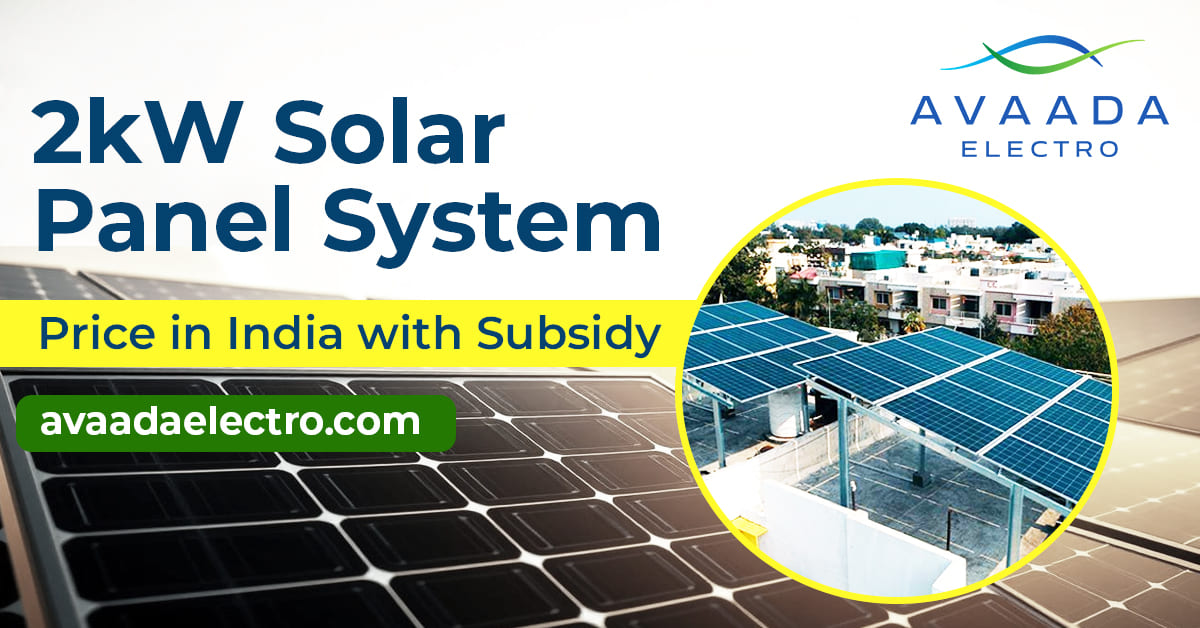
Planning to cut electricity bills without a heavy upfront spend? A 2 kilowatt solar panel is one of the most practical rooftop choices for a small Indian home.
The 2kW solar panel price in India starts at around ₹1,30,000 before subsidy and comes down to roughly ₹78,000 after the ₹52,000 PM Surya Ghar subsidy. That means a payback period of just 3.5–4.5 years, with near-free electricity for 20+ years after that.
In this guide: real price breakdowns (with and without subsidy), state-wise costs, what a 2000 watt solar panel price in India can actually run, and a step-by-step installation walkthrough.
What Is a 2kW Solar Panel System?
A 2 kilowatt solar system also written as a 2 kW or 2000 watt solar panel price in india is a rooftop setup that delivers up to 2,000 watts of power under peak sunlight. That works out to 10–12 units of electricity every day.
You only need about 150–200 sq. ft. of shadow-free rooftop space, which most 1–2 BHK homes in India already have.
| Parameter | Details |
| System Capacity | 2 kW (2,000 watts) |
| Daily Generation | 10–12 units |
| Monthly Generation | 300–360 units |
| Annual Generation | 3,650–4,380 units |
| Roof Area Required | 150–200 sq. ft. |
| Grid Connection | Yes (on-grid) |
| Battery Required | No (on-grid) |
| System Lifespan | 25+ years |
| Best Suited For | 1–2 BHK homes |
How Does a 2kW Solar Panel System Work
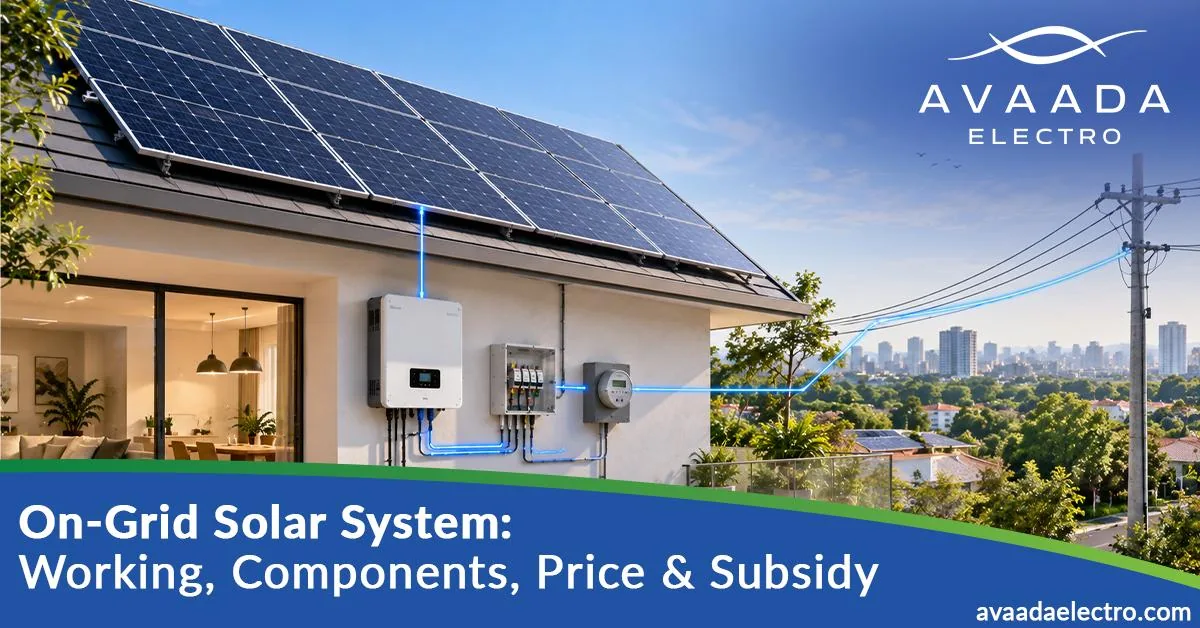
A 2kW on-grid solar system works in four simple steps:
- Solar panels capture sunlight and generate direct current (DC) electricity from rooftop panels.
- The solar inverter converts power it transforms DC electricity into the AC electricity your home appliances use.
- Your appliances run on solar first generated power goes directly to your lights, fans, fridge, and other loads.
- Surplus goes to the grid via net metering any excess electricity you generate is exported to the DISCOM grid, and you get credits against future bills.
At night or on cloudy days, electricity is drawn from the grid as usual you are never without power.
How Many Solar Panels Does a 2kW System Need?
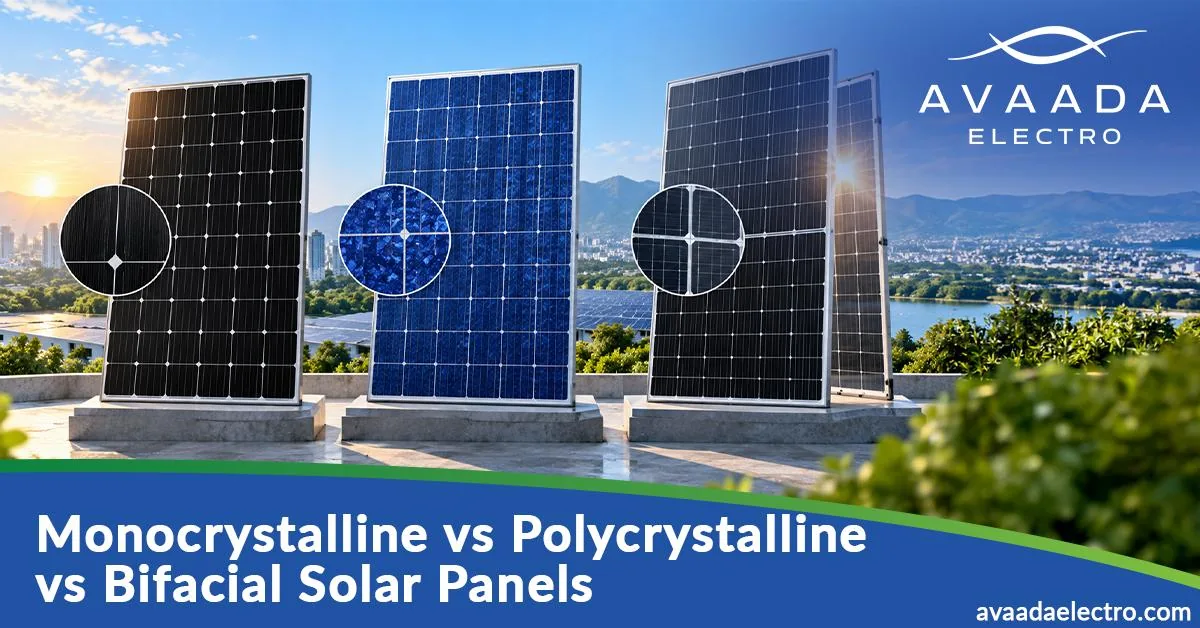
| Panel Type | Wattage (Wp) | Panels Needed | Best For |
| N-Type TOPCon | 630–720 Wp | 3–4 panels | Limited roof, best long-term output |
| Mono-PERC (High-Watt) | 540–550 Wp | 4 panels | Good balance of cost and efficiency |
| Mono-PERC (Standard) | 440–500 Wp | 4–5 panels | Budget-conscious builds |
| Standard Mono | 330 Wp | 6–7 panels | Older or budget installs |
2 Kilowatt Solar Panel Price in India (With and Without Subsidy)
The 2 kilowatt solar panel price in India varies by system type. Here is the current market range before and after the PM Surya Ghar subsidy:
| System Type | Price Before Subsidy | Subsidy Available | Final Price (Approx.) |
| 2kW On-Grid | ₹1,30,000 – ₹1,60,000 | ₹52,000 – ₹60,000* | ₹70,000 – ₹1,08,000 |
| 2kW Hybrid | ₹1,80,000 – ₹2,30,000 | Not Eligible | ₹1,80,000 – ₹2,30,000 |
| 2kW Off-Grid | ₹1,90,000 – ₹2,40,000 | Not Eligible | ₹1,90,000 – ₹2,40,000 |
2 Kilowatt Solar Panel Price Across States in India
| State / City | Price with Installation (Before Subsidy) | Price After Subsidy (Approx.) |
| Delhi NCR | ₹1,90,000 | ₹1,30,000 |
| Maharashtra (Pune / Mumbai) | ₹1,75,000 | ₹1,15,000 |
| Madhya Pradesh (Bhopal) | ₹1,80,000 | ₹1,20,000 |
| Uttar Pradesh (Lucknow) | ₹1,80,000 | ₹90,000* |
| Rajasthan (Jaipur) | ₹1,90,000 | ₹1,30,000 |
| Gujarat (Ahmedabad) | ₹1,75,000 | ₹1,15,000 |
| Karnataka (Bengaluru) | ₹2,00,000 | ₹1,40,000 |
| Telangana (Hyderabad) | ₹1,75,000 | ₹1,15,000 |
| Tamil Nadu (Chennai) | ₹2,05,000 | ₹1,45,000 |
*UP homeowners may receive an additional state subsidy of ₹30,000 on top of the central subsidy, reducing the 2kw solar system price in india further. Always verify current state scheme status with your DISCOM.
Note: Prices are indicative and vary by vendor, panel brand, and rooftop structure. Always request 2–3 quotes from DISCOM-empanelled installers in your area.
Government Subsidy for 2 kW Solar System (PM Surya Ghar Yojana 2026)
The Indian households have been rendered small rooftop systems, such as 2 kW, very affordable through the PM Surya Ghar Muft Bijli Yojana. Its subsidy system is straightforward –
Systems up to 3 kW (including 1 kW, 2 kW and 3 kW systems) shall be subsidised by 40%.
In the case of a 2 kW system, the total value of the subsidy available is INR 52,000.
The subsidy is passed to the bank account of the homeowner once the installation, inspection and net-metering approval are done. You are not required to pay the system cost minus subsidy at an upfront stage, but rather the subsidy is accrued in the future.
Important –
ALMM-approved solar modules must be installed, and a DISCOM-empanelled vendor must be chosen; otherwise, the subsidy will not be granted.
The system should not be on the grid (systems that have battery backup are not eligible).
PM Surya Ghar Muft Bijli Yojana
Under the PM Surya Ghar Muft Bijli Yojana, residential on-grid solar systems up to 3kW attract a central subsidy. For a 2kW system, the central subsidy is ₹52,000–₹60,000 (subject to current benchmark rates).
The subsidy is credited directly to your bank account after three steps: installation, DISCOM inspection, and net-metering connection.
Key Conditions to Receive the Subsidy
- System must be on-grid (no battery backup)
- Panels must be ALMM-listed modules
- Vendor must be DISCOM-empanelled
- Application must go through the PM Surya Ghar portal (gov.in)
Component-Wise Cost Breakdown of a 2kW Solar Panel System
Here is a transparent breakdown of where your money goes in a typical 2 kw solar panel price calculation:
| Component | What It Covers | Approx. Cost (₹) |
| Solar Panels (2kW) | 4–6 Mono-PERC or 3–4 TOPCon panels | ₹48,000 – ₹90,000 |
| Solar Inverter | 2kW on-grid string inverter | ₹22,000 – ₹40,000 |
| Mounting Structure | GI / Aluminium frame with fasteners | ₹12,000 – ₹20,000 |
| DC/AC Cables & Wiring | Fire-resistant, high-quality cable runs | ₹6,000 – ₹15,000 |
| Protection Devices | MCB, SPD, ACDB, DCDB, earthing kit | ₹10,000 – ₹14,000 |
| Labour & Installation | Skilled install + commissioning | ₹10,000 – ₹20,000 |
| Net Metering Fee | DISCOM application + bidirectional meter | ₹500 – ₹1,500 |
| Total (Before Subsidy) | ₹1,30,000 – ₹1,60,000 |
What Can a 2 Kilowatt Solar Panel System Actually Power?
One of the most-searched questions before buying a 2kW solar panel is will it run my appliances? Here is a clear answer:
| Load Category | Appliances | Can a 2kW System Handle It? |
| Daily Essentials | 5–6 ceiling fans, 8–10 LED lights, 1 fridge, TV, WiFi, laptop, mobiles | Yes Runs Comfortably |
| Moderate Use | Washing machine, mixer-grinder, induction cooktop, 0.5 HP pump (occasional) | Yes With Care |
| Heavy Loads | 1-ton AC, geyser, large water pump, heavy heating appliances | No Needs 3–4kW System |
Payback Period and ROI of a 2kW Solar Panel System
Here is a realistic financial picture based on the mid-range 2 kilowatt solar system price with the PM Surya Ghar subsidy applied:
| Parameter | Value |
| System Cost (Mid-Range, Before Subsidy) | ₹1,40,000 |
| PM Surya Ghar Subsidy | ₹52,000 – ₹60,000 |
| Net Cost to Homeowner | ₹80,000 – ₹88,000 |
| Average Daily Generation | 8–10 units |
| Monthly Bill Savings | ₹800 – ₹1,500 |
| Annual Savings | ₹10,000 – ₹18,000 |
| Payback Period | 3.5 – 4.5 years |
| Lifetime Savings (25 Years) | ₹3.5 – ₹4.5 lakh |
| CO2 Reduction (Annual) | 2.4 – 2.6 tonnes |
| Equivalent Trees Planted (Annual) | 120 – 140 |
What Affects the Final 2kW Solar Panel Price in India
7 factors: panel type, inverter type, roof structure, cable quality, vendor distance, state labour rates, DISCOM fees.
No two 2kw solar panel price installations cost the same. Here are the variables that move the final price:
- Panel Technology: TOPCon panels (630–720 Wp) cost slightly more but deliver better long-term efficiency worth it for rooftops with limited space. Standard Mono-PERC (440–550 Wp) is more budget-friendly.
- Inverter Type: On-grid inverters are the most affordable. Hybrid inverters cost more but add battery compatibility if you want power backup later.
- Roof Type: Flat roofs need additional mounting tilt frames. Metal shed roofs require different fastening hardware. Both add cost.
- State and City: Metro installation labour costs more. Some states charge higher DISCOM processing fees for net-metering.
- Cable and Protection Quality: Premium DC cables, ACDB/DCDB panels, and SPDs add cost but reduce safety risks and increase system life.
- Tier-1 vs Budget Brands: Tier-1 solar panel brands (Avaada,Waaree, REC, Jinko) cost more upfront but have stronger performance warranties and better degradation rates.
Why a 2kW Solar Panel Is Worth Installing
- Monthly Bill Savings: Most homes save ₹800–₹1,500 per month ₹10,000–₹18,000 per year without any lifestyle change.
- Fast Payback: At under 4.5 years post-subsidy, this system pays for itself faster than most home upgrades.
- Electricity Tariff Protection: DISCOM tariffs rise almost every year. Solar locks your generation cost at near-zero, making savings grow year on year.
- Property Value Boost: Homes with solar already installed attract buyers who value lower running costs especially in urban markets.
- Environmental Impact: A 2kW system offsets ~2.5 tonnes of CO2 annually equivalent to planting 120–140 trees.
- Low Maintenance: No batteries in an on-grid setup means less to service. Just clean the panels every 15–30 days.
1kW, 2kW, 3kW and 5kW Solar Systems Which Is Best?
Not sure if 2kW is the right size? Here is how it compares across the most common residential solar sizes in India:
| Feature | 1kW | 2kW | 3kW | 5kW |
| Daily Generation | 6–7 units | 12–14 units | 18–21 units | 30–35 units |
| Monthly Savings | ₹600–₹1,000 | ₹1,200–₹2,100 | ₹2,250–₹3,500 | ₹5,250–₹7,000 |
| Central Subsidy | ₹30,000 | ₹52,000–₹60,000 | ₹78,000 | ₹78,000 |
| Roof Space | 80–100 sq.ft. | 150–200 sq.ft. | 260–300 sq.ft. | 430–500 sq.ft. |
| Best For | 1 BHK, minimal use | 1–2 BHK homes | 2–3 BHK homes | 3+ BHK, ACs |
| Payback Period | 4–5 years | 3.5–4.5 years | 3–4 years | 3.5–4 years |
2 kW Solar System Step-by-Step Installation Guide
The full process from portal registration to subsidy credit typically takes 4–8 weeks. Here is what each step involves:
- Register on PM Surya Ghar Portal Go to pmsuryaghar.gov.in and register using your electricity consumer number and Aadhaar details.
- Choose a DISCOM-Empanelled Installer Select only from vendors listed on the government portal. This is mandatory for subsidy eligibility.
- Site Survey and Roof Assessment Your installer visits to check roof dimensions, shade patterns, existing wiring, and grid connection point.
- Panel and Inverter Installation Mounting structure, panels, inverter, wiring, and protection devices are installed and commissioned.
- Net Metering Connection DISCOM installs a bidirectional meter and formally approves your grid connection.
- Subsidy Credit to Bank Account After final verification, ₹52,000–₹60,000 is credited directly to your registered bank account.
Maintenance & Performance Tips (Simple & Practical Advice)
- Clean Panels Every 15–30 Days: Dust and bird droppings can reduce generation by 10–15%. A damp cloth wipe in the morning is enough.
- Monitor Daily via App: Most inverters come with a monitoring app. A quick daily check will flag any unexpected dip in generation.
- Annual Electrical Safety Check: Have wiring, earthing, and protection devices inspected once a year by a certified technician.
- Keep the Area Shade-Free: Trim trees and reposition water tanks if they start casting shadows even partial shade noticeably hurts output.
- Plan Battery Addition Thoughtfully: If you decide to add storage later, check inverter compatibility first not all on-grid inverters support a battery retrofit.
Read More – 3Kw Solar Panel Price In India
Why Choose Avaada Electro for Your 2kW Solar System
| Feature | What It Means For You |
| N-Type TOPCon Panels (630–720 Wp) | 23%+ efficiency more power from a smaller rooftop, ideal for 150–200 sq.ft. builds |
| ALMM-Listed Modules | Subsidy-eligible under PM Surya Ghar mandatory for ₹52,000+ benefit |
| BIS, UL, IEC Certified | Meets international safety and performance benchmarks |
| 30-Year Performance Warranty | Among the longest in the industry protects your investment well beyond the payback period |
| Domestic Manufacturing (Butibori) | Faster supply chain, lower import risk, supports Make in India |
| Pan-India Distribution | Available nationwide with consistent EPC, rooftop, and O&M support |
Final Takeaway
The 2 kilowatt solar panel price in India has never been more accessible. A combination of the PM Surya Ghar subsidy, falling panel prices, and rising electricity tariffs means the system pays for itself in under 4.5 years and then generates near-free power for the next two decades.
The smartest move: go on-grid, use ALMM-listed modules from a certified manufacturer, and work with a DISCOM-empanelled installer who handles the paperwork. Get at least 2–3 quotes from empanelled vendors in your state before committing.
If you are comparing solar this season, the conditions right now in terms of 2kw solar system price in india with subsidy, government support, and technology are about as favourable as they have ever been.
Frequently Asked Questions
What is the 2 kilowatt solar panel price in India?
The 2 kilowatt solar panel price in India ranges from ₹1,30,000–₹1,60,000 before subsidy. After the PM Surya Ghar subsidy of ₹52,000–₹60,000, the net cost comes down to approximately ₹70,000–₹1,08,000 depending on your city and vendor.
What is the subsidy on a 2kW solar system?
The central government offers a subsidy under PM Surya Ghar Muft Bijli Yojana. For a 2kW on-grid system, the central subsidy is ₹52,000–₹60,000. In Uttar Pradesh, an additional state subsidy of ₹30,000 is available, taking the total to ₹90,000.
How much electricity does a 2 kilowatt solar panel generate per day?
A 2kW system typically generates 8–10 units of electricity per day, or 240–300 units per month, depending on sunlight availability in your city.
Is a 2kW solar system enough for a 2BHK house?
Yes a 2kW system is well-suited to a 1–2 BHK home with monthly consumption of 200–300 units. It comfortably supports fans, lights, a fridge, TV, WiFi, and similar loads. For homes with a 1-ton AC, a 3kW system is recommended.
Can a 2kW solar system run an air conditioner?
Not reliably. A 2kW system is not designed to support an AC as a regular load. If you need to run a 1-ton AC, upgrade to a 3kW or larger system.
How many solar panels are needed for a 2kW system?
It depends on panel wattage 3–4 panels at 630–720 Wp (TOPCon), 4 panels at 540–550 Wp, or up to 6–7 panels using older 330 Wp modules.
What is the payback period for a 2kW solar system?
Typically 3.5–4.5 years after subsidy, depending on your electricity tariff and usage. After payback, the system generates near-free electricity for 20+ more years.
Is net metering available with a 2kW system?
Yes. A 2kW on-grid system works with net metering surplus power goes to the grid and you receive credits, helping reduce future bills further.
How long does a 2 kilowatt solar panel system last?
Quality panels last 25–30 years. Inverters typically last 10–15 years. Overall system life with basic maintenance is 25+ years.
Are Avaada panels eligible for the PM Surya Ghar subsidy?
Yes. Avaada Electro panels are ALMM-listed, making them fully subsidy-eligible under PM Surya Ghar Muft Bijli Yojana.
What is the 2kw hybrid solar system price in India?
A 2kW hybrid solar system costs ₹1,80,000–₹2,30,000 in India, with no PM Surya Ghar subsidy since hybrid (battery-backed) systems don’t currently qualify. This is ₹50,000–₹70,000 more than an equivalent on-grid solar panel for home 2kw setup, but it provides power backup during outages a trade-off worth making only if your area sees frequent power cuts.
What is the solar panel for home 2kW price in India?
For residential use, a 2kW solar panel system costs ₹1,30,000–₹1,60,000 before subsidy in India. After the PM Surya Ghar subsidy of ₹52,000–₹60,000, homeowners typically pay ₹70,000–₹1,08,000 making it the most accessible rooftop solar entry point for 1–2 BHK homes.