
How can connecting your home directly to the sun reshape your monthly electricity bills while creating a cleaner environment? An on-grid solar system converts solar energy into electricity for household or commercial loads and can export surplus electricity to the grid under the applicable metering arrangement. According to the Ministry of New and Renewable Energy (MNRE), India’s cumulative installed solar capacity stood at 168.04 GW as of 31 August 2026. Understanding how grid-tied setups work helps property owners lower operating costs, manage energy use and take part in local clean-energy transformation.
What Is an On-Grid Solar System? Understanding On-Grid Solar Systems
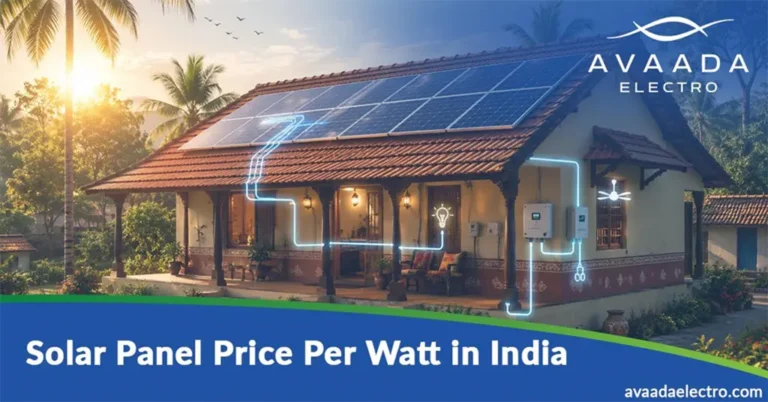
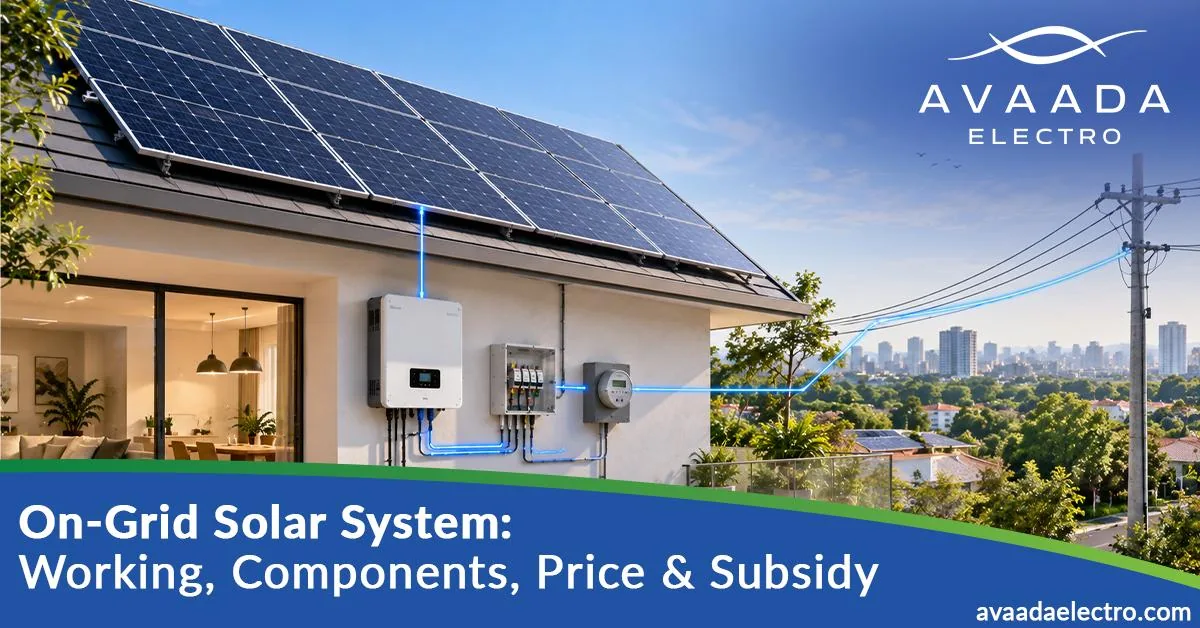
What is an on-grid solar system? An on-grid solar system, also called a grid-tied system, connects to the local electricity grid and typically operates without battery storage. Solar panels generate electricity during the day and the inverter converts it into usable AC power.
The panels first supply electricity to the connected appliances. If the system produces more electricity than the home needs, it can export the surplus to the grid through a suitable metering arrangement. When solar generation is not enough, the system can draw electricity from the grid.
This arrangement reduces the need for battery storage and allows the grid to supply power when solar generation is unavailable.
How Does an On-Grid Solar System Work? Step-by-Step
An on-grid solar system follows a simple process:
- Solar panels receive sunlight and generate direct current (DC) electricity.
- The grid-tie inverter converts DC electricity into alternating current (AC).
- Appliances in the home or building use the generated electricity.
- Excess electricity can be exported to the grid through the applicable metering system.
- When solar generation is insufficient, the system imports electricity from the grid.
The exact process for exporting and settling electricity depends on the state, electricity distribution company (DISCOM) and applicable regulations.
Components of an On-Grid Solar System
An on-grid solar system consists of several key components:
- Solar panels: Convert sunlight into DC electricity. Indian manufacturers such as Avaada Electro produce solar PV modules for these applications.
- Grid-tie inverter: Converts DC electricity into AC electricity and synchronises the system with the grid.
- Bi-directional meter: Records electricity imported from and exported to the grid where the applicable metering arrangement supports both directions.
- Mounting structure: Supports the solar panels on the rooftop or ground.
- DCDB and ACDB: Provide protection and isolation on the system’s DC and AC sides.
- Earthing and lightning protection: Help protect the installation and connected equipment against electrical faults and lightning-related risks.
Also Read – On-Grid Vs Off-Grid Solar Systems
On-Grid Solar System Price in India (2026): Factors Affecting Cost
The on-grid solar system price in India depends on the system capacity, solar panel and inverter specifications, installation requirements, location and applicable DISCOM charges. Indicative market prices can vary considerably between suppliers.
The central subsidy under PM Surya Ghar is calculated based on eligible capacity rather than as a flat percentage of the system price. Under the scheme, residential consumers can receive ₹30,000 per kW for the first 2 kW and ₹18,000 per additional kW up to 3 kW, with the total subsidy capped at ₹78,000 for systems above 3 kW.
Actual installation costs can differ based on the equipment selected, site conditions, installation work and local DISCOM requirements.
Subsidy and Net Metering
The PM Surya Ghar: Muft Bijli Yojana provides central financial assistance to eligible residential consumers installing grid-connected rooftop solar systems. The current central subsidy structure provides ₹30,000 per kW for the first 2 kW and ₹18,000 per kW for the additional capacity up to 3 kW. The maximum central financial assistance for an individual residential system is ₹78,000.
Net metering allows electricity generated by a rooftop system to be accounted for against electricity consumed from the grid, subject to the rules applicable in the relevant state or DISCOM. A bi-directional meter records electricity flowing in both directions.
The treatment of surplus electricity, billing, credits and annual settlement vary by state. Consumers should therefore check the latest rules issued by their DISCOM and state electricity regulator before installing a system.
Advantages and Disadvantages
An on-grid system offers several benefits:
- Lower initial cost: It does not normally require a battery bank.
- Lower electricity bills: Solar generation can reduce the electricity you buy from the grid.
- Net-metering benefits: Eligible systems can export surplus electricity under applicable regulations.
- Low routine maintenance: Solar PV modules have no moving parts and the overall system generally requires relatively little routine maintenance.
- Residential subsidy: Eligible systems can receive central financial assistance under PM Surya Ghar.
The main limitation is that a standard on-grid system does not provide backup during a grid outage. Anti-islanding protection causes the inverter to disconnect from the grid when the grid supply fails. This prevents the solar system from sending electricity into a network that may be undergoing maintenance.
Homes that require backup during outages may consider a hybrid system with battery storage instead.
Sizing and Lifespan
The required solar system capacity depends on your electricity consumption, available roof area, solar resource and the specifications of the selected equipment. A typical rooftop installation may require around 80 to 100 sq ft of shadow-free area per kW, although the actual requirement varies by module size, layout and mounting arrangement.
Solar panels can have long operating lives, with many products designed to continue generating electricity for around 25 years or more. Inverters generally have a shorter service life and may need replacement during the solar panels’ lifetime.
Also Read – What Is an Off-Grid Solar System?
Conclusion
An on-grid solar system can help homes and businesses generate electricity from sunlight while remaining connected to the utility grid. Its main advantages include no large battery bank, lower system complexity and the ability to export surplus electricity where permitted.
The total cost depends on system capacity, equipment specifications, installation requirements and local charges. Eligible residential consumers can also receive central financial assistance under PM Surya Ghar, subject to the scheme’s current rules.
Planning an on-grid solar project? Explore Avaada Electro’s made-in-India N-type TOPCon solar modules and connect with the team for product specifications and technical guidance.
FAQs
Can I add a battery to an on-grid solar system later?
A standard on-grid inverter is generally not designed to manage battery storage. Adding backup later may require a compatible battery system, additional equipment or replacing the existing inverter with a hybrid model.
Do I still pay electricity charges with net metering?
Yes, net metering mainly affects the energy component of your electricity bill. Fixed charges, demand charges, taxes and other applicable charges may still apply depending on the tariff and DISCOM rules.
What is the difference between net metering and net billing?
Net metering generally accounts for electricity imported from and exported to the grid under applicable state regulations. Net billing uses a different settlement mechanism in which exported electricity may be credited at a rate that differs from the retail electricity tariff.
The applicable arrangement varies by state and DISCOM, so check the latest local regulations before installation.
Is an on-grid or off-grid solar system better for a home?
The choice depends on the home’s electricity supply, backup requirements, roof space and budget. An on-grid system suits homes with reliable grid access and no need for battery backup. An off-grid system can be considered where grid access is unavailable or unreliable, but it requires battery storage to supply electricity when solar generation is low.
What happens to surplus solar electricity?
Surplus electricity can be exported to the grid under the applicable metering arrangement. How the exported electricity is credited, carried forward or settled depends on the rules of the relevant state and DISCOM.