
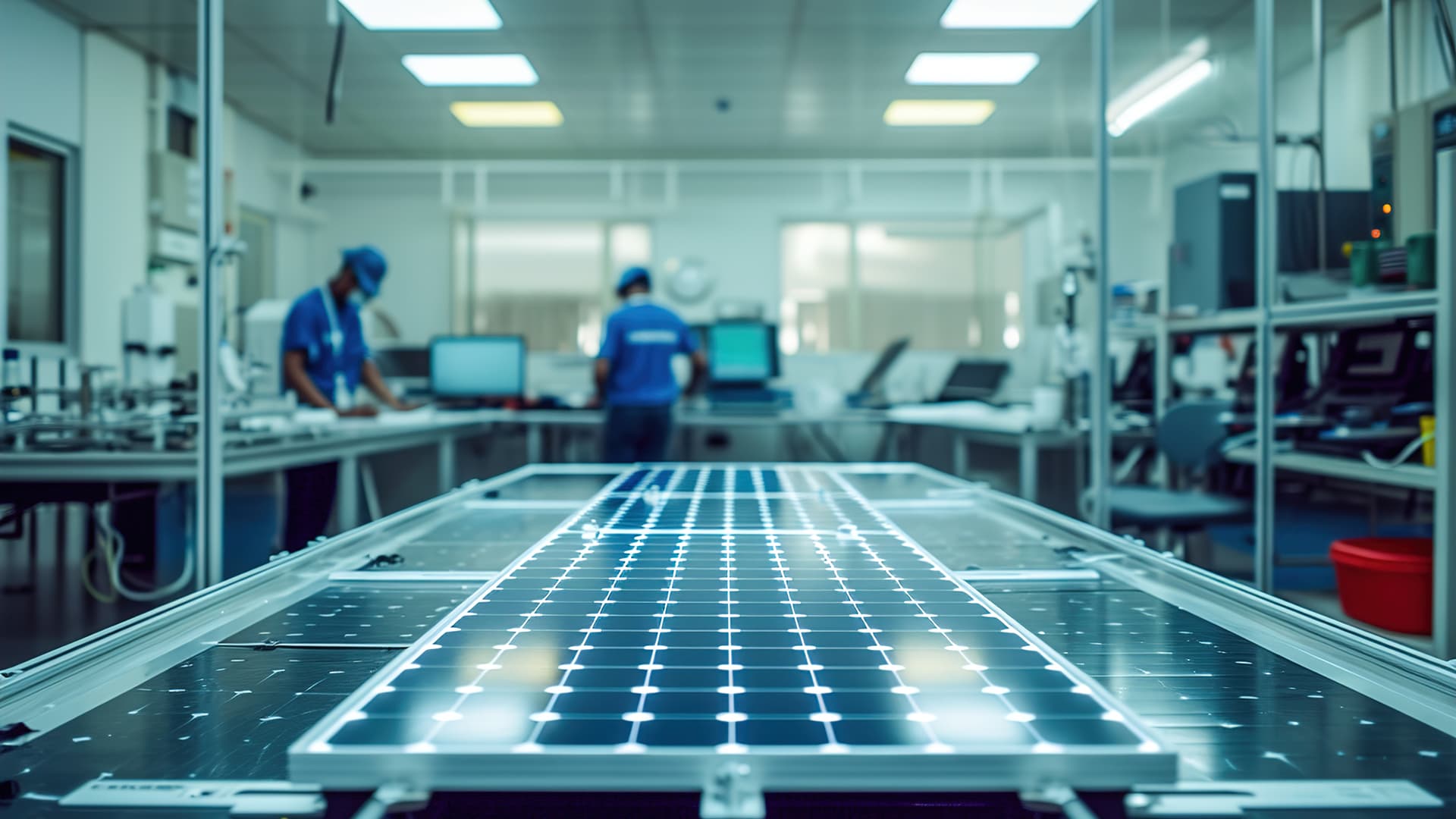
As solar energy continues to gain momentum as a leading renewable energy source, the importance of quality control in solar module manufacturing cannot be overstated.
Ensuring that solar modules meet rigorous performance and reliability standards is essential for maximizing energy production, extending product lifespan, and maintaining customer satisfaction.
In this blog, we delve into the critical role of quality control in solar module manufacturing, exploring the key processes and techniques employed to uphold the highest standards of performance and reliability.
Setting the Standard
Performance and Reliability Criteria Before delving into the intricacies of quality control, it’s essential to understand the performance and reliability criteria that solar modules must meet to ensure their effectiveness over their operational lifespan.
Performance metrics include efficiency, power output, and temperature coefficients, while reliability criteria encompass factors such as mechanical strength, weather resistance, and degradation rates.
Establishing clear benchmarks for these criteria forms the foundation of effective quality control measures throughout the manufacturing process.
Incoming Inspection
Screening Raw Materials and Components Quality control begins with rigorous inspection of incoming raw materials and components.
This includes silicon wafers, encapsulants, backsheets, conductive adhesives, and junction boxes, among others. Each component must undergo thorough testing to verify compliance with specifications and standards, such as material purity, dimensional accuracy, and electrical properties.
Any deviations from these standards are flagged for further investigation or rejection to prevent downstream quality issues.
Read More – The Evolution Of Solar Module Manufacturing From Conventional To Advanced Techniques
Production Process Control
Monitoring Manufacturing Processes Once raw materials and components pass incoming inspection, they enter the production process, where meticulous monitoring and control are essential to maintain product consistency and quality.
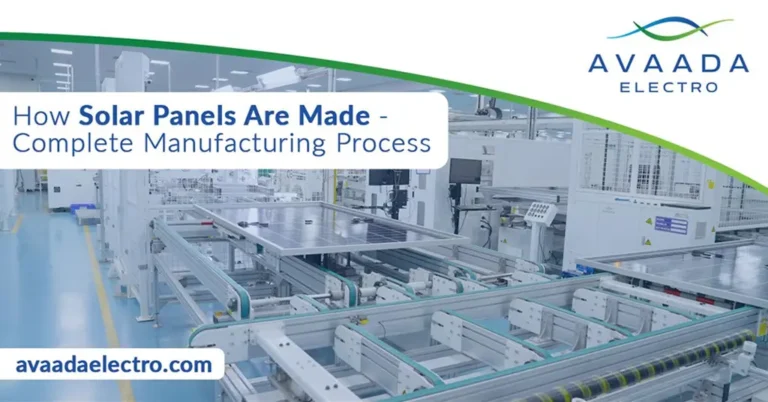
Automated production lines, equipped with sensors and monitoring devices, track key process parameters such as temperature, pressure, and alignment throughout each manufacturing step.
Any deviations from predetermined tolerances trigger immediate corrective actions to prevent defects and ensure uniformity across production batches.
In-Process Testing
Detecting Defects and Anomalies In addition to real-time process monitoring, in-process testing is conducted at various stages of production to detect defects and anomalies before they compromise the final product.
This includes electrical tests to verify cell performance, visual inspections for surface defects, and mechanical tests to assess structural integrity.
Advanced imaging techniques, such as electroluminescence (EL) and photoluminescence (PL) imaging, offer non-destructive ways to identify hidden defects and material inconsistencies.
Final Inspection and Quality Assurance
Validating Finished Products Before solar modules are packaged and shipped to customers, they undergo comprehensive final inspection and quality assurance procedures.
This includes functional testing under simulated operating conditions, accelerated aging tests to assess long-term durability, and visual inspections to ensure cosmetic perfection.
Modules that meet or exceed performance and reliability standards are stamped with a seal of approval and prepared for delivery, while any non-conforming units are rectified or rejected to uphold the brand’s reputation for quality and reliability.
Read More – Best Solar Companies In India
Conclusion
In conclusion, quality control is the cornerstone of solar module manufacturing, ensuring that every module meets stringent performance and reliability standards.
By implementing robust quality control measures, manufacturers can deliver products that not only meet but exceed customer expectations for efficiency, durability, and longevity.
As the solar energy industry continues to evolve, maintaining a relentless focus on quality will remain paramount to driving innovation, fostering trust, and accelerating the transition to a sustainable energy future.