
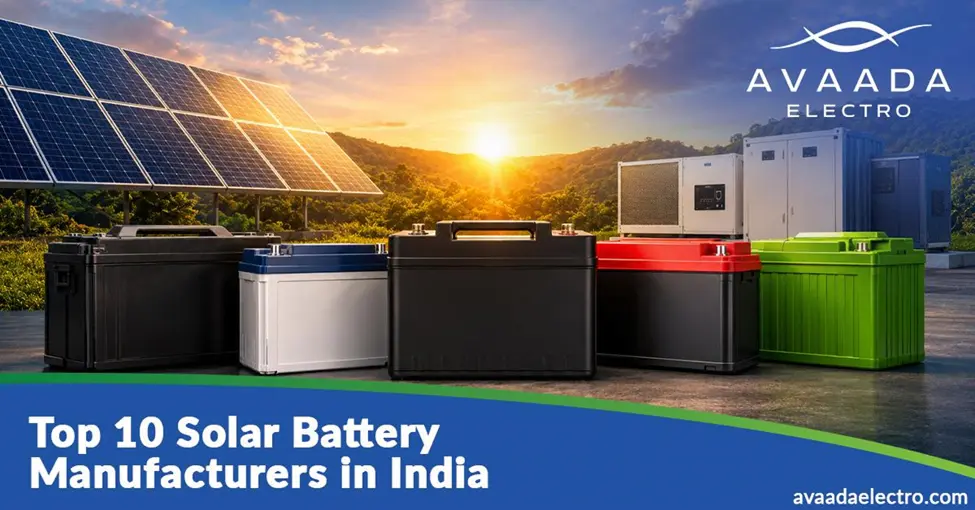
How can a home or business store excess solar power for use after sunset or during a grid outage? A solar battery makes this possible by storing surplus electricity generated during the day and supplying it when solar generation is unavailable. Choosing the right battery requires more than comparing prices. Battery chemistry, usable capacity, cycle life, inverter compatibility, warranty and after-sales support all affect long-term performance.
What Is a Solar Battery?
A solar battery stores electricity generated by a solar PV system for later use. During the day, the solar panels supply electricity to connected loads first. Any surplus power can then charge the battery. When solar generation falls or the grid goes down, stored electricity can be used to operate selected appliances.
Solar batteries are designed for repeated charging and discharging. Their performance depends on factors such as battery chemistry, depth of discharge, operating temperature and charging conditions.
Types of Solar Batteries
The main battery technologies used for solar storage include:
- Lithium Iron Phosphate (LiFePO4): These batteries offer high energy density, low maintenance requirements and good cycle life. They suit residential and commercial systems that expect regular daily cycling.
- Tubular Lead-Acid: These batteries generally have a lower upfront cost and are widely used for backup applications. However, they are heavier and require more maintenance than lithium batteries.
- Flow Batteries: These use liquid electrolytes and suit larger energy-storage applications that require long-duration storage and frequent cycling.
- Other large-scale energy-storage technologies: This large-scale storage technology uses electricity to pump water to a higher elevation and generates electricity when the water flows back down. It is generally used for grid-scale applications rather than homes.
Read Also: Types of Solar Panels
Leading Solar Battery Brands and Energy-Storage Companies in India
Several established solar battery manufacturers in India and energy-storage companies offer products for residential, commercial and industrial applications. The right choice depends on the required storage capacity, battery chemistry, inverter compatibility and service availability.
| Brand | Common Battery Technologies | Application |
| Luminous | Lithium, Lead-Acid | Residential backup and solar storage |
| Livguard | Lithium, Lead-Acid | Residential and small commercial systems |
| Loom Solar | Lithium | Residential solar storage |
| Exide | Lithium, Lead-Acid | Residential and commercial applications |
| Amaron | Lead-Acid, Lithium | Automotive, backup and energy-storage applications |
| UTL | Lithium, Lead-Acid | Residential solar and backup systems |
| Okaya | Lithium, Lead-Acid | Residential and commercial backup |
| Waaree | Lithium-based storage solutions | Residential and commercial solar systems |
| Pylontech | Lithium-based storage | Residential and commercial energy storage |
Product availability, battery specifications and warranty terms can vary by model, so buyers should check the manufacturer’s current product documentation before purchasing.
Solar Battery Prices in India
There is no single market price for a solar battery because the final cost depends on chemistry, usable capacity, battery management system, inverter compatibility, installation requirements and warranty.
Lithium batteries generally have a higher upfront cost than lead-acid batteries but can offer longer service life and lower maintenance requirements. Rather than comparing only the purchase price, buyers should consider the cost per usable kWh over the expected battery life.
For example, a battery with a higher usable depth of discharge can provide more usable energy from the same nominal capacity. Similarly, a battery with a longer cycle life may offer better long-term value despite its higher initial price.
How to Choose a Solar Battery
When selecting the right solar battery for your energy needs, it’s important to follow a systematic approach to ensure you make an informed choice that maximizes efficiency and compatibility with your solar system.
Here’s a step-by-step process to guide you through the selection.
1. Calculate Your Evening Energy Requirement
Start by identifying which appliances need to operate after sunset or during a power cut. Add their power consumption and expected operating hours to estimate the required storage capacity.
For example, if essential appliances consume 2 kWh between evening and morning, you would need a battery with at least 2 kWh of usable capacity. You may need additional capacity to account for conversion losses and reserve requirements.
2. Check Battery Chemistry
LiFePO4 batteries suit users who need frequent daily cycling and low maintenance. Consider lead-acid batteries when the initial purchase cost is the priority.
3. Match the Battery With the Inverter
The battery voltage, charging current, communication protocol and power rating must match the selected hybrid or off-grid inverter. A technically incompatible battery can affect system performance and safety.
4. Compare Usable Capacity
A battery’s nominal capacity does not always match the amount of electricity you can use. Check the manufacturer’s specified usable capacity and recommended depth of discharge before comparing products.
5. Review Warranty and Cycle Life
Check both the warranty period and the conditions attached to it. Some manufacturers specify a maximum number of cycles, minimum retained capacity or operating conditions within their warranty terms.
6. Consider Service Support
Battery systems require appropriate installation, commissioning and occasional technical support. Availability of authorized service centres and replacement components can be important over a long operating period.
Solar Battery Storage and Efficient Solar Modules
A storage system’s performance also depends on how much electricity the solar array can generate during the day. Efficient solar modules can help produce more electricity from a given roof area, leaving more surplus generation available for battery charging.
Avaada Electro manufactures N-Type TOPCon solar modules for residential, commercial, and utility-scale applications, among the top 10 solar panels in India. Its module portfolio includes the Integlow series, with power ratings from 585 Wp to 610 Wp and the Enlume series, with ratings extending up to 720 Wp.
The company operates manufacturing facilities in Nagpur and Dadri and uses an integrated manufacturing approach covering stages from ingot and wafer production through to solar cells and modules.
For projects with limited rooftop space, higher-wattage modules can help achieve the required system capacity with fewer panels. However, always select the appropriate module based on roof dimensions, energy demand, inverter specifications and project requirements.
How a Solar Battery System Works
A battery-backed solar system follows this sequence:
Solar panels → Hybrid inverter → Household loads
During periods of surplus generation:
Solar panels → Hybrid inverter → Battery storage
When solar generation is insufficient:
Battery → Hybrid inverter → Essential loads
During a grid outage, the inverter determines which connected circuits receive battery power. A standard grid-tied solar system without battery backup generally does not continue supplying electricity during an outage because it must disconnect from the grid for safety.
Read Also: Solar Panel Energy Generation
Final Thoughts
Choosing among the best solar battery manufacturers in India requires more than comparing the purchase price. Battery chemistry, usable capacity, depth of discharge, cycle life, inverter compatibility, warranty and service support all influence long-term value.
Lithium-based batteries can suit systems requiring frequent daily cycling, while lead-acid batteries remain an option for applications where lower upfront costs are important. Pairing the battery with appropriately sized, efficient solar modules can further improve overall system performance.
Planning a solar power system with battery storage? Contact the Avaada Electro team to explore efficient N-Type TOPCon solar modules for residential, commercial and utility-scale applications.
FAQs
Can I use a standard inverter battery for daily solar storage?
A standard backup battery may not be designed for frequent daily cycling. A solar battery designed for repeated charge and discharge cycles is generally more suitable for regular solar energy storage.
How long do lithium solar batteries last?
Service life depends on the battery chemistry, operating temperature, depth of discharge, charging conditions and usage pattern. Check the manufacturer’s specified cycle life and warranty rather than relying on a fixed lifespan.
Does PM Surya Ghar cover battery storage?
The central financial assistance under PM Surya Ghar is primarily linked to eligible grid-connected rooftop solar installations. Battery storage is generally treated separately, so applicants should check the latest scheme guidelines before budgeting for a battery.
What size solar battery does a home need?
The required capacity depends on the appliances that need backup and how long they must operate. Calculate the total evening or backup energy requirement in kWh and then account for usable battery capacity and system losses.
Is lithium better than lead-acid for solar storage?
Lithium batteries generally offer higher usable capacity, lower maintenance and longer cycle life, while lead-acid batteries can have a lower initial cost. The appropriate option depends on the project’s operating requirements and budget.
Which is the best solar battery in India?
The best solar battery in india depends on your backup needs and budget. LiFePO4 batteries suit daily cycling with low maintenance; lead-acid suits lower upfront cost.