
Solar Panels for Home in India: Comparing Brands, Technologies & Costs (2026)
Electricity powers nearly every aspect of modern life, yet rising power tariffs continue to increase household expenses across India. At the same time, rooftop solar has become more accessible through improved technology, government incentives, and affordable financing. According to the Ministry of New and Renewable Energy (MNRE), India’s solar sector has witnessed significant growth, crossing 100 GW of installed solar capacity in 2025. The government’s PM Surya Ghar: Muft Bijli Yojana is further increasing residential rooftop solar adoption by supporting installations in one crore households. For individuals looking to lower electricity bills and generate clean energy, a home solar installation is now a practical long-term investment.
How Solar Panel Systems Generate Electricity
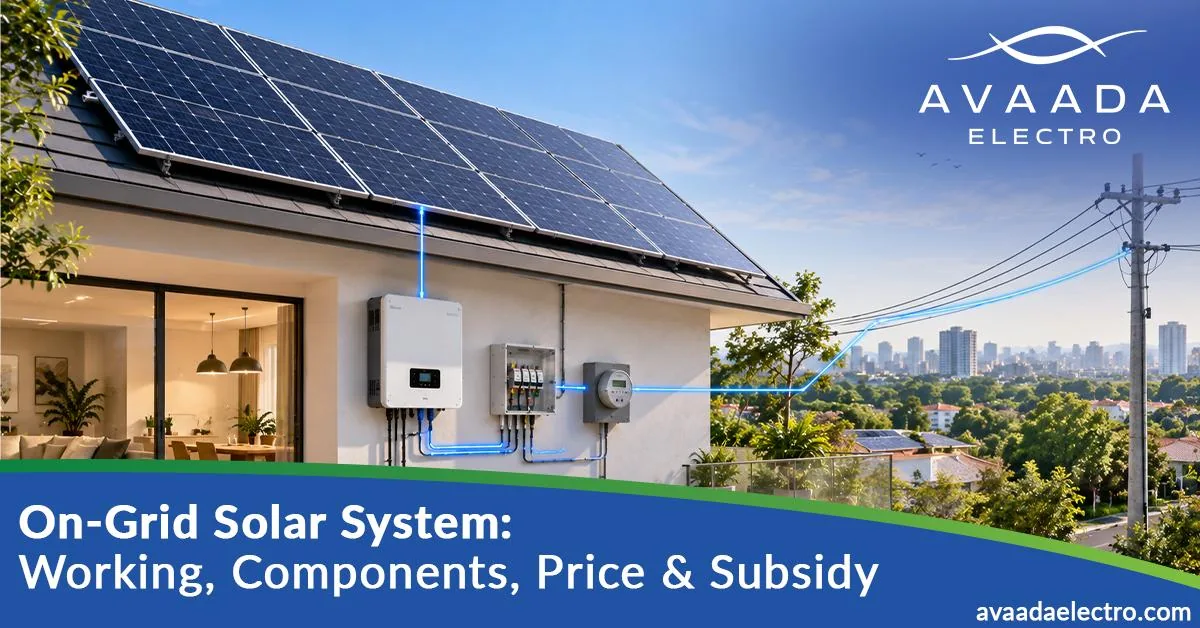
A home solar panel system converts sunlight into usable electricity through photovoltaic (PV) cells. The generated DC power is converted into AC power by an inverter and supplied to household appliances. Here are the main components of a solar panel system along with their functions:
Main Component | Function |
Solar Panels | Generate electricity from sunlight |
Inverter | Converts DC power into AC power |
Net Meter | Records electricity import and export |
Grid/Battery | Stores or supplies additional power |
You can choose between on-grid, off-grid, and hybrid systems depending on your energy requirements.
Leading Solar Module Manufacturers for Residential Projects in India
When selecting solar for the home, efficiency, certifications, warranty coverage, and long-term performance are important considerations.
Brand | Efficiency | Performance Warranty |
Avaada Electro | >23% | 30 Years |
Waaree | 18–21% | 25 Years |
Premier Energies | 20–22% | 25 Years |
Navitas Solar | 19–21% | 25 Years |
RenewSys | 20–22% | 25 Years |
For subsidy eligibility, always choose BIS-certified and ALMM-listed modules.
Solar Technologies Commonly Used in Residential Installations
When choosing how to transition your home to clean energy, selecting the right cell technology is just as important as finding the right installer. Different types of solar panels process sunlight differently, which directly affects how much space they require on your roof and how much you save on your monthly electricity bill.
The table below breaks down the primary solar technologies currently available for home installations:
Technology | Efficiency | Cost Range | Best Application |
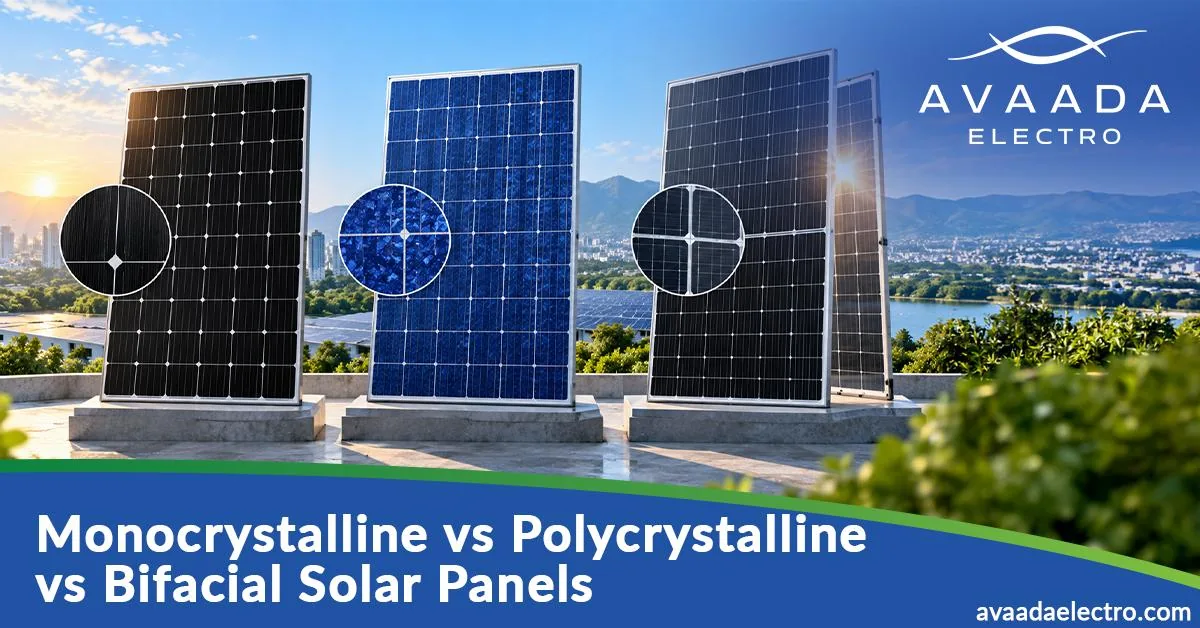
Monocrystalline | 19–22% | ₹25–45/Wp | Limited rooftop space |
Bifacial | 20–22.5% | ₹30–50/Wp | Open terraces |
N-Type TOPCon | 21–23% | ₹30–50/Wp | Long-term performance |
Thin-Film | 10–13% | ₹10–20/Wp | Low-light areas |
Among these, N-Type TOPCon and bifacial modules used by Avaada Electro are increasingly preferred due to their performance characteristics and lower degradation rates over time.
Factors That Influence Solar Panel System Selection
A shadow-free rooftop is important for maximizing generation. A 1 kW rooftop system generally requires 10 square meters of shadow-free area per 100W of capacity. Moreover, a 1 kW rooftop solar system can generate approximately 4-5.5 units of electricity per day, depending on location and sunlight availability.
| Monthly Consumption | Recommended System Size | Approx. Cost |
| 100–150 Units | 1 kW | ₹60,000–80,000 |
| 150–300 Units | 2–3 kW | ₹1.2–2.0 Lakh |
| 300–500 Units | 3–5 kW | ₹1.8–3.0 Lakh |
| 500+ Units | 5–10 kW | ₹3.0–6.0 Lakh |
When evaluating a solar setup for a home, homeowners should also verify product warranties, performance guarantees, BIS certification, and ALMM compliance.
Read more – Best Solar Company in India
What to Expect During a Residential Solar Project
A solar panel setup for home involves:
- Rooftop survey and shading assessment
- System design and quotation
- DISCOM approvals and net-metering application
- Installation of panels, inverter, and wiring
- Testing, commissioning, and grid synchronization
Most residential installations are completed within one to three days after approvals are received.
Solar Panel Costs for Home in India: Prices and Subsidies (2026)
The cost of a solar power home installation depends on system size, technology, and equipment quality.
| System Size | Estimated Cost (Before Subsidy) |
| 3 kW | ₹1.5–2.5 Lakh |
| 5 kW | ₹2.5–3.5 Lakh |
| 10 kW | ₹4.5–6.0 Lakh |
PM Surya Ghar Subsidy
The PM Surya Ghar: Muft Bijli Yojana offers subsidies for both residential households and Group Housing Society/Resident Welfare Association (GHS/RWA):
Subsidy for Residential Households
| Size | Central Subsidy |
| Up to 2 kW | ₹30,000 per kW |
| Additional upto 3 kW | ₹18,000 per kW |
| Above 3 kW | Fixed at ₹78,000 |
Subsidy for Group Housing Society/Resident Welfare Association (GHS/RWA)
The subsidy of ₹18,000 per kW is available for common facilities, including EV charging infrastructure. It applies to systems up to 500 kW capacity, with a limit of 3 kW per residential house within the GHS/RWA. For special states, an additional 10% subsidy may apply per kW.
Benefits of Installing Solar Panels at Home
Installing solar panels at home is a long-term investment, offering both financial savings and environmental benefits. Here are some of its key advantages:
- Lower Electricity Bills: Homeowners can significantly reduce their electricity expenses, with potential savings of 80–100% through net metering.
- Faster Returns on Investment: Most residential solar systems recover their installation costs within 4–7 years, making them a cost-effective solution over time.
- Clean Energy Generation: Solar power helps reduce reliance on fossil-fuel electricity, supporting a cleaner, more sustainable environment.
- Improved Energy Security: Producing your own electricity can provide greater protection against rising energy tariffs and utility cost fluctuations.
Overall, residential solar panels offer a practical way to lower energy costs, increase energy independence, and contribute to a greener future.
How Avaada Electro Supports Residential Solar Adoption
When choosing a solar system for your home, the quality of the solar modules plays a crucial role in long-term performance and energy generation. Avaada Electro manufactures N-Type TOPCon solar modules in India. For people planning to install a solar system at home, Avaada Electro offers modules designed for long-term reliability and performance. These modules can help homeowners generate solar power while supporting their transition to clean, renewable energy.
Read more – Solar System Installation
Conclusion
Installing a residential solar system can significantly reduce electricity expenses while supporting India’s clean energy transition. By selecting certified, high-efficiency modules and the right system size, homeowners can maximize long-term savings and energy independence. With advanced solar technologies and integrated manufacturing capabilities, Avaada Electro continues to support the growing demand for reliable rooftop solar solutions across India.
Find the right rooftop solar solution for your home with Avaada Electro’s advanced, made-in-India solar technologies.
FAQs
Which solar panel is suitable for residential use in India?
High-efficiency monocrystalline and N-Type TOPCon solar panels are suitable for residential use in India, as they generate more electricity per unit of rooftop space. They also perform well in high temperatures and offer lower degradation rates, making them suitable for long-term use.
How does the PM Surya Ghar subsidy work?
Under the PM Surya Ghar: Muft Bijli Yojana, eligible homeowners can receive financial assistance for installing rooftop solar systems. The subsidy is credited after the system is installed, inspected, and approved through the government’s official portal.
What is the difference between on-grid and off-grid solar systems for homes?
An on-grid solar system is connected to the utility grid and allows homeowners to export surplus electricity through net metering. On the other hand, an off-grid system operates independently and relies on battery storage, making it suitable for areas with limited or unreliable grid access.
Do solar panels work during cloudy weather in India?
Solar panels can still produce electricity in cloudy weather, though the output may be less than on sunny days. Modern high-efficiency modules can still capture diffused sunlight, helping maintain electricity generation throughout different weather conditions.
What is the best solar panel technology for my home?
It depends on your roof: monocrystalline suits limited space, bifacial suits open terraces, and N-Type TOPCon offers the best long-term performance. A rooftop shading assessment helps confirm the right fit.