
Starting or expanding a solar module business involves more than building a customer base. Businesses also need access to reliable manufacturing facilities that can supply modules meeting their technical and quality requirements. Setting up and operating an independent manufacturing unit requires investment, infrastructure and technical expertise, making it a challenging option for some businesses.
Solar Module Original Equipment Manufacturer (OEM) manufacturing offers an alternative for businesses looking to outsource production. It lets businesses partner with an established solar panel manufacturer to produce modules to their specifications and sell them under their own brand. By working with an experienced manufacturing partner, businesses can focus on sales, distribution and project development while arranging module production through an existing facility. Understanding how OEM manufacturing works and what to look for in a partner can help businesses choose an arrangement that suits their needs.
What is a Solar Module OEM Manufacturer?
A solar module OEM manufacturer produces solar panels for another business, which may sell them under its own brand. Depending on the agreement, the buyer and manufacturer decide on product specifications, branding requirements, quality expectations and supply arrangements.
This model can be relevant to:
- Solar developers and independent power producers (IPPs).
- Engineering, procurement and construction (EPC) companies.
- Solar distributors and resellers.
- Businesses developing their own solar product brands.
Working with an OEM manufacturer gives these businesses access to established production facilities without requiring them to set up and operate their own module manufacturing units.
OEM vs. White-Label Solar Module Manufacturing
OEM and white-label manufacturing are related models, but their scope depends on the agreement between the buyer and manufacturer.
In a white-label arrangement, a manufacturer supplies products that another business markets under its own brand. OEM arrangements may involve closer coordination on product specifications, technical requirements and branding.
The exact responsibilities can vary across agreements. Therefore, buyers should clarify who is responsible for product specifications, testing, certification, branding and quality assurance before selecting either model.
What to Look for in a Solar OEM Manufacturer in India
Selecting an OEM partner involves more than comparing module prices. The manufacturer’s production capabilities, quality systems, regulatory compliance and ability to meet supply commitments also matter. Consider the following factors before entering into a supply agreement.
Manufacturing Capabilities
Review the manufacturer’s production facilities, operational capacity, technology and ability to support the required order volumes. Check whether its production capabilities match your preferred module technology and specifications. Clarify production schedules and supply arrangements before finalizing the agreement.
ALMM Compliance
The Ministry of New and Renewable Energy (MNRE) maintains the Approved List of Models and Manufacturers (ALMM) for solar PV modules and cells. List-I covers solar PV modules, while List-II covers solar PV cells. Buyers should verify the applicable listing requirements for their projects and check the latest MNRE notifications, as certain project categories may qualify for specific exemptions.
Certifications and Documentation
Review applicable BIS and IEC certifications, technical datasheets, test reports and warranty documents. These records help buyers assess whether the modules meet the required technical and quality standards. For international supply, confirm the standards and certifications required in the destination market.
Quality Assurance
Understand how the manufacturer manages incoming material checks, production inspections, module testing and pre-dispatch quality checks. Ask which inspection records and test documents will be available for the order. It is also useful to clarify the process for reporting defects, handling rejected products and resolving quality-related concerns.
Solar Module Manufacturing Capabilities
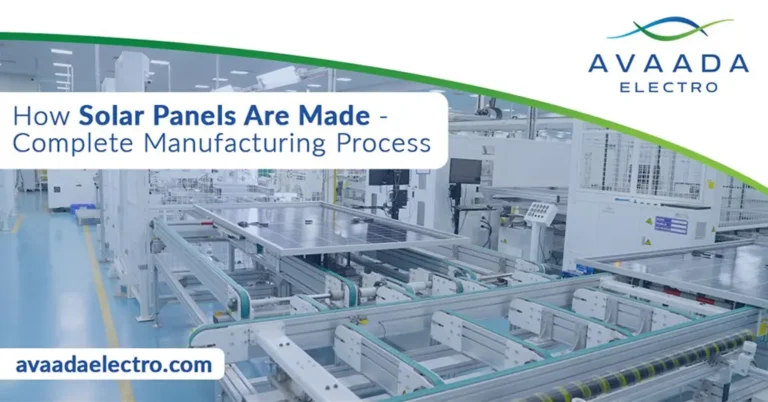
Avaada Electro operates solar PV module manufacturing facilities in Dadri, Uttar Pradesh and Nagpur, Maharashtra, with a combined annual module manufacturing capacity of 8.5 GW.
The product portfolio includes N-type TOPCon solar modules across different formats and power ratings, including:
- ENLUME G12: 720 Wp
- ENLUME G12R: 630 Wp
- INTEGLOW M10L: 610 Wp
- DCR: 745 Wp
These modules are designed for applications across utility-scale, commercial, industrial and rooftop solar projects. Buyers can review the technical specifications and available product configurations before discussing their requirements with the manufacturing team.
Avaada Electro also offers OEM and white-label manufacturing options for businesses interested in selling solar modules under their own brand. Product specifications, branding requirements and supply arrangements can be discussed based on the scope of the proposed partnership.
Read Also: Biggest Solar Power Plant in India
Important Considerations Before an OEM Agreement
A clear agreement helps set expectations for both parties. Before confirming an order, discuss:
- Product Specifications: Confirm module technology, power rating, dimensions, materials and other technical requirements.
- Minimum Order Quantity and Timelines: Clarify order volumes, production schedules, dispatch arrangements and delivery responsibilities.
- Branding and Confidentiality: Discuss private branding, packaging, artwork approvals, intellectual property and confidentiality obligations.
- Quality checks: Establish testing requirements, inspection procedures, documentation and acceptance criteria.
- Commercial Terms: Define pricing, payment schedules, warranty responsibilities and procedures for addressing product-related concerns.
Record all agreed specifications, responsibilities and commercial terms in the final agreement before production begins.
How to Start a Solar Module OEM Partnership
Starting an OEM partnership involves a few key steps to align product requirements, production capabilities, and commercial terms.
- Share Business Requirements: Provide details about your expected order volumes, target markets, preferred module specifications, and branding requirements.
- Discuss Product Options: Review suitable module options, technical specifications, and available product configurations with the manufacturing team.
- Review Production Capabilities: Understand the manufacturer’s production capacity and ability to meet your order volumes and delivery requirements.
- Finalize Commercial Terms: Discuss pricing, payment schedules, branding arrangements, quality checks, and other contractual responsibilities.
- Confirm the Agreement: Finalize the product specifications, responsibilities, and supply schedule before production begins.
Once the terms are agreed upon, both parties can coordinate production and delivery according to the confirmed requirements and schedule.
Read Also: Best Solar Panels in India
Conclusion
Solar module OEM manufacturing lets businesses offer products under their own brand without independently establishing manufacturing facilities. Choosing the right partner involves evaluating production capabilities, product quality, regulatory compliance, documentation and commercial terms. A clear understanding of these factors can help businesses select a manufacturing arrangement that supports their product requirements and business plans.
As an established solar module manufacturer in India, Avaada Electro offers OEM and white-label manufacturing opportunities through its solar module manufacturing facilities and N-type TOPCon product portfolio.
Businesses looking for a solar module manufacturing partner can connect with our team to explore available modules, discuss their requirements and understand the scope of an OEM partnership.
FAQs
What is the difference between an OEM and a solar module distributor?
An OEM manufactures modules for another business based on agreed specifications and contractual requirements, potentially under that buyer’s brand. A distributor purchases finished modules from a manufacturer and resells them to customers.
Can solar modules be supplied under a buyer's brand?
Yes, white-label and OEM arrangements can support buyer-specific branding, subject to the manufacturer’s capabilities and agreed contractual terms.
Why is ALMM compliance important?
ALMM listing is relevant to solar projects covered by applicable government requirements. Buyers should check the current lists and project-specific rules before selecting modules and cells.
What should businesses evaluate before selecting an OEM partner?
Businesses should assess manufacturing capacity, product specifications, applicable certifications, quality-control processes, documentation, commercial terms and supply arrangements.