
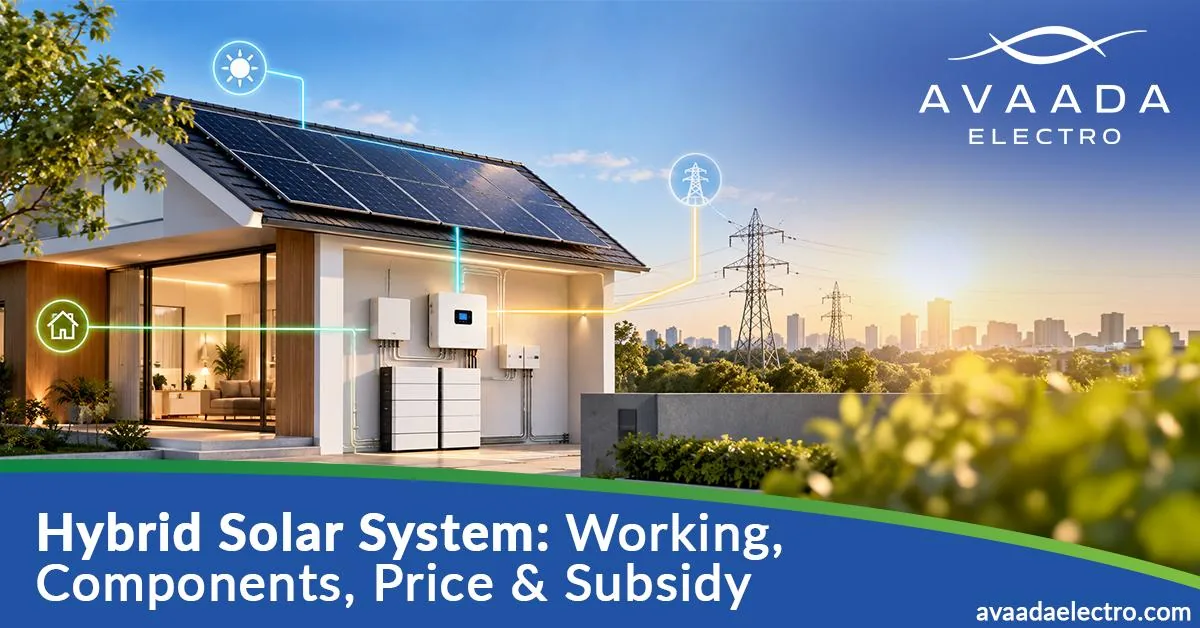
What is a hybrid solar system? A power cut can disrupt everything from essential appliances to work-from-home routines. A hybrid solar system lets you use solar power during the day, store excess electricity for later and keep selected appliances running when the grid goes down. But how does this system work, what does it cost and is it suitable for your home? Understanding its components, operation, battery options and applicable subsidies can help you assess whether a hybrid solar setup fits your energy needs.
What Is a Hybrid Solar System? Understanding How It Works
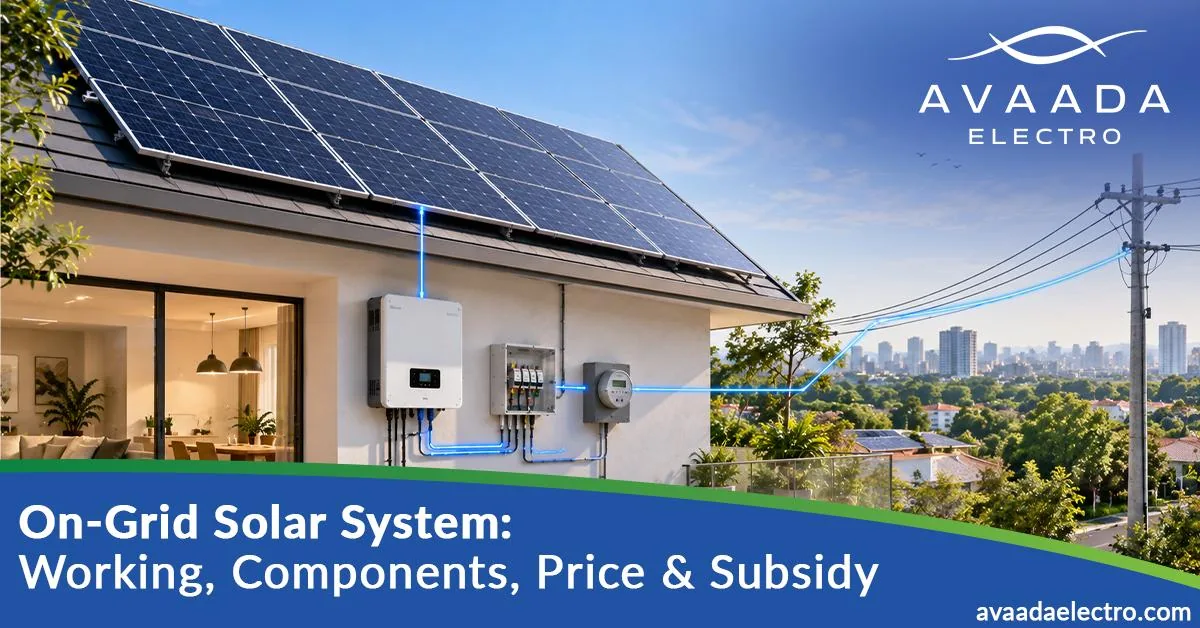
A hybrid solar system connects to the electricity grid and includes battery storage. Unlike a standard on-grid system, it can use stored solar power when the grid supply is unavailable.
The system automatically manages electricity from the solar panels, battery and grid based on power generation, electricity demand and grid availability.
How Does a Hybrid Solar System Work? (Step-by-Step)
A hybrid solar system manages electricity through a series of simple steps:
- Solar Power Generation: Solar panels receive sunlight and generate direct current (DC) electricity.
- Power Conversion: The hybrid inverter converts DC electricity into AC electricity for household loads and manages power flow between the solar array, battery, grid and connected loads.
- Battery Charging: The system stores excess solar electricity in the connected battery.
- Grid Export: Once the battery is charged, the system can export additional solar power to the grid through a bi-directional meter, where permitted.
- Backup Power: During a grid outage, the system can switch to battery power and supply the connected backup loads.
Key Components of a Hybrid Solar System
A hybrid solar system consists of several important components:
Component | Main Function |
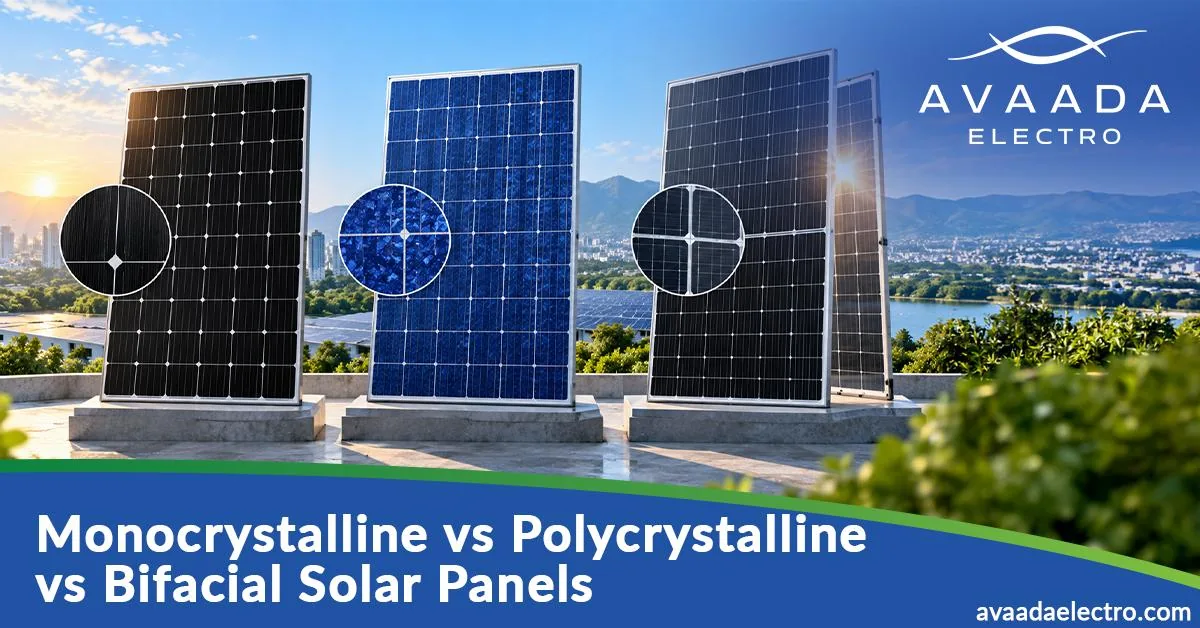
Solar Modules | Capture sunlight and generate DC electricity. N-type TOPCon bifacial modules can also generate power from reflected light reaching their rear side. |
Hybrid Inverter | Manages power flow between the solar panels, battery, household loads and the electricity grid. |
Battery Bank | Stores excess solar electricity for use during the evening or a power outage. Lithium Iron Phosphate (LFP) batteries are commonly used in modern systems. |
Bi-Directional Meter | Records electricity imported from and exported to the grid under the applicable metering arrangement. |
Protection Equipment | Includes AC/DC distribution boxes, surge protection, earthing equipment and suitable cables. |
Avaada Electro operates solar manufacturing facilities in Dadri, Uttar Pradesh, and the Butibori Industrial Area of Nagpur, Maharashtra, supporting its N-type TOPCon solar module manufacturing capabilities.
Also Read – On-Grid and Off-Grid Solar Systems
Types of Hybrid Solar Systems
Hybrid systems can be designed in different ways depending on the installation and backup requirements:
- DC-Coupled Systems: Solar panels and batteries are connected through a common DC bus. This configuration suits new solar installations where integrated solar-and-storage design is planned from the outset.
- AC-Coupled Systems: A battery inverter connects to the AC side of an existing solar system. This can make it suitable for adding battery storage to an existing installation.
- Hybrid Systems with Generator Backup: Commercial and industrial facilities can combine solar panels, batteries and generators to support critical loads during extended power interruptions.
Hybrid Solar System Price in India
The cost of a hybrid solar system depends on the solar capacity, battery size, inverter specifications and installation requirements. The indicative prices in the source material are:
Capacity | Estimated System Price With Lithium Battery | Suitable Property Type |
₹2,60,000 – ₹3,30,000 | 2–3 BHK homes with basic loads and lighting | |
₹4,20,000 – ₹5,60,000 | 3–4 BHK homes using 1–2 air conditioners | |
₹5,30,000 – ₹6,50,000 | Larger homes with home offices or small workshops | |
₹7,80,000 – ₹9,80,000 | Large commercial properties and larger residences |
Actual prices can vary based on the equipment selected, battery capacity, installation requirements and location.
Government Subsidy & Net Metering Rules for Hybrid Systems in India
Residential solar installations may qualify for financial assistance under schemes such as PM Surya Ghar: Muft Bijli Yojana, subject to the applicable eligibility conditions.
The source material states that eligible homeowners can receive:
- 1 kW: Up to ₹30,000
- 2 kW: Up to ₹60,000
- 3 kW and above: Maximum subsidy of ₹78,000
The central financial assistance is linked to eligible solar capacity. The subsidy calculation does not include the cost of battery storage.
Where net metering is available, you can export surplus solar electricity to the grid and account for it under applicable state and DISCOM rules.
How to Choose the Right Hybrid Solar System for Your Home or Business
The right system depends on your electricity consumption, backup requirements and available installation space.
- Calculate Critical Loads: Identify the appliances that must keep running during a power cut, such as refrigerators, lights, fans and other essential equipment.
- Select Battery Chemistry: LFP batteries can offer longer service life and lower maintenance requirements, although their initial cost can be higher.
- Consider Module Efficiency: High-efficiency modules such as N-type TOPCon can generate more electricity from limited roof space.
Select solar capacity and battery size based on your actual electricity consumption and the loads you want to support during an outage.
Also Read – What Is Net Metering in Solar Energy?
Final Thoughts
A hybrid grid solar system combines solar generation, battery storage and grid connectivity in one setup. It can reduce dependence on grid electricity while providing backup power when the grid is unavailable.
The right system depends on factors such as electricity demand, required backup duration, available roof space, battery capacity and budget. Selecting compatible solar modules, inverters and batteries can also help the system operate efficiently over its service life.
Are you planning a commercial rooftop project, developing clean energy infrastructure or expanding your regional solar distribution network? Contact Avaada Electro today to access reliable TOPCon solar modules engineered for maximum energy yield.
FAQs
What is a hybrid solar system?
A hybrid solar system combines solar panels, battery storage and a connection to the electricity grid. It can use solar power, store excess electricity and provide battery backup when required.
How does a hybrid solar system work during a power cut?
During a grid outage, the hybrid inverter can disconnect the backup circuits from the grid and use stored battery power to supply the connected loads.
What is the difference between a hybrid grid solar system and an on-grid solar system?
An on-grid system generally operates without battery storage and shuts down during a grid outage. A hybrid grid solar system includes battery storage and can supply selected loads during an outage.
Can a hybrid solar system work without a battery?
Some hybrid inverters can operate without a battery, depending on the model and system configuration. Battery storage is required if the system needs to provide backup power during a grid outage.
Is a hybrid solar system suitable for homes in India?
A hybrid system suits homes that want solar generation and battery backup. It can be particularly useful where power interruptions are frequent or backup power is required.
How much does a hybrid solar system cost in India?
Indicative market prices in 2026 can range from around ₹2.6 Lakh for a 3 kW system to around ₹9.8 Lakh for a 10 kW system with lithium battery storage, depending on system specifications and installation requirements.
Does a hybrid solar system qualify for government subsidy?
Eligible residential solar systems can receive central financial assistance under PM Surya Ghar, subject to the scheme’s current requirements. Battery storage costs are excluded from the central subsidy calculation.
What size hybrid solar system do I need for my home?
The required capacity depends on electricity consumption and the appliances you want to operate. A 3 kW system may suit basic household loads, while larger homes with higher loads may require 5 kW or more.
How long does a hybrid solar system last?
The service life varies by component. Solar modules can operate for several decades, while inverters and batteries generally have shorter service lives and may require replacement during the system’s lifetime.
Can I convert my existing on-grid system into a hybrid system?
You may upgrade an existing grid-tied system with battery storage using compatible AC-coupled equipment. Feasibility depends on the existing inverter, system design and compatibility with the new equipment.