
Solar Power Plants in India: Types, Technology, Developers & Scale (2026)
How Solar Power Plants Generate Electricity
A solar power plant is a large-scale facility that converts sunlight into electricity using photovoltaic (PV) modules. Unlike rooftop systems designed for individual buildings, utility-scale projects generate electricity centrally and supply it to the grid for widespread use.
Most ground mounted solar projects require approximately 4 to 5 acres of land per MW of installed capacity. The solar plants made by Avaada Electro use bifacial modules and tracking systems to improve energy generation and operational efficiency.
Major Types of Solar Power Plants
Solar power plants are designed using different technologies to suit varying energy needs, site conditions, and operational goals. Below are the different types of utility-scale solar projects that maximize efficiency and power generation:
Photovoltaic (PV) Plants
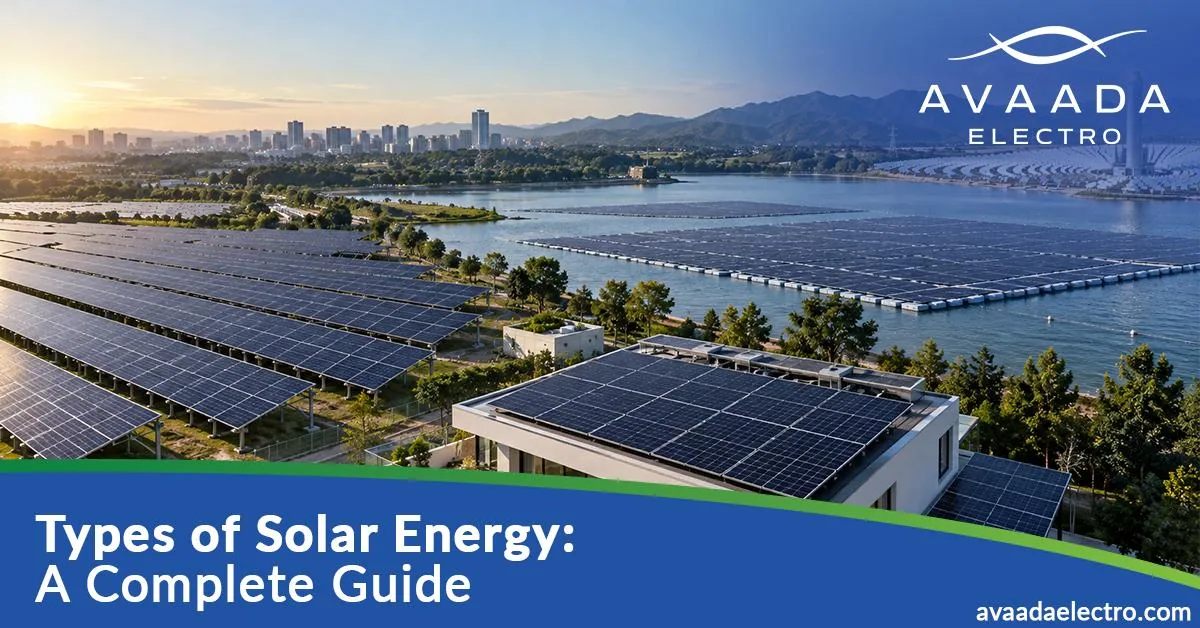
PV plants are the most common type of solar plant in India. They generate electricity directly from sunlight and include:
- Fixed-tilt systems
- Single-axis tracking systems
- Floating solar projects
- Bifacial solar installations
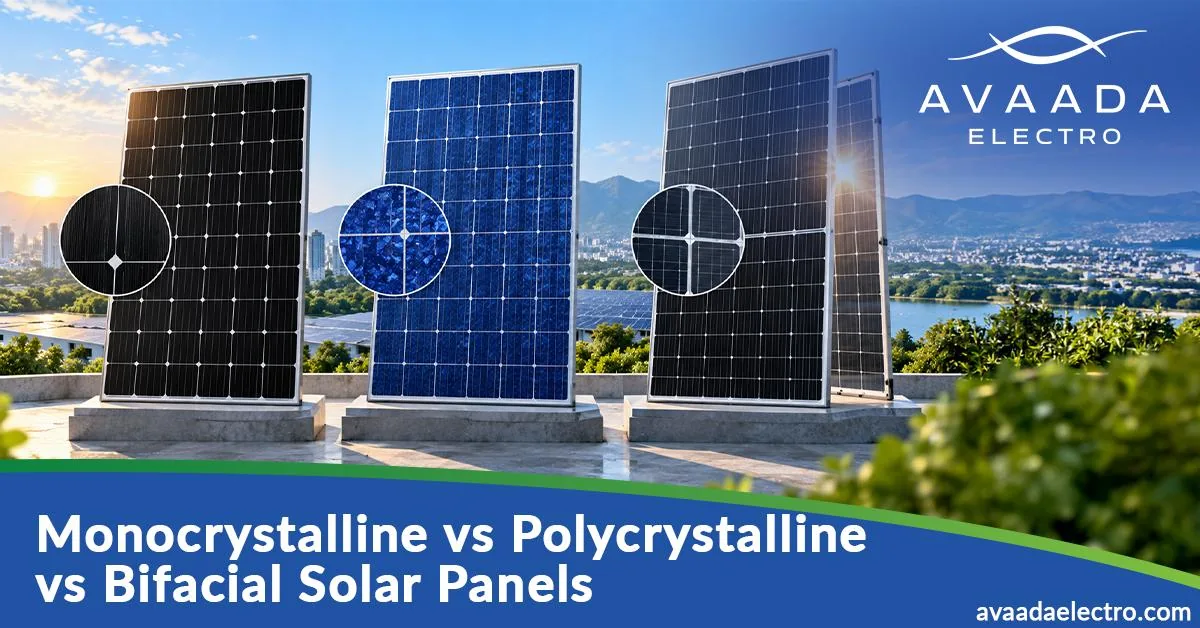
Solar plant projects by Avaada Electro use bifacial N-Type TOPCon modules to improve energy yield and optimize land utilization.
Concentrated Solar Power (CSP) Plants
CSP plants use mirrors to concentrate sunlight and generate heat, which is then converted into electricity through turbines. Although their adoption remains limited in India, thermal storage systems allow CSP plants to generate power beyond daylight hours.
Hybrid Renewable Energy Plants
Hybrid projects combine solar with technologies such as wind energy, Battery Energy Storage Systems (BESS), pumped storage projects, and green hydrogen production. These combinations improve reliability and support stable renewable power generation.
How Solar Power Plants Generate Electricity
A solar power plant follows a systematic process to convert sunlight into usable electricity. From capturing solar energy to delivering power to the grid, each stage plays a critical role in ensuring reliable energy generation.
Stage 1: Energy Capture
Solar modules absorb sunlight and generate Direct Current (DC) electricity through the photovoltaic effect. Multiple modules are connected together to create large solar arrays capable of producing utility-scale power.
Stage 2: Power Conversion
The DC electricity generated by solar modules is converted into alternating current (AC) using inverters. This conversion is necessary because homes, businesses, and grid infrastructure operate on AC power.
Stage 3: Grid Connection
Electricity passes through transformers and substations before entering transmission networks. Long-term Power Purchase Agreements (PPAs) make sure that the generated electricity reaches distribution companies and commercial consumers.
Stage 4: Monitoring and Performance Management
Supervisory Control and Data Acquisition (SCADA) systems continuously monitor plant performance, weather conditions, equipment health, and electricity generation. Advanced analytics help operators identify issues early and maintain consistent plant output.
Read more – Best Solar Panel Company
Growing Role of Solar in India's Energy System
As India works toward its renewable energy and energy security goals, solar power is becoming an increasingly important part of the country’s electricity mix. Its environmental, economic, and infrastructure benefits continue to drive large-scale adoption across states and industries.
Environmental Benefits
- Solar PV plants generate electricity without direct emissions of sulfur dioxide, nitrogen oxides, or particulate matter.
- According to the International Renewable Energy Agency (IRENA), solar power uses significantly less water than conventional thermal power generation.
- Agrivoltaic projects co-locate agricultural production and solar power generation on the same land. It allows agricultural activities and energy generation to coexist on the same land.
Economic Benefits
- Solar investments create employment opportunities across manufacturing, engineering, construction, and operations.
- Large solar parks can generate lease income for local communities and landowners.
Energy Security Benefits
- Greater solar adoption reduces dependence on imported fossil fuels.
- Utility-scale solar projects help meet rising electricity demand while diversifying the country’s energy mix.
Examples of Large Solar Plants in India
India has several landmark projects that show the scale of renewable energy deployment.
| Solar Park | State | Capacity |
| Bhadla Solar Park | Rajasthan | 2,245 MW |
| Pavagada Solar Park | Karnataka | 2,050 MW |
| Kurnool Ultra Mega Solar Park | Andhra Pradesh | 1,000 MW |
| Rewa Solar Park | Madhya Pradesh | 750 MW |
| Kamuthi Solar Power Project | Tamil Nadu | 648 MW |
Bhadla Solar Park remains one of the largest solar parks in the world, while projects such as Pavagada have demonstrated how renewable energy development can create long-term economic opportunities for local communities.
Avaada Electro’s Contribution to Solar Infrastructure Development
For businesses evaluating a solar plant manufacturer in India, factors such as technology, manufacturing capabilities, certifications, and long-term performance remain important. At Avaada Electro, we manufacture high-efficiency, made-in-India solar modules designed for utility-scale, commercial, and industrial applications. Our focus on bifacial N-Type TOPCon technology and integrated manufacturing supports quality, reliability, and supply chain efficiency.
Read more – Solar Panel Installation Cost
Conclusion
Solar energy has become a base for India’s clean energy transition. From utility-scale installations and hybrid renewable projects to advanced module technologies, every solar power plant contributes to a more resilient and sustainable energy system. As more ground mounted solar projects are developed across the country, the need for reliable technology and manufacturing expertise will continue to grow. Backed by an integrated renewable energy ecosystem, Avaada Electro supports India’s energy transition through advanced solar manufacturing and high-performance PV solutions.
Power your next solar project with high-efficiency Made-in-India modules from Avaada Electro. Connect with our team to explore advanced bifacial N-Type TOPCon solutions for utility-scale, commercial, and industrial applications.
FAQs
What is a solar power plant and how does it work?
A solar power plant converts sunlight into electricity using photovoltaic modules. The generated DC electricity is converted to AC power by inverters, transmitted via transformers and substations, and then supplied to the grid for homes, businesses, and industries.
What is the largest solar plant in India?
Bhadla Solar Park in Rajasthan is India’s largest solar park, with an installed capacity of 2,245 MW. The solar park spans nearly 14,000 acres and is one of the world’s largest utility-scale solar projects and a benchmark for renewable energy development.
What is the lifespan of a solar power plant?
The lifespan of a solar power plant is ideally 25 to 30 years. Solar modules usually carry long-term performance warranties, while components such as inverters may require replacement after 10 to 15 years, depending on operating conditions and maintenance practices.
What is the difference between rooftop solar and a solar power plant?
Rooftop solar systems are installed on buildings and primarily serve on-site electricity needs. On the other hand, a solar power plant is a centralized utility-scale facility that generates electricity in large quantities and supplies it to the grid.
What are the main challenges for solar power plants in India?
Some of the main challenges for installing solar power plants in India are land acquisition, grid integration, financing requirements, dust accumulation, and policy uncertainties. However, solutions such as agrivoltaics, dedicated green energy corridors, robotic cleaning systems, and energy storage technologies are helping address these issues.